
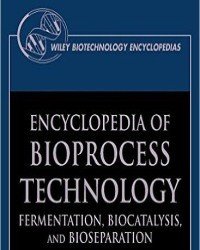
Michael C. Flickinger – Encyclopedia of Bioprocess Technology (5 Volume Set)
2.770 ₽
Автор: Michael C. Flickinger
Название книги: Encyclopedia of Bioprocess Technology
Формат: PDF
Жанр: Биология
Страницы: 2845
Качество: Изначально компьютерное, E-book
The five-volume set of the Encyclopedia of Bioprocess Technology presents the applications and established theories in biotechnology-focusing on industrial applications of fermentation, biocatalysis and bioseparation. It is an essential resource for anyone working in industrial biotechnology, biochemistry, genetics and microbiology laboratories, pharmaceutical firms, regulatory agencies and chemical and environmental engineering companies
The Wiley Biotechnology Encyclopedias, composed of
the Encyclopedia of Molecular Biology; the Encyclopedia of
Bioprocess Technology: Fermentation, Biocatalysis, and
Bioseparation; the Encyclopedia of Cell Technology; and
the Encyclopedia of Ethical, Legal, and Policy Issues in
Biotechnology cover very broadly four major contemporary
themes in biotechnology. The series comes at a fascinating
time in that, as we move into the twenty-first century, the
discipline of biotechnology is undergoing striking paradigm
changes.
Biotechnology is now beginning to be viewed as an informational
science. In a simplistic sense there are three
types of biological information. First, there is the digital or
linear information of our chromosomes and genes with the
four-letter alphabet composed of G, C, A, and T (the bases
guanine, cytosine, adenine, and thymine). Variation in the
order of these letters in the digital strings of our chromosomes
or our expressed genes (or mRNAs) generates information
of several distinct types: genes, regulatory machinery,
and information that enables chromosomes to carry
out their tasks as informational organelles (e.g., centromeric
and telomeric sequences).
Second, there is the three-dimensional information of
proteins, the molecular machines of life. Proteins are
strings of amino acids employing a 20-letter alphabet. Proteins
pose four technical challenges: (1) Proteins are synthesized
as linear strings and fold into precise three-dimensional
structures as dictated by the order of amino acid
residues in the string. Can we formulate the rules for protein
folding to predict three-dimensional structure from
primary amino acid sequence? The identification and comparative
analysis of all human and model organism (bacteria,
yeast, nematode, fly, mouse, etc.) genes and proteins
will eventually lead to a lexicon of motifs that are the building
block components of genes and proteins. These motifs
will greatly constrain the shape space that computational
algorithms must search to successfully correlate primary
amino acid sequence with the correct three-dimensional
shapes. The protein-folding problem will probably be
solved within the next 10–15 years. (2) Can we predict protein
function from knowledge of the three-dimensional
structure? Once again the lexicon of motifs with their functional
as well as structural correlations will play a critical
role in solving this problem. (3) How do the myriad of
chemical modifications of proteins (e.g., phosphorylation,
acetylation, etc.) alter their structures and modify their
functions? The mass spectrometer will play a key role in
identifying secondary modifications. (4) How do proteins
interact with one another and/or with other macromolecules
to form complex molecular machines (e.g., the ribosomal
subunits)? If these functional complexes can be isolated,
the mass spectrometer, coupled with a knowledge of
all protein sequences that can be derived from the complete
genomic sequence of the organism, will serve as a
powerful tool for identifying all the components of complex
molecular machines.
The third type of biological information arises from complex
biological systems and networks. Systems information
is four dimensional because it varies with time. For
example, the human brain has 1,012 neurons making approximately
1,015 connections. From this network arise
systems properties such as memory, consciousness, and
the ability to learn. The important point is that systems
properties cannot be understood from studying the network
elements (e.g., neurons) one at a time; rather the collective
behavior of the elements needs to be studied. To
study most biological systems, three issues need to be
stressed. First, most biological systems are too complex to
study directly, therefore they must be divided into tractable
subsystems whose properties in part reflect those of the
system. These subsystems must be sufficiently small to analyze
all their elements and connections. Second, highthroughput
analytic or global tools are required for studying
many systems elements at one time (see later). Finally,
the systems information needs to be modeled mathematically
before systems properties can be predicted and ultimately
understood. This will require recruiting computer
scientists and applied mathematicians into biology—just
as the attempts to decipher the information of complete
genomes and the protein folding and structure/function
problems have required the recruitment of computational
scientists.
I would be remiss not to point out that there are many
other molecules that generate biological information:
amino acids, carbohydrates, lipids, and so forth. These too
must be studied in the context of their specific structures
and specific functions.
The deciphering and manipulation of these various
types of biological information represent an enormous
technical challenge for biotechnology. Yet major new and
powerful tools for doing so are emerging.
One class of tools for deciphering biological information
is termed high-throughput analytic or global tools. These
tools can be used to study many genes or chromosome features
(genomics), many proteins (proteomics), or many
cells rapidly: large-scale DNA sequencing, genomewide
genetic mapping, cDNA or oligonucleotide arrays, twodimensional
gel electrophoresis and other global protein
separation technologies, mass spectrometric analysis of
proteins and protein fragments, multiparameter, highthroughput
cell and chromosome sorting, and highthroughput
phenotypic assays.
A second approach to the deciphering and manipulation
of biological information centers around combinatorial
strategies. The basic idea is to synthesize an informational
string (DNA fragments, RNA fragments, protein fragments,
antibody combining sites, etc.) using all combinations
of the basic letters of the corresponding alphabet,
thus creating many different shapes that can be used to
activate, inhibit, or complement the biological functions of
designated three-dimensional shapes (e.g., a molecule in a
signal transduction pathway). The power of combinational
chemistry is just beginning to be appreciated.
A critical approach to deciphering biological information
will ultimately be the ability to visualize the functioning
of genes, proteins, cells, and other informational elements
within living organisms (in vivo informational
imaging).
Finally, there are the computational tools required to
collect, store, analyze, model, and ultimately distribute the
various types of biological information. The creation presents
a challenge comparable to that of developing new instrumentation
and new chemistries. Once again this
means recruiting computer scientists and applied mathematicians
to biology. The biggest challenge in this regard
is the language barriers that separate different scientific
disciplines. Teaching biology as an informational science
has been a very effective means for breeching these barriers.
The challenge is, of course, to decipher various types of
biological information and then be able to use this information
to manipulate genes, proteins, cells, and informational
pathways in living organisms to eliminate or prevent
disease, produce higher-yield crops, or increase the
productivity of animals for meat and other foods.
Biotechnology and its applications raise a host of social,
ethical, and legal questions, for example, genetic privacy,
germline genetic engineering, cloning of animals, genes
that influence behavior, cost of therapeutic drugs generated
by biotechnology, animal rights, and the nature and
control of intellectual property.
Clearly, the challenge is to educate society so that each
citizen can thoughtfully and rationally deal with these issues,
for ultimately society dictates the resources and regulations
that circumscribe the development and practice of
biotechnology. Ultimately, I feel enormous responsibility
rests with scientists to inform and educate society about
the challenges as well as the opportunities arising from
biotechnology. These are critical issues for biotechnology
that are developed in detail in the Encyclopedia of Ethical,
Legal, and Policy Issues in Biotechnology.
The view that biotechnology is an informational science
pervades virtually every aspect of this science, including
discovery, reduction to practice, and societal concerns.
These Encyclopedias of Biotechnology reinforce the emerging
informational paradigm change that is powerfully positioning
science as we move into the twenty-first century
to more effectively decipher and manipulate for humankind’s
benefit the biological information of relevant living
organisms.
Leroy Hood
University of Washington
Описание
Только зарегистрированные клиенты, купившие данный товар, могут публиковать отзывы.



Отзывы
Отзывов пока нет.