

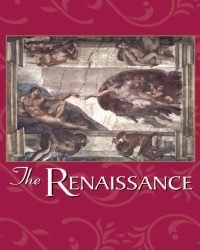
Paul F. Grendler – The Renaissance. An Encyclopedia for Students (4 Volumes)
1.320 ₽
Автор: Paul F. Grendler
Название книги: The Renaissance. An Encyclopedia for Students (4 Volumes)
Формат: PDF
Жанр: Прочая историческая литература
Страницы: 228+232+228+240
Качество: Изначально компьютерное, E-book
In the middle of the fourteenth century, the Italian
scholar and poet Petrarch looked at his world with
fresh and critical eyes and had new ideas. In place of
medieval values and methods of learning, he looked
back to the literature and philosophy of the ancient
world for inspiration and advice on how to live. By
the time of his death in 1374, other Europeans had
begun to share his vision. By about 1400 a group of
Italians, scholars as well as men and women from
many walks of life, had created a new intellectual
movement called humanism that combined ethics,
rhetoric, and education. Their ideas began to transform
Italian and European civilization.
The intellectual, artistic, political, and social initiatives
that began in Italy about 1350 spread to the rest
of Europe and to the wider world over the next three
centuries. The men and women of those times believed
that they were giving birth to a new age. They called it
a Renaissance because they saw their era as a rebirth of
the best of the ancient world and as a departure from
the world of the Middle Ages. By the late fifteenth century,
their actions, concerns, writings, and artistry had
spread to the rest of Europe. In the sixteenth century
few doubted that a new age had dawned. The changes
affected every area of life and knowledge, from art to
zoology, from commerce to science. The Renaissance
was one of the most innovative periods in the history
of mankind. It transformed Europe and then the rest of
the world, even into the twenty-first century.
The influence of the Renaissance is still remarkably
strong. Everyone recognizes the paintings of Leonardo
da Vinci and Michelangelo. Students at many levels
read the plays of Shakespeare, which have probably
been performed more frequently than those of any
other playwright in history. His Romeo and Juliet has
been retold so many times in prose and poetry, screen
and music, that everyone knows the tragic story. At
the other extreme, the word “Machiavellian still refers
to the use of deceit to reach political goals and the
notion that the end justifies the means, even though
Niccolò Machiavelli set down these ideas nearly five
hundred years ago. In addition, the writers and artists
of the Renaissance have inspired authors, artists, and
musicians in every century.”
In 1999 Charles Scribner’s Sons, in collaboration
with the Renaissance Society of America, produced
the six-volume Encyclopedia of the Renaissance (ER),
with Paul F. Grendler as editor in chief. It was the first
comprehensive encyclopedia in any language devoted
to the Renaissance. Librarians and scholars hailed
it as the essential reference work on this period. It
received the Dartmouth Medal of the American
Library Association, the Roland H. Bainton Reference
Prize of the Society for Sixteenth Century Studies, and
many other honors.
Now Charles Scribner’s Sons presents The
Renaissance: An Encyclopedia for Students, a condensed
version of ER written especially for students. Like ER,
it covers people and events beginning in Italy about
1350, then broadens geographically to embrace the
rest of Europe in the middle to late fifteenth century.
The coverage ends around 1620, when Europe once
again moved into a new age with different values and
events. Between these dates the encyclopedia discusses
important political events, concepts, ideas, works
of art and literature, and scientific achievements
across Europe. It incorporates the most recent scholarship
on these subjects. In particular, it addresses the
three most important developments in the study of
the Renaissance in the second half of the twentieth
century: the numerous studies of humanism throughout
Europe, the increased concentration on the social
history of the Renaissance, and the study of the many
roles of women. The Renaissance: An Encyclopedia for
Students provides comprehensive discussions of all
aspects of the European Renaissance. Coverage of the
rest of the world is limited to how Europeans influenced
other continents, and discussion of the
Protestant and Catholic Reformations is limited to
the way they affected the Renaissance and vice versa.
The work contains 461 entries organized alphabetically.
These discuss the important themes, events,
ideas, and individuals of the Renaissance on a level suitable for a young audience. Each page consists of a
major column containing the article text plus a minor
column. The latter contains many special features
designed for students: entry titles, brief definitions of
unfamiliar terms, small illustrations, lists of rulers,
and sidebars that expand the main text. Cross-references
appear at the end of articles. The encyclopedia
also contains 60 color plates, which are organized into
four visual essays that illustrate various aspects of
Renaissance society: “Art and Architecture,” “Daily
Life,” “The Renaissance City, and” New Frontiers.”
More than 160 black-and-white illustrations of people,
places, artifacts, and events enhance the text. The
work also contains 18 maps and 5 genealogical charts.
A chronology of the most important events of the
Renaissance can be found at the beginning of each
volume.
Many talented people made this work possible.
Frank Menchaca, publisher of Charles Scribner’s Sons,
launched The Renaissance: An Encyclopedia for Students.
John Fitzpatrick oversaw the project from the vantage
point of Scribner’s. The staff at Visual Education
Corporation did the essential work of organizing the
table of contents, rewriting the articles, and editing
the volumes. Darryl Kestler and Amy Livingston managed
the project, assisted in the editorial work by
Tobey Cloyd, Cindy George, and Sarah Miller. The
work is the product of all these able and dedicated
people.
It is our hope that The Renaissance: An Encyclopedia
for Students will encourage students everywhere to
appreciate, understand, and learn more about a fascinating
part of our past.
PAUL F. GRENDLER
Описание
Только зарегистрированные клиенты, купившие данный товар, могут публиковать отзывы.


Отзывы
Отзывов пока нет.