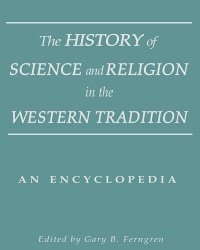
G. Ferngren – The History of Science and Religion in the Western Tradition
1.745 ₽
Автор: G. Ferngren
Название книги: The History of Science and Religion in the Western Tradition
Формат: PDF
Жанр: Философия
Страницы: 719
Качество: Изначально компьютерное, E-book
Andrew Dickson White’s A History of the Warfare of Science with Theology in Christendom (1896) was
published just over a century ago. In it White argued that Christianity had a long history of opposing
scientific progress in the interest of dogmatic theology. White’s thesis, supported by John William Draper in
his History of the Conflict between Religion and Science (1874), struck a responsive chord in American
thought, which was, at the turn of the twentieth century, increasingly committed to a secular outlook and to
recognizing the central role that science played in modern society. The Draper-White thesis, as it has come
to be known, was enormously influential among academics. During much of the twentieth century, it has
dominated the historical interpretation of the relationship of science and religion. It wedded a triumphalist
view of science with a dismissive view of religion. Science was seen to be progressing continually,
overcoming the inveterate hostility of Christianity, which invariably retreated before its awesome advance.
Popular misconceptions doubtless underlay the widespread presumption that religion was, by its very nature,
opposed to science. Based on faith, religion seemed bound to suffer when confronted by science, which was,
of course, based on fact.
While some historians had always regarded the Draper-White thesis as oversimplifying and distorting a
complex relationship, in the late twentieth century it has undergone a more systematic reevaluation. The
result has been the growing acknowledgment among professional historians that the relationship of religion
and science has been a much more positive one than is usually thought. While popular images of
controversy continue to exemplify the supposed hostility of Christianity to new scientific theories, a number
of studies have shown that Christianity has sometimes nurtured and encouraged scientific endeavor, while
at other times the two have coexisted without either tension or attempts at harmonization. If Galileo and the
Scopes Trial come to mind as examples of conflict, they were exceptions rather than the rule. In the words
of David C.Lindberg, writing on medieval science and religion for this volume:
There was no warfare between science and the church. The story of science and Christianity in the
Middle Ages is not a story of suppression, nor one of its polar opposite, support and encouragement.
What we find is an interaction exhibiting all of the variety and complexity that we are familiar with in
other realms of human endeavor: conflict, compromise, understanding, misunderstanding,
accommodation, dialogue, alienation, the making of common cause, and the going of separate ways
(p. 266).
What Lindberg writes of medieval Europe can be said to describe much of Western history. The recognition
that the relationship of science and religion has exhibited a multiplicity of attitudes, which have reflected
local conditions and particular historical circumstances, has led John Hedley Brooke to speak of a “complexity
thesis” as a more accurate model than the familiar “conflict thesis.” But old myths die hard. While Brooke’s view has gained acceptance among professional historians of science, the traditional view remains strong
elsewhere, not least in the popular mind.
The purpose of this volume is to provide a comprehensive survey of the historical relationship of the
Western religious traditions to science from the time of the Greeks of the fifth century before Christ to the
late twentieth century. The editors’ decision to limit the volume’s coverage to the West reflects both our
own professional backgrounds and our belief that, underlying the diversity of the several streams that have
fed Western civilization, there exists a basic substratum, formed by the West’s dual heritage of the classical
world of Greece and Rome and the monotheistic traditions of Judaism, Christianity, and Islam. The more
than one hundred articles that we have commissioned demonstrate that, within that heritage, science and
religion have enjoyed a varied and multifaceted association. From the beginning, the editors intended to
produce a volume that would provide a convenient summary of recent historical scholarship. In assigning the
articles, we have been fortunate in enlisting the cooperation of many of the leading scholars in the field.
Our contributors have been drawn from a variety of backgrounds. No single point of view—in respect to
either religion or historical interpretation—can be said to monopolize these pages. While many of our
contributors share the view of the editors that the historical relationship of science and religion has been a
complex one—sometimes harmonious, sometimes conflictive, often merely coexisting—others retain a less
benign view of Western religions as they have interacted with science. Moreover, readers will find some
overlap in the subjects treated. Rather than strive vigorously to avoid duplication, we have commissioned
several essays that deal with different aspects of the same subject. Our desire throughout has been that each
article should provide a comprehensive treatment of its subject.
It hardly needs to be said that this volume adopts a historical approach to the subjects it treats. We have
attempted to avoid imposing presentist and essentialist approaches, which have too often distorted the
modern understanding of both religion and science of the past; hence our inclusion of the occult sciences, for
example, which would not fall under the rubric of science today. Science has long enjoyed a kind of
privileged reputation as empirically based and, therefore, rigorously objective. By contrast, it has been
widely recognized that religious traditions are neither monolithic nor static. They have developed over time
and reflect the diverse circumstances of their geography and culture. Less well known is the fact that
definitions and conceptions of science, too, have changed over the centuries. Indeed, they continue to arouse
vigorous debate in our own day. “Science,” wrote Alfred North Whitehead, “is even more changeable than
theology” (Science and the Modern World. 1925. Reprint. New York: New American Library 1960, 163). If
the historical landscape is littered with discarded theological ideas, it is equally littered with discarded
scientific ones. Failure to understand this historical reality has led those who see the march of science as one
of inexorable progress to view controversies between science and religion as disputes in which (to quote
Whitehead again) “religion was always wrong, and…science was always right. The true facts of the case are
very much more complex, and refuse to be summarised in these simple terms” (ibid., loc. cit.).
Recognition that both science and religion are historically conditioned does not necessarily imply a
relativist point of view. It does, however, at least require an awareness of the cultural factors that are
imposed on all societies, ideas, and disciplines, including, of course, our own. It demands a view of the past
that is neither patronizing nor disparaging but capable of appreciating the power of ideas that we do not
share or that have fallen out of fashion in our own day. If the study of the intersection of religion and
science demonstrates anything, it is the enduring vitality and influence of some of the most basic concepts of
the Western world—religious, philosophical, and scientific—which retain their ability to shape ideas and
inform our culture in the twenty-first century.
Gary B.Ferngren
Описание
The History of Science and Religion in the Western Tradition Г. Фернгрена — фундаментальный обзор взаимоотношений научного и религиозного мировоззрения на протяжении всей истории Запада. Книга показывает, как менялись представления о природе, Боге и познании от Античности до Нового времени, опровергая популярный миф о вечном конфликте науки и религии.
Авторы анализируют ключевые периоды и темы: космологию в Средние века, механистическую философию XVII века, дарвинизм и эволюцию, а также современные дискуссии о креационизме, биоэтике и границах научного метода. Издание представляет собой коллективный труд ведущих историков науки и религии, где каждый раздел написан специалистом в своей области.
- Студентам и преподавателям истории науки, философии и религиоведения
- Тем, кто интересуется интеллектуальной историей Запада
- Специалистам, желающим глубже понять контекст современных споров о науке и вере
- Читателям, которые хотят выйти за рамки упрощённого «конфликтного» нарратива
Только зарегистрированные клиенты, купившие данный товар, могут публиковать отзывы.
Похожие


Другие книги раздела «Философия»
- D. Borchert – Encyclopedia of Philosophy (10 Volumes, 2nd edition)
- D. Frank – History of Jewish Philosophy
- D. Moyar – Hegels Phenomenology of Spirit. A Critical Guide
- Donald K. McKim – The Cambridge Companion to Martin Luther
- E. Craig – Routledge Encyclopedia of Philosophy + The Shorter Routledge Encyclopedia of Philosophy (2 books)
- G. Demartino – The Oxford Handbook of Professional Economic Ethics (2016)
- G. H. R. Parkinson – Routledge History Of Philosophy (10 Volume set)
- Georg Northoff – Philosophy of the Brain
- A. Rengakos – Brills Companion To Thucydides
- H. Hillerbrand – The Encyclopedia of Protestantism
- Henrik Lagerlund – Encyclopedia of Medieval Philosophy
- J. Israel – Enlightenment Contested. Philosophy Modernity and the Emancipation of Man 1670-1752
- J. May – Brills Companion To Cicero
- J. Roth – Ethics. Revised Edition
- J. Van Den Hoven – Information Technology and Moral Philosophy
- J. van Huyssteen – Encyclopedia of Science and Religion
Все книги раздела «Философия» →
Смежные разделы: Бизнес-Книги · Биография · Боевики и Триллеры · Детективы · Детские книги · Школа · Дом и Семья · Здоровье · Искусство · Историческая проза · Классика · Компьютеры
Отзывы
Отзывов пока нет.