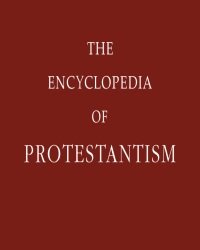
H. Hillerbrand – The Encyclopedia of Protestantism
1.890 ₽
Автор: H. Hillerbrand
Название книги: The Encyclopedia of Protestantism
Формат: PDF
Жанр: Философия
Страницы: 4143
Качество: Изначально компьютерное, E-book
Routledge is proud to announce the publication of a new major reference work from world-renowned scholar Hans J. Hillerbrand. The Encyclopedia of Protestantism is the definitive reference to the history and beliefs that continue to exert a profound influence on Western thought. Featuring entries written by an international team of specialists and scholars, the encyclopedia traces the course of Protestantism from its beginnings prior to 1517, when Martin Luther nailed his 95 Theses to the door of Wittenberg Cathedral, to the vital and diverse international scene of the present day.
Protestantism, alongside the Roman Catholic and Orthodox traditions, has been one of
the three major manifestations of the Christian religion ever since the sixteenth century.
Its total number of adherents is estimated to be roughly 391,000,000, to which should
probably be added another 345,000,000 who are members of so-called independent
traditions, most of which are distinctly Protestant. While statistics of this sort are not
always reliable, one may well conclude that Protestants at present comprise some 40% of
world Christianity, with Roman Catholicism and Orthodox churches comprising the rest.
Protestantism is not confined to Europe and North America but has been, since the
nineteenth century, a truly global phenomenon.
Unlike Roman Catholic and Orthodox Christianity, however, Protestant Christianity is
divided not only geographically and culturally, but also theologically and ecclesiastically.
There is no single Protestant Church as such the way there is, despite various diversities,
a single Roman Catholic Church. Quite the contrary, there are dozens upon dozens of
Protestant churches. Some of these, such as the Anglican Communion, are worldwide in
scope and distribution of membership; others, such as the Church of the Prussian Union,
are confined to a single country or are solitary church bodies or congregations, such as
the independent snakehandling churches of the Appalachians in the United States.
Despite such diversity, which Catholics in the past used to buttress their own truth claims
(since truth, as Bishop Bossuet noted in the seventeenth century, must be one, not many),
all of these traditions, however, have staked out the same truth claims as have the Roman
Catholic and Orthodox churches. Until the modern era, all Protestant churches insisted on
the exclusive prominence of Christian truth and, each in its own way, echoed the ancient
Catholic notion that “extra ecclesiam nulla salus”—outside the church there is no
salvation.
This diversity of Protestant traditions raises the question of their essential identity. The
name “Protestant” itself comes, of course, from the “protest” which the supporters of the
Reformation lodged in 1529 at Speyer against the decision of the Catholic estates and
rulers to carry out the stipulations of the Edict of Worms against Martin Luther and his
followers. The term is, therefore, a negative one, even though some interpreters of the
action in 1529 have pointed to the root meaning of the Latin “protestari” as denoting “to
bear witness.” Still, while Protestantism may well be defined with a number of positives,
it is also correct to call Protestant all those individuals and churches that repudiate the
authority and office of the Roman pontiff of the Catholic Church.
This Protestant diversity finds its obvious explanation in the absence of a central
authoritative entity—either person or structure—in Protestantism that would constitute
normative authority (and power). The Protestant recourse to the Bible, or the Word of
God, as ultimate authority has produced multiple divergent interpretations of the Bible.
And ever new and different theological or biblical interpretations have frequently
assumed structural concreteness. Yet, it is neither fair nor theologically accurate to contrast the relatively homogeneous Catholic and Orthodox churches with the
bewildering diversity of Protestant denominations—and to find in this diversity proof
positive for the non-viability of Protestant truth claims. The Roman Catholic tradition can
sustain its theological homogeneity through the process of excommunication or inciting
the voluntary separation of dissenting members. Thereby, the Roman Catholic Church is
at once able to retain its relative homogeneity but also to become the source of the larger
diversity within Christendom. The very existence of Orthodox and Protestant traditions
suggests that the Roman Catholic Church has not been able to sustain its truth claims
universally but has sloughed off dissent within its ranks. In Protestant churches,
excommunication and dissent likewise have led to separation, but with a difference—the
frequent result of the establishment of new groups and churches. The phenomenon of
new ecclesial structures has been particularly prominent in places where the legal
freedom to do so existed. The absence of “established” churches in North America and
the non-European world has allowed dissent from the mainstream to express itself
organizationally, sociologically in the form of new churches, each of which advances its
own truth claims.
The diversity of Protestant groupings and churches, especially pronounced in the
United States, has entailed two consequences. One is the difficulty of speaking of “the”
Protestant understanding or view of almost any topic—be it worship, doctrine, ethics, etc.
Even in regard to the traditional and hallowed and fundamental hallmark of
Protestantism, namely, the priority of grace in salvation, there are diverse Protestant
notions as to how exactly divine grace and human will and effort are to be related.
Accordingly, while one might assume that a reference work on Protestantism would have
definitive entries on the Protestant understanding of basic theological topics, grace, to cite
one example, the reality is different and complicated.
Second, there is the increasingly popular (at least among scholars) tendency to use the
plural and speak of “Reformations” of the sixteenth century, which is to denote the
empirical reality of Protestant diversity in the sixteenth century. Analogously, the term
suggests the use of the plural for “Protestantism” as well.
This Encyclopedia of Protestantism seeks to offer a comprehensive reference work for
this diverse Protestant tradition, both historically and theologically. In so doing, we face
the seemingly simple yet truly complex question as to what is and what is not Protestant,
and, therefore, what is to be included in this reference work? To cite one example: Is the
Unification Church a Protestant church? The answer is simple, if all non-Catholic
traditions are considered Protestant. The Unification Church then is definably Protestant,
and the definition of Protestantism is simply that Protestant is whatever is not Catholic
(or Orthodox).
Historically, the question may be answered with relative ease. Protestant Christianity
may be defined as those theologies, church structures, and polities that consciously
separated themselves from the Roman Catholic Church. Therefore, Protestantism may
indeed be defined negatively, that is, Protestantism is not Catholicism. This separation
from Rome took place at first painfully and reluctantly. It is a truism that Martin Luther
and the other early reformers did not want to separate themselves from the church. They
were forced out of the Roman Church by excommunication rather than by their own
decisions to leave it. But it is an equal truism that, once the break had occurred, theological reflection made
it clear to the Protestant reformers that their understanding of text and message differed
categorically from that of the Catholic Church. There surely should be no doubt about
that reality—the only exceptions seem to be systematic theologians who tend to view the
past from the perspective of their understanding of the present. From a certain point
onward, the reformers and their successors would not have returned to the Catholic
Church even if they had been welcomed as a “sect.”
Theologically, the argument leading to the emergence of the Protestant tradition was
over authority. The radical newness of the Protestant assertion lay in the insistence that
there were two dramatically different sources of authority—the church, in its various
representations (council, bishop, pope), or Scripture. The reformers vigorously argued for
Scripture and thereby against the Catholic notion that Scripture and tradition were in
effective harmony. All Protestant groupings have been heirs to Martin Luther’s insistence
that the Word was not only the primary source of religious authority but also that it was
self-affirming, clear, and self-evident in its message. The sixteenth century reformers
tended to be arrogant in their strident polemic that the Catholic Church did not base its
teachings on the Bible, but on what they called “human traditions.” That, of course, was
sheer polemic, but it did point to the fact that at issue was not so much the Word but
whether or not that Word “alone” was the authority.
There were other pivotal Protestant affirmations. They focused on human salvation
and argued that salvation was sola gratia and sola fide—solely by grace, solely by faith.
Protestants also disagreed with Catholics on the number of sacraments. Contrary to the
Roman Catholic affirmation of seven sacraments, Protestant churches affirmed only two,
baptism and the Lord’s Supper. Indeed, if it is the definition of a sacrament that it is a
vehicle of divine grace, then many Protestant churches reject such a notion of a
sacrament altogether, understanding the act of baptism or receiving bread and wine as
symbolic. They speak instead of ordinances or memorial signs. Protestants have also
emphasized the notion of the church as a community, rather than hierarchy, of believers,
a notion found in Luther’s concept of the priesthood of all believers, which made all
Christians equal before God.
In this Encyclopedia of Protestantism, the historical dimension dominates. This is
understandable inasmuch as Protestantism has had a rich and varied history, not the least
because of the invigorating emergence of new Protestant groups and groupings ever since
the sixteenth century. This rich history, much of which has not been thoroughly studied,
deserves adequate and comprehensive treatment.
This Encyclopedia seeks to be an accurate and comprehensive reference work
reflecting the best in current scholarship. At the same time, it strives to be neutral to the
extent to which such is possible, since it is the responsibility of a reference work to
present fairly the current understanding of a given topic. The Encyclopedia is also
intended to be global in scope, thereby acknowledging that the twentieth century has truly
turned Protestantism into a worldwide phenomenon that is no longer restricted to Europe
and North America. Understandably, however, the Encyclopedia favors North American
topics, though it is hoped not to the exclusion or marginalization of non-North American
entries. One striking aspect of contemporary scholarship on Protestantism is that its
European and North American component are far more thoroughly explored than Asian
and African Protestantism. Arguably, it has been on the North American Continent that the rich diversity of Protestantism has come to bear its most meaningful fruit.
Accordingly, North American Protestantism deserves special consideration in a reference
work such as this.
A number of editorial policies are worth noting. The Encyclopedia includes a
judicious number of entries that might be considered marginal in their relation to
Protestantism. It includes literary and artistic figures as well as figures from public life,
whose historical significance, however, does not lie in the realm of Protestant
Christianity. The editorial decision was to be restrictive and only include those figures for
whom it might be reasonably expected that prospective searchers will turn to a reference
work on Protestantism to find the particulars.
A related policy had to do with the inclusion of figures still living. The vicissitudes of
life might suggest that, given the longevity of reference works, any policy of this sort will
quickly face the realities of life, but the editorial policy was to include living figures if
the argument can be made that the individual has played a significant role in shaping and
molding twentieth century Protestantism.
In these days of ecumenicity and post-Enlightenment understanding of the Christian
faith, the Reformation of the sixteenth century and the ensuing Protestant traditions often
seem terribly distant and without dynamic response to the issues and questions of the
twenty-first century. Lutherans and Roman Catholics agreed, in the final years of the
twentieth century that they possessed a common understanding of the doctrine of
justification—over which the reformers of the sixteenth century had separated from the
Roman Catholic Church. Other ecumenical agreements could be easily cited. Thus, some
Protestants devoutly wish to find ways to be reunited with Rome.
Despite its four volumes, this Encyclopedia is by no means able to offer the kind of
comprehensive coverage of much larger reference works. This reality allows mention of
two recent reference works published in Germany—the Theologische Realenzyklopädie,
with its 33 volumes to date, and the Lexikon für Theologie und Kirche, with 11 volumes
to date. As regards biographies, the Biographisch-Bibliographisches Wörterbuch zur
Kirchengeschichte, in over 20 volumes, also available on-line, may be commended.
As is invariably the case in a project that is the work of many hands, the four volumes
do not necessarily represent what had been envisioned in the beginning. Thus, if the
viewer of this Encyclopedia does not find the “obvious” author connected with a given
entry, the reason will be quite complex, since it did not always prove possible to
coordinate the schedules of prospective authors with the editorial schedules of a reference
work of over 1000 entries.
It remains for me to offer a public word of appreciation to all who contributed
significantly to this work. Kevin Ohe, now with the Encyclopedia Americana, proposed
this project; Linda Hollick, formerly the publisher at Routledge New York, intervened at
a crucial stage to set things right; and Sally Barhydt, who joined the editorial staff at
Routledge late but sought to keep things on their right track with indefatigable
determination. I also note with appreciation the help I received from the members of the
editorial board as well as from Sheila Davaney, Linell Cady, and Mark Toulouse.
The preparation of this Encyclopedia proved to be a more formidable project than I
had anticipated. I would be deeply amiss if the last sentence in this encomium were not
an appreciation of my family, which once again supported my endeavor with grace. I
hope that Bonnie, together with Susanna, Dylan, Johannes, Noah, Annika, Keenan Maximilian, Addison, and Madeleine—who must have sensed that the last few years I
was preoccupied with the “encyclopedia”—will derive insight and meaning from these
volumes.
Hans J.Hillerbrand
Описание
The Encyclopedia of Protestantism Ханса Хиллебранда — фундаментальное справочное издание, которое охватывает историю, идеи, ключевые фигуры и современное состояние протестантизма от Реформации до наших дней. Книга объясняет, как одно из крупнейших направлений христианства формировало культуру, политику и религиозную жизнь миллионов людей по всему миру.
Издание содержит тысячи статей о доктринах, конфессиях, значимых событиях, организациях и персоналиях. Особое внимание уделено влиянию протестантской этики на развитие капитализма, образования, социальной мысли и глобальных миссионерских движений. Материал представлен в удобном энциклопедическом формате, позволяющем быстро находить нужную информацию.
- студентам и преподавателям религиоведения, теологии и истории
- пасторам, миссионерам и всем, кто интересуется церковной историей
- исследователям, работающим с темами Реформации, протестантской этики и межконфессиональных отношений
- читателям, которые хотят глубоко понять корни современной западной культуры и ценностей
Только зарегистрированные клиенты, купившие данный товар, могут публиковать отзывы.
Похожие


Другие книги раздела «Философия»
- D. Borchert – Encyclopedia of Philosophy (10 Volumes, 2nd edition)
- D. Frank – History of Jewish Philosophy
- D. Moyar – Hegels Phenomenology of Spirit. A Critical Guide
- Donald K. McKim – The Cambridge Companion to Martin Luther
- E. Craig – Routledge Encyclopedia of Philosophy + The Shorter Routledge Encyclopedia of Philosophy (2 books)
- G. Demartino – The Oxford Handbook of Professional Economic Ethics (2016)
- G. Ferngren – The History of Science and Religion in the Western Tradition
- G. H. R. Parkinson – Routledge History Of Philosophy (10 Volume set)
- Georg Northoff – Philosophy of the Brain
- A. Rengakos – Brills Companion To Thucydides
- Henrik Lagerlund – Encyclopedia of Medieval Philosophy
- J. Israel – Enlightenment Contested. Philosophy Modernity and the Emancipation of Man 1670-1752
- J. May – Brills Companion To Cicero
- J. Roth – Ethics. Revised Edition
- J. Van Den Hoven – Information Technology and Moral Philosophy
- J. van Huyssteen – Encyclopedia of Science and Religion
Все книги раздела «Философия» →
Смежные разделы: Бизнес-Книги · Биография · Боевики и Триллеры · Детективы · Детские книги · Школа · Дом и Семья · Здоровье · Искусство · Историческая проза · Классика · Компьютеры
Отзывы
Отзывов пока нет.