
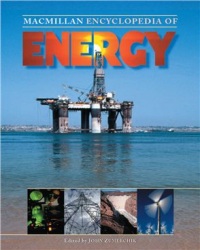
John Zumerchik – Encyclopedia of Energy
1.440 ₽
Автор: John Zumerchik
Название книги: Encyclopedia of Energy
Формат: PDF
Жанр: Физика
Страницы: 1284
Качество: Изначально компьютерное, E-book
In the mid-1970s, many environmental organizations
and energy experts predicted a bleak future of widespread
economic and social disruption caused by
energy scarcities and continually rising costs of fossil
fuels. These predictions never came true. In fact, the
opposite occurred—fossil fuel prices in the year 2000
are actually lower than the brief peaks that were
reached after the OPEC oil embargo of 1973. Despite
this reality, there continue to be long-term energy
problems for which there are no easy answers.
Foremost is availability, related to the unsustainability
of ever more people demanding an ever-declining
supply of fossil fuels. Second is growth in electricity
demand, which requires more power plants in an era
of growing political opposition to the greater use of
fossil fuels and nuclear power. Third is pollution,
because the more power plants and vehicles there are,
the harder it is to reduce harmful emissions. And
finally, there is global warming, the contentiously
debated link between energy-related carbon dioxide
emissions and climate change.
The three-volume Macmillan Encyclopedia of
Energy is an interdisciplinary work with a very ambitious
scope that addresses these continuing problems.
Entries represent the fields of physics, chemistry,
biology, geophysics, and engineering, as well as history,
economics, psychology, sociology, and ethics.
Traditional energy concepts such as electricity, thermodynamics,
and conservation of energy are included,
but so are less obvious concepts such as combustion,
catalysts, propulsion, and matter and energy.
The traditional fuels such as gasoline, diesel, and jet
fuel are included, but so are the alternative fuels such
as methanol, synthetic fuel, and hydrogen. The traditional
energy sources such as coal, natural gas, petroleum,
and nuclear fission are included, but so are the
more forward-looking sources such as wind, solar,
fuel cells, and nuclear fusion.
The Encyclopedia covers the major energy-using
technologies and examines the advances that have
been made in terms of performance and efficiency.
This is an important approach because the unforeseen
technology of tomorrow might be far different
from what exists today, leading to an alteration in patterns
of energy consumption. Only by improving
how experts predict how technological innovation
will alter energy consumption will we be able to
avoid making erroneous energy predictions similar to
those made in the 1970s. A large number of entries
related to transportation are included because this
sector of the economy faces the greatest challenges in
the future with regard to energy use. The reliance on
imported petroleum and the difficulty in switching to
another energy source make the transportation sector
particularly vulnerable to supply disruptions and wild
price fluctuations. Subjects related to electricity are
also well represented because of the rapid pace of
growth in the field of electric technology.
The interdisciplinary approach of the Encyclopedia
led to different approaches for different types of
articles. Besides the historical articles covering the
sources, uses, and social views of energy, many technology
articles take a historical approach to discussing
the invention and innovation of the technology,
especially the pace of innovation and energy efficiency
improvements between 1970 and 2000. Sixty biographies
provide information on specific scientists and
engineers who made major contributions to the
understanding of energy and the related technologies.
Since environmental and safety issues are important
to the story of energy, these issues are addressed
throughout the Encyclopedia. The Encyclopedia includes 253 alphabetically
arranged entries written by 170 authors. The text is
supplemented with more than 600 photographs,
illustrations, sidebars, and maps. Entries contain a set
of cross-references to related entries within the set, as
well as a bibliography of related books and journal
articles to guide readers who want to learn more
about a given topic. The front matter in Volume 1
includes a list of entry topics, and the back matter in
Volume 3 contains both an extensive timeline of
important dates in energy history and a comprehensive
subject index.
The purpose of this publication is to provide an
up-to-date reference guide for people who want full,
current, trustworthy information about all aspects of
energy. This includes individuals who want more
information than they read in newspapers or magazines,
high school and college students who want
information for class discussions and papers, people
looking for expert information on which to base their
everyday energy-related decisions, and scholars who
want a review of interdisciplinary research.
The Encyclopedia will help to foster a greater
awareness of the historical significance of energy and
the relationship between energy and technology.
Decisions that are related to technology and that
affect energy consumption are made on a regular
basis. However, since energy is mostly invisible (one
cannot see a kilowatt of electricity or a cubic foot of
natural gas), these decisions are not commonly
thought of as energy decisions even when the energy
aspect is an essential aspect. Choices related to transportation,
shelter, comfort, and recreation all entail
energy decisions, but they are not themselves considered
to be energy decisions. For example, driving to
work instead of walking, purchasing bigger homes
and vehicles instead of smaller ones, and acquiring
the latest plug-in appliance all have short- and longterm
energy-related consequences. Although each
individual decision has an insignificant effect on
overall consumption, once the behavior becomes a
norm, the effect can be very significant for society
since reversal is often impossible.
Production of this three-volume set has involved
the efforts of many people. In particular, I want to
thank my associate editors, Herm Bieber, Alan
Chachich, Fred Denny, Barney Finn, John Firor,
Howard Geller, David Greene, Joseph Priest, Rosalie
Ruegg, Harold Wallace, and Ellen Zeman for their
suggestions with regard to the organization and content
of the work and for lending their expertise in
evaluating and reviewing manuscripts. I would also
like to thank the contributors for their cooperation in
ensuring that the content and level of presentation of
their entries was appropriate for our audience.
I am equally indebted to the staff at Macmillan
Reference USA for their prodding and pushing that
helped speed the completion of this work. In particular,
I want to thank Charlie Montney and Brian
Kinsey for their day-to-day management of the project
and Elly Dickason, the publisher of Macmillan,
for her support in producing the work you see before
you.
Описание
Encyclopedia of Energy Джона Зумерчика — фундаментальный справочник, который объединяет актуальные знания о всех основных видах энергии, принципах её производства, преобразования, хранения и использования. Книга объясняет сложные физические процессы доступным языком и показывает, как энергия связана с технологиями, экологией и экономикой.
Издание охватывает традиционные и возобновляемые источники энергии, ядерную физику, термодинамику, транспортные системы, влияние на окружающую среду и перспективные технологии будущего. Материал организован в виде энциклопедических статей, удобных для быстрого поиска нужной информации.
- студентам и преподавателям физики, энергетики и смежных дисциплин
- инженерам и специалистам, работающим в энергетической отрасли
- исследователям и всем, кто интересуется устойчивым развитием и экологическими проблемами
- читателям, желающим глубоко понимать современные энергетические вызовы
Только зарегистрированные клиенты, купившие данный товар, могут публиковать отзывы.
Похожие


Другие книги раздела «Физика»
- L. Lupichev – Synergetics of Molecular Systems (2015)
- A. Babin – Neoclassical Theory of Electromagnetic Interactions (2016)
- J. Loureiro – Kinetics and Spectroscopy of Low Temperature Plasmas (2016)
- M. Orszag – Quantum Optics. Including Noise Reduction, Trapped Ions, Quantum Trajectories, and Decoherence (3rd edition)
- R. Dick – Advanced Quantum Mechanics (2nd edition, 2016)
- R. Rampazzo – From the Realm of the Nebulae to Populations of Galaxies (2016)
- D. Tiab – Petrophysics (2016)
- He Tian – Photochromic Materials (2016)
- J. Basdevant – Lectures on Quantum Mechanics (2016)
- M. Kennedy – Practical Petrophysics (2015)
- P. Busch – Quantum Measurement (2016)
- P. Coleman – Introduction to Many-Body Physics (2016)
- R. Karwa – Heat and Mass Transfer (2016)
- G. Hlawacek – Helium Ion Microscopy (2016)
- C. Joseph – Modern Devices. The Simple Physics of Sophisticated Technology (2016)
- F. Bloise – Solved Problems in Electromagnetics (2017)
Смежные разделы: Авиация и космонавтика · Астрономия · Геология и Геодезия · Железнодорожное дело · Журналистика · Математика · Машиностроение · Нанотехнологии · Научно-популярная литература · Химия · Экология · Энергетика
Рекомендуем также
- J. Merriman – Encyclopedia of the Age of Industry and Empire. Europe 1789 to 1914 (5 Volume set)
- А. Велидов – Красная книга ВЧК в 2 томах (1989)
- И. Иванов – Украинский кризис. Документы и материалы (15 Томов, 2015)
- A. Knapp – Prehistoric and Protohistoric Cyprus. Identity, Insularity, and Connectivity
- Alexander Mikaberidze – Historical Dictionary of Georgia
- C. Woolgar – Food in Medieval England
- Paul F. Grendler – The Renaissance. An Encyclopedia for Students (4 Volumes)
- Владимир Потемкин – История дипломатии (3 Тома)

Отзывы
Отзывов пока нет.