
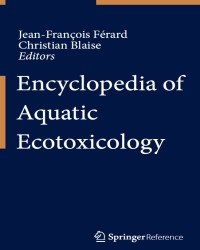
J. Ferard – Encyclopedia of Aquatic Ecotoxicology
4.895 ₽
Автор: J. Ferard
Название книги: Encyclopedia of Aquatic Ecotoxicology
Формат: PDF
Жанр: Экология
Страницы: 1269
Качество: Изначально компьютерное, E-book
With its 104 chapters, this Encyclopedia of aquatic ecotoxicology reveals the diversity of issues, problems and challenges that have faced, and are facing today, receiving environments. It also indicates ways by which tools, strategies and future investigations can contribute to correct, minimize, solve and prevent water quality degradation.
Structured homogeneously, the chapters convey salient information on historical background, features, characteristics, uses and/or applications of treated topics, often complemented by illustrations and case studies, as well as by conclusions and prospects. This work is most suitable for teaching purposes. Academics, for example, could literally deliver comprehensive lectures to students simply based on chapter outlines and contents.
Ecotoxicology, a still fairly young discipline of the environmental sciences, requires
the application of knowledge in several domains (e.g., toxicology, ecology, chemistry,
parasitology, microbiology, engineering, modeling, mathematics, climatology,
public policy, and environmental legislation) in order to more fully understand
and adequately interpret hazard stemming from a myriad of chemical contaminants
continually released into aquatic environments worldwide.
Indeed, while discharge of single chemicals comprising both “classical contaminants”
(e.g., metals, pesticides, PAHs) and new emerging chemicals (e.g., hormones,
pharmaceuticals, nanomaterials) are of immediate concern in terms of their
ecotoxicity, so too are their interactions in mixtures emitted via complex industrial
and municipal effluents, as well as from diffuse sources of pollution. Once in
receiving waters, cocktails of chemicals will again interact with specific physicochemical
characteristics of aqueous systems, with various types of pelagic and benthic
biota, as well as with their associated parasites, and also microbial communities.
Hence, the complexity linked with many contamination events often renders
hazard/risk assessment a difficult task for ecotoxicology, making it, at times,
a science prone to imprecision much akin to meteorology or even psychiatry.
This said, modern ecotoxicology is now in a position to bank more and more on
newer disciplines to reduce, and even offset, some levels of imprecision. Improved
ecological knowledge in structure and function of aquatic ecosystems, “omics”
technologies and applications, modeling, and bio-informatics comprise some
of these.
Given the diversity of issues, problems, and challenges facing water quality of
receiving environments today owing to contamination brought on by anthropogenic
sources, we felt that producing a comprehensive book integrating a broad knowledge
base of key areas, either directly or indirectly linked to aquatic ecotoxicology,
would be a worthwhile endeavor to pursue.
Clearly, meeting this goal would require welcoming aboard this major book
project literally “a small army” of reputed international colleagues, each of whom
would then be willing to submit manuscripts in their field of expertise. After drawing
up an extensive list of topics associated with the field of aquatic ecotoxicology and
subsequently sending out an official invitation letter to 115 scientists at large, we were delighted to see that 104 responded positively to our call! Considering the
exhaustive information that would be conveyed by this large number of entries, it
then seemed appropriate to entitle our book the Encyclopedia of Aquatic
Ecotoxicology.
In order to ensure uniformity in text presentations, contributors were asked to
adhere to a common template by taking into account specific structural guidelines.
In many cases, inclusion of a Glossary and/or Abbreviations sections was also
recommended to make entries as user-friendly as possible for readers.
Because of the considerable amount of information provided by contributors
(104 entries!), Springer Publishers – and rightly so – decided to produce
a two-volume book, whereby contents are simply aligned alphabetically based on
their titles.
With its 104 entries, this Encyclopedia of Aquatic Ecotoxicology reveals the
diversity of issues, problems, and challenges that have faced, and are still facing
today, receiving environments and also indicates ways by which tools, strategies,
and future investigations can contribute to correct, minimize, solve, and prevent
water quality degradation.
Interest for this book should encompass a wide audience as academics (students,
professors), government (environmental managers, scientists, regulators) and
consulting professionals (biologists, chemists, engineers), instructors in courses in
ecotoxicology, as well as the lay public will undoubtedly find it a useful compendium
benefiting from current knowledge provided by experts in key topics of
modern aquatic ecotoxicology. In short, all groups directly or indirectly concerned
with the protection and conservation of aquatic environments will find this book
appealing, as will those who simply wish to become familiar with the field of
ecotoxicology.
We are grateful for the time and moral support given to us in the production of
this book by the Universite´ de Lorraine, formerly called Universite´ Paul Verlaine
(Metz, France) and by Environment Canada (Science and Technology Branch,
Water Science and Technology Directorate, Centre Saint-Laurent, Montre´al,
Que´bec).
For assistance and enlightened guidance provided in many ways which facilitated
our work and ensured the timely completion of our book, we are very
appreciative of the dedicated professional help provided to us by Tamara Welschot,
Alexandrine Cheronet, and Judith Terpos of Springer Dordrecht.
A special appreciation is equally in order for all of our devoted colleagues who
accepted our invitation to contribute to this encyclopedia. Without each of your
individual inputs in providing outstanding material in key topics of ecotoxicology,
this publication would not have seen the light of day. Considering all those (authors
and coauthors) associated with the book’s 104 entries, 173 of you participated in this
captivating adventure. Collectively, you represent 20 countries (Australia, Belgium,
Canada, China, Czech Republic, Denmark, Finland, France, Germany, Italy,
Mexico, Poland, South Africa, South Korea, Spain, Sweden, Switzerland, the Netherlands, the UK, and the USA), truly a planetary drive. Let it be said, loud and
clear, that we editors thoroughly enjoyed working with you on this major project
that extended slightly over a 2-year period!
Our thoughts are also directed to Philip Rainbow, Professor of Zoology at the
Natural History Museum, London, UK – a genuine gentleman and scholar – for
writing the Foreword for the book. Thank you sincerely for your support in this
respect, Phil! Not to be forgotten as well are three respected colleagues who agreed
to promote our book by way of succinct endorsement quotes, namely, Jean-Claude
Amiard (CNRS Research Director, Universite´ de Nantes, France), Derek Muir
(Senior Research Scientist, Environment Canada, Water Science and Technology
Directorate, Burlington, Canada), and John Stegeman (Director, Woods Hole
Center for Oceans and Human Health, Woods Hole Oceanographic Institution,
MA, USA). Last but not least, a final acknowledgment is directed toward our
other estimated colleagues who acted as peer-reviewers for all manuscript contributions
and who significantly contributed to their final quality.
We are certain that this new publication in the field of ecotoxicologywill advance
knowledge and understanding of aquatic environmental issues at different levels,
and that it will entice actions, through cognitive, curative, and preventive measures,
aimed at improving water quality worldwide.
Описание
J. Ferard – Encyclopedia of Aquatic Ecotoxicology — это фундаментальный справочник, который объединяет знания об эффектах загрязнителей на водные экосистемы. Книга охватывает механизмы токсического действия веществ на организмы, от микроорганизмов до рыб и беспозвоночных, а также методы оценки рисков для окружающей среды.
Издание подробно рассматривает ключевые понятия экотоксикологии водной среды: биомаркеры, биоаккумуляцию, моделирование распространения токсикантов, стандарты качества воды и влияние антропогенных факторов. Авторы собрали актуальные данные по наиболее значимым загрязнителям, включая тяжелые металлы, пестициды, нефтепродукты и фармацевтические вещества.
- Экологам и гидробиологам, изучающим воздействие загрязнений на водные организмы
- Специалистам по охране окружающей среды и оценке экологических рисков
- Студентам и преподавателям экологических, биологических и токсикологических специальностей
- Сотрудникам природоохранных организаций и лабораторий мониторинга воды
Только зарегистрированные клиенты, купившие данный товар, могут публиковать отзывы.
Похожие


Другие книги раздела «Экология»
- Sergio Rossi – Marine Animal Forests (2017)
- Б. Тангиев – Экокриминология
- В. Смола – Диоксид серы в атмосфере (2017)
- Bruce Johansen – Climate Change (2017)
- Daniel Borcard – Numerical Ecology with R (2018)
- Christoph Leuschner – Ecology of Central European Forests
- Constance L. McDermott – Global Environmental Forest Policies
- D. Boland – Forest Trees of Australia
- Food and Agriculture Organization – Global Review of Forest Pests and Diseases
- Francisco Moreira – Post-Fire Management and Restoration of Southern European Forests
- Hans Pretzsch – Forest Dynamics, Growth and Yield
- Joe Landsberg – Physiological Ecology of Forest Production
- L. Kirkman – Ecological Restoration and Management of Longleaf Pine Forests
- Mark S. Ashton – Managing Forest Carbon in a Changing Climate
- Matti Maltamo – Forestry Applications of Airborne Laser Scanning
- Richard A. Fournier – Hemispherical Photography in Forest Science
Все книги раздела «Экология» →
Смежные разделы: Авиация и космонавтика · Астрономия · Геология и Геодезия · Железнодорожное дело · Журналистика · Математика · Машиностроение · Нанотехнологии · Научно-популярная литература · Физика · Химия · Энергетика

Отзывы
Отзывов пока нет.