50% Off
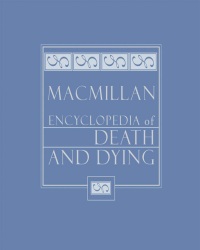
Robert Kastenbaum – Macmillan Encyclopedia of Death and Dying
Первоначальная цена составляла 3.740 ₽.1.870 ₽Текущая цена: 1.870 ₽.
Автор: Robert Kastenbaum
Название книги: Macmillan Encyclopedia of Death and Dying
Формат: PDF
Жанр: Философия
Страницы: 1094
Качество: Изначально компьютерное, E-book
The Macmillan Encyclopedia of Death and Dying is a contribution to the understanding
of life. Scientists and poets have long recognized that life and death are
so intimately entwined that knowledge of one requires knowledge of the other.
The Old Testament observes that “all flesh is as grass.” Religions have addressed
the question of how one should live with the awareness of inevitable death.
Often the answer has been based upon the vision of a life beyond death. Societies
have developed systems of belief and practice to help their people cope
with the prospect of death and the sorrow of grief. Children are often puzzled
by the curious fact that flowers fade and animals stop moving. This incipient
realization of mortality eventually becomes a significant part of the adult’s worldview
in which hope contests with fear, and faith with doubt.
The twenty-first century has inherited an anxiety closet from the past, a
closet packed with collective memories of unsettling encounters with death. This
history of darkness concealed threats from predators and enemies; child-bearing
women and their young children would suddenly pale and die; terrible plagues
would periodically ravage the population; the dead themselves were sources of
terror when resentful of the living; contact with corpses was perilous but had to
be managed with diligence, lest the departing spirit be offended; the spirit world
often intervened in everyday life; gods, demi-gods and aggrieved or truculent
ancestors had to be pacified by gifts, ceremonies, and conformity to their wishes;
animal and human sacrifices were deaths intended to protect the lives of the
community by preventing catastrophes or assuring good crops. Everyday life was
permeated by rituals intended to distract or bribe the spiritual forces who controlled
life and death. Fairly common were such customs as making sure not to
speak ill of the dead and protecting home and person with magic charms.
Particular diseases have also left their lingering marks. Tuberculosis, for
example, horrified several generations as young men and women experienced
a long period of suffering and emaciation before death. The scourge of the
industrial era did much to increase fears of dying slowly and in great distress.
Syphillis produced its share of unnerving images as gross disfiguration and a
descent into dementia afflicted many victims near the end of their lives. All of
these past encounters and more have bequeathed anxieties that still influence
attitudes toward death today. The past, however, offers more than an anxiety closet. There was also comfort,
wisdom, and the foundation for measures that greatly improved the chances
of enjoying a long, healthful life, and to palliate the final passage. The achievements
of public health innovations and basic biomedical research are fulfilling
dreams that motivated the inquisitive minds of early healers. The hospice care programs
that provide comfort and pain relief to terminally ill people build upon the
model demonstrated by devoted caregivers more than 2,000 years ago. The peer
support groups that console grieving people were prefigured by communal gatherings
around the survivors in many villages. Religious images and philosophical
thought have helped people to explore the meanings and mysteries of death.
The Macmillan Encyclopedia of Death and Dying draws extensively from the
past, but is most concerned with understanding the present and the future. The
very definition of death has come into question. The ethics of assisted death and
euthanasia have become the concern of judges and legislators as well as physicians
and clergy. Questions about ongoing changes in society are raised by the
facts that accidents, homicide, and suicide are the leading causes of death among
youth, and that the suicide rate rises so precipitously for aging men. Continuing
violence in many parts of the world suggests that genocide and other forms of
mass killing cannot only be of historical concern. Other death-related issues
have yet to receive the systematic attention they deserve. For example, widowhood
in third world nations is a prime example of suffering and oppression in
the wake of death, and, on a different front, advances in the relief of pain too
often are not used in end-of-life medical management.
Each of these issues are addressed in this two-volume set as part of a more
comprehensive exploration of the place of death in contemporary life. The coverage
of the topics is broad and multidisciplinary because death threads through
society in so many different ways. Attention is given to basic facts such as life
expectancy and the changing causes of death. Many of the entries describe the
experiences of terminally ill people and the types of care available while others
focus on the situation of those who grieve and mourn. How people have
attempted to understand the nature and meaning of death is examined from
anthropological, historical, psychological, religious, and sociological perspectives.
The appendix, which complements the substantive entries, can be found near the
end of the second volume. It provides information on numerous organizations that
are active in education, research, services, or advocacy on death-related topics.
The contributors are expert scholars and care providers from a variety of disciplines.
Many have made landmark contributions to research and practice, and
all have responded to the challenge of presenting accurate, up-to-date, and wellbalanced
expositions of their topics. As editor in chief, I am much indebted to
the distinguished contributors for giving their expertise and time so generously.
Contributing mightily to the success of this project were associate editors Jim
Crissman, Mike Kearl, and Brian Mishara, each also providing many illuminating
articles of their own. Macmillan has published reference books of the highest
quality on many topics; the high standards that have distinguished their publications
have assured the quality of this project as well. The editor appreciates the
opportunity to have worked with Macmillan’s Shawn Beall, Joe Clements, Elly
Dickason, Brian Kinsey, and Jill Lectka.
ROBERT KASTENBAUM
Описание
Macmillan Encyclopedia of Death and Dying — это фундаментальная двухтомная энциклопедия, подготовленная под редакцией известного американского психолога и геронтолога Роберта Кастенбаума. Издание объединяет научные знания из области танатологии, психологии, социологии, философии, религии, истории и биоэтики, раскрывая тему смерти во всех её проявлениях.
В статьях подробно рассматриваются медицинские, культурные, религиозные и правовые аспекты умирания, утраты и горя. Авторы анализируют, как разные общества и эпохи относились к смерти, как менялось отношение к эвтаназии, суициду, похоронным обрядам и паллиативной помощи. Особое внимание уделено психологическим процессам переживания потери и современным подходам к уходу за умирающими.
- психологам, танатологам и специалистам по паллиативной помощи
- философам, социологам и культурологам, изучающим отношение к смерти
- медицинским работникам и студентам, интересующимся биоэтикой
- всем, кто хочет глубже понять одну из важнейших сторон человеческого существования
Только зарегистрированные клиенты, купившие данный товар, могут публиковать отзывы.
Похожие




Другие книги раздела «Философия»
- E. Dowling – Encyclopedia of Religious and Spiritual Development
- Jacob E. Safra – Britannica Encyclopedia of World Religions
- John Anthony McGuckin – The Encyclopedia of Eastern Orthodox Christianity
- K. Patton – Religion of the Gods. Ritual, Paradox, and Reflexivity
- L. Jones – Encyclopedia of Religion (14 Volume set, Second edition)
- M. Mitchell – The Cambridge History of Christianity (9 Volume set)
- Michael O’Neal – World Religions. Reference library (6 Volume set)
- Nancy M. Tischler – All Things in the Bible. An Encyclopedia of the Biblical World
- Lise Nelson – A Companion To Feminist Geography
- P. Byrne – Companion Encyclopedia of Theology
- Plato – The Complete Works
- Platon – Oeuvres Completes (FRA)
- R. Pasnau – The Cambridge History of Medieval Philosophy
- R. Pippin – Hegel on Ethics and Politics. Hegels Practical Philosophy (2 Books)
- Roy Sorensen – A Brief History of the Paradox. Philosophy and the Labyrinths of the Mind
- Sahotra Sarkar – Encyclopedia of Philosophy of Science
Все книги раздела «Философия» →
Смежные разделы: Бизнес-Книги · Биография · Боевики и Триллеры · Детективы · Детские книги · Школа · Дом и Семья · Здоровье · Искусство · Историческая проза · Классика · Компьютеры
Рекомендуем также
- W. Zhang – Measurement Technology for Micro-Nanometer Devices (2016)
- Yu Yao – Robust Control (2016)
- T. Gasser – Basiswissen Urologie (6 Auflage, 2015, Немецкий язык)
- D. Ubelaker – The Global Practice of Forensic Science (2015)
- G. Christ – Handbook of Oncology Social Work (2015)
- J. Wu – Variational Methods in Molecular Modeling (2017)
- M. Rai – Nanotechnology for Bioenergy and Biofuel Production (2017)
- W. Hustrulid – Open Pit Mine Planning Design (2013)
Отзывы
Отзывов пока нет.