
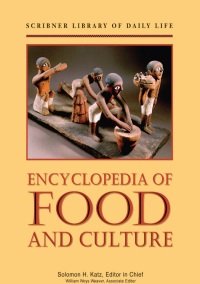
S. Katz – Encyclopedia of Food and Culture (3 Volumes set)
3.490 ₽
Автор: S. Katz
Название книги: Encyclopedia of Food and Culture (3 Volumes set)
Формат: PDF
Жанр: Культура и Искусство
Качество: Изначально компьютерное, E-book
As the title implies, the encyclopedia discusses food in its relation to society. The 600 articles, arranged alphabetically, cover everything from the significance of Betty Crocker to bioactive food components. Chronological scope encompasses the Paleolithic origins of hunting and current trends such as comfort food and fusion cuisine. Length of the signed articles ranges from less than a page for most biographies (Birdseye, Clarence; Escoffier, Georges-Auguste) to more than 10 pages for Dairy products and Sensation and the senses. Some topics, among them Beer, France, and Fruit, are examined in series of subentries. See also references and current bibliographies are at the end of each entry, with some bibliographies containing Web sites. Interspersed throughout the text are boxes and sidebars on subjects such as genetically modified organisms, a controversial topic that is treated impartially. A box adjacent to the entry on Julia Child provides three quotations by Child. The best one is this advice: “No matter what happens in the kitchen, never apologize.” The volumes also include tables with statistical information; for example, production, imports, and exports of butter by country.
In addition to the set's 550 black-and-white photos and 50 maps, each volume has a section of color plates, an eclectic mix illustrating relationships between culture and food. A plate in volume 1 offers a detail of a Spanish still-life painting containing biscuits, a page from a Belgium biscuit catalog, and a photograph of a bread vendor in Central Asia. Interesting textual links between culture and food include a discussion of the problem of litter in the U.S. because of fast-food restaurants and the elevation of the chef, making “going to restaurants a combination of high theater and spectator sport.”
The contributors are listed in the appendix with affiliation and the articles they wrote. They include a number of U.S. academics but also Alan Davidson, the editor of The Oxford Companion to Food; the famous Paris bread baker, Lionel Poilane, who died last fall; Chef Fritz Blank of Deux Cheminees in Philadelphia; and cookbook author Elisabeth Lambert Ortiz. The appendix also has “Dietary Reference Intakes” and a “Systematic Outline of Contents,” which is a good finding tool. The index is comprehensive, indexing minor names such as Marjorie Hendrick and the Watergate Inn, which are mentioned in the entry United States: Middle Atlantic.
Criticisms are few. A general bibliography would have been useful because sometimes books mentioned in articles are not cited in the accompanying bibliographies. The ice cream entry says nothing about the great variety of flavors that are now in existence. The cookbook article fails to mention the effect of Erma Rombauer's Joy of Cooking on women in the twentieth century.
The Encyclopedia of Food and Culture is all about food: a single authoritative
source about the most essential element of daily life. Here you will find articles
by food historians, anthropologists, chefs and bakers, nutritionists and dieticians,
farmers, agronomists and horticulturists, food stylists, and specialists
in the culinary arts. In developing the Encyclopedia, the editors took special
care to make the content interesting and the organization useful for those
who want to learn about a particular topic, to make the text enjoyable for
those who simply want to explore the wide and wonderful world of food, and
to provide sufficient authority and depth for researchers. If this Encyclopedia
does not tell you everything you need to know about food, it will show you
where to find it.
The articles are arranged in alphabetical order, but the overall work was
conceived thematically to ensure treatment of all essential aspects of food (see
the Systematic Outline at the back of Volume 3). For example, the Encyclopedia
covers staple foods, such as fruit, fish, meat, and vegetables; cooked and
processed foods; food production, storage, distribution, preparation, and processing;
and nutrition and constituents of food, such as fats, minerals, starch,
and sugar. You will also find articles on festivals and feasts and on major countries
and regions of the world, on world religions and their food customs, and
on people who have been influential in food history. If a topic does not appear
in the table of contents, look in the index; there will likely be several
mentions of the subject in different articles. In the Encyclopedia you will find
the topics you would normally expect in a book about food—such as bread
and cheese, cooking, and vitamins—but you will also find some surprises, as
in the articles on “Cannibalism,” “Pet Pigs of New Guinea,” “Seabirds and
Their Eggs,” “Disgust,” and “Poisoning,” as well as “Spam” and “How to
Read an Old (Handwritten) Recipe.” The Encyclopedia covers human history
from Stone Age nutrition to the future of food, and it reaches all around the
world—geographically and culturally—from Australian Aborigines and the
Inuit peoples to Pacific Ocean societies and the Inca empire; from the Japanese
tea ceremony to food as a weapon of war. Each article concludes with a
bibliography and cross-references pointing readers to topics of related interest.
The articles are generously illustrated with many rarely seen photographs,
line drawings, and old advertisements, and are supplemented by maps, tables,
and informative sidebars. Each volume contains a beautiful eight-page color
insert of images selected by Associate Editor William Woys Weaver.
Entries explore what constitutes food, how it is procured, where it originates,
and what is in the foods we eat. You will find detailed accounts of the
production of food, including fishing, hunting and gathering, and types of
agriculture as they relate to ecological and environmental considerations, and
you will be introduced to some of the unusual foods that are consumed around
the world. You can also read about what is done to food once it is procured,
including preparation and processing, distribution, storage (such as ancient
and modern preservatives), food preparatory rituals (religious and secular),
and the science and technology underlying food processing (including the
chemistry and physics of food preparation and processing).
In a larger context, the Encyclopedia enables readers to trace the ways in
which food affects our lives both nutritionally and socially, across the boundaries
of time and place, throughout many cultures and their traditions. The
articles cover the nutrition and biochemistry of food, food science, various
conditions and health disorders associated with food, dietetics, constituents
of food, the pharmacological effects of foods, and the physiology of eating,
digestion, and nutrition.
The editors are aware, however, that people eat food and not nutrition.
For most of us, food customs and preferences are influenced by social determinants
that are deeply rooted in cultural values and historic traditions. The
next time you eat, ask yourself, Why this food and not some other? What
does this food reveal about me socially, culturally, and physiologically? Where
did its ingredients come from? Why were these ingredients and not others
included in the food? Does it contain any additives I should know about? As
even a casual reader will note, the food we eat does not begin and end on our
plates: how and when we eat, what we eat, and where and with whom we
eat—all these choices display a range of behaviors about food that define and
symbolize who we are. Hence, the Encyclopedia documents the act of eating
from the perspectives of cultural history, nutrition, ethnicity, religion, psychology,
anthropology, geography, economics, and aesthetics. Further, foodrelated
behaviors are considered for their symbolic and cultural meanings, as
in the entries about religion, holidays, table manners, social class, gender, sexuality,
taboos, the arts, magic, and mythology.
In order to cover important cultural dimensions of food, the editors looked
for experts who could discuss ethnic and national traditions across multiple
disciplines and regions of the world and, where possible, provide an integrative
approach to the dietary traditions of a people, nation, or region. Entries
on countries with great food traditions that have had worldwide influence,
such as France, Italy, and China, give attention to the foods and typical diets
of the various regions of these countries, both historically and culturally, and
consider important social, religious, political, economic, migration, and environmental
factors.
The editors sought the contributions of authorities in a variety of fields
in order to consider food from many perspectives. For instance, a chef might
look at the artful arrangement of food on the plate or how it sears in a hot
pan or grill. But a nutritionist is more interested in how the nutrients in a
food may be affected by what the chef did to the food during preparation,
what kinds of fats were added to the searing pan, or what nutrients may have
been lost or altered during cooking. A food scientist may focus on the degree
to which the food was safer to eat after it was heated to such a high temperature
in the pan.
Authors were urged to try, within the limits of the allotted space, to write
as comprehensively about their topic as possible. For example, the entry for
chocolate covers the botany, history, and archaeology of cacao (chocolate
bean), the principal ingredient of chocolate, and gives detailed consideration
to how chocolate is produced and procured, stored, transported, and processed
into various forms to be used in foods like candy and confections. The author
also covers chocolate’s cultural aspects, from its Mayan origin to its diffusion
to the royal courts of Europe, and explains the technical discoveries
that led to its commercialization and widespread availability.
The contributors give attention to the geographic origins of many foods
and include their diffusion around the world and through time. Food history
entries span the human evolutionary time scale, through prehistoric, ancient,
and more recent periods for well-known societies and civilizations. Contemporary
topics include food politics, genetic engineering, water as a resource,
food supply and food shortages, advertising and marketing, the restaurant industry
(including fast foods), and the commodification of various food traditions.
We believe that the Encyclopedia addresses a serious need for an integrated
information source that encourages a greater appreciation of food, its history,
and its ethnic diversity, while also explaining its nutritional significance. It is
by combining a wide range of perspectives—a collaborative effort of hundreds
of specialists—that this source can provide answers to many questions about
health, food policy, hunger, food studies, and the food industry, while at the
same time enhancing appreciation for the wonderful variety and history of
the foods we eat.
We hope that by providing an integrative approach to food, nutrition, and
culture over time and throughout the many regions of the world, this Encyclopedia
will stimulate new insights about human evolution, adaptation, and
creativity, and a richer appreciation of the many meanings of food and culture
in our everyday lives.
*
I want to acknowledge the enormous support and patience of my wife, Pauline,
the steadfast help of Jim Coleman, and the great inspiration provided by Jacob,
Rachael, Micah, Noah, and Megan. I also want to acknowledge the invaluable
assistance of William Woys Weaver and the editorial board; the steady
support of Scribner Publisher Frank Menchaca and John Fitzpatrick; and the
outstanding efforts of Mark LaFlaur and the Scribner editorial staff, including
Kelly Baiseley and Georgia Maas, who got the job done. I am grateful to
Stephen Wagley and Karen Day, formerly of Scribners, for their help and advice
in initiating the Encyclopedia
Описание
Encyclopedia of Food and Culture (3 Volumes set) от S. Katz — это фундаментальная многотомная энциклопедия, которая рассматривает еду не только как источник питания, но и как важнейшую часть мировой культуры, истории и социальных традиций.
Издание охватывает широкий спектр тем: от древних кулинарных практик и региональных кухонь до современных пищевых технологий, этикета, религиозных запретов и влияния глобализации на гастрономию. Авторы анализируют, как еда формирует идентичность народов, влияет на экономику и отражает социальные изменения на протяжении веков.
- Антропологам, историкам и культурологам, изучающим повседневную жизнь и традиции
- Профессиональным шеф-поварам, рестораторам и специалистам пищевой отрасли
- Студентам и преподавателям, работающим в сфере food studies и культурологии
- Всем, кто интересуется гастрономией как частью мировой культуры
Только зарегистрированные клиенты, купившие данный товар, могут публиковать отзывы.
Похожие


Другие книги раздела «Культура и Искусство»
- Jan Harold Brunvand – American Folklore. An Encyclopedia
- K. Nash – The Cultural Politics of Human Rights
- L. Benton – Law and Colonial Cultures
- Mariko Namba Walter – Shamanism. An Encyclopedia
- P. Bogucki – Encyclopedia of Society and Culture in the Ancient World
- Rod Edmond – Leprosy and Empire. A Medical and Cultural History
- S. Angle – Human Rights in Chinese Thought
- T. Aladjem – The Culture of Vengeance and the Fate of American Justice
- Thomas A. Green – Encyclopedia of Martial Arts Of The World (2 Volumes)
- Timothy Gall – Worldmark Encyclopedia of Cultures and Daily Life (5 Volume Set, 2009)
- Tom Pendergast – St. James Encyclopedia of Popular Culture (5 Volume set)
- William Kibler – Medieval France. An Encyclopedia
- А. Парфрей – Культура времён Апокалипсиса
- А. Прасол – От Эдо до Токио и обратно. Культура, быт и нравы Японии
- А. Чегодаев, Ю. Колпинский – Всеобщая история искусств (6 Томов, 8 книг, 1956)
- Б. Виппер – Введение в историческое изучение искусства
Все книги раздела «Культура и Искусство» →
Смежные разделы: Архитектура · Живопись и Графический дизайн · Музыка · Мода и Дизайн · Театр и Кино · Фотография · Декоративно-прикладное искусство
Рекомендуем также
- W. Zhang – Measurement Technology for Micro-Nanometer Devices (2016)
- Yu Yao – Robust Control (2016)
- T. Gasser – Basiswissen Urologie (6 Auflage, 2015, Немецкий язык)
- D. Ubelaker – The Global Practice of Forensic Science (2015)
- G. Christ – Handbook of Oncology Social Work (2015)
- J. Wu – Variational Methods in Molecular Modeling (2017)
- M. Rai – Nanotechnology for Bioenergy and Biofuel Production (2017)
- W. Hustrulid – Open Pit Mine Planning Design (2013)

Отзывы
Отзывов пока нет.