
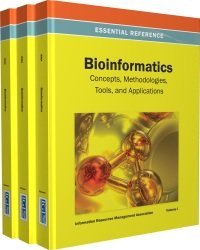
M. Khosrow-Pour – Bioinformatics. Concepts, Methodologies, Tools and Applications (2013)
1.770 ₽
Автор: M. Khosrow-Pour
Название книги: Bioinformatics. Concepts, Methodologies, Tools and Applications
Формат: PDF
Жанр: Биоинформатика
Страницы: 1827
Качество: Изначально компьютерное, E-book
As a result of experimental techniques, the combination of biology and computer science was initiated to classify and process an expanding number of biological observations. Bioinformatics: Concepts, Methodologies, Tools, and Applications highlights the area of bioinformatics and its impact over the medical community with its innovations that change how we recognize and care for illnesses. This publication provides significant research and the most recent observations that are useful for researchers, practitioners, and academicians involved in the many aspects of bioinformatics
The constantly changing landscape of Bioinformatics makes it challenging for experts and practitioners
to stay informed of the field’s most up-to-date research. That is why Information Science Reference is
pleased to offer this three-volume reference collection that will empower students, researchers, and
academicians with a strong understanding of critical issues within Bioinformatics by providing both
broad and detailed perspectives on cutting-edge theories and developments. This reference is designed
to act as a single reference source on conceptual, methodological, technical, and managerial issues, as
well as provide insight into emerging trends and future opportunities within the discipline.
Bioinformatics: Concepts, Methodologies, Tools and Applications is organized into six distinct
sections that provide comprehensive coverage of important topics. The sections are: (1) Fundamental
Concepts and Theories, (2) Tools and Technologies, (3) Frameworks and Methodologies, (4) Cases and
Applications, (5) Issues and Challenges, and (6) Emerging Trends. The following paragraphs provide a
summary of what to expect from this invaluable reference tool.
Section 1, Fundamental Concepts and Theories, serves as a foundation for this extensive reference
tool by addressing crucial theories essential to the understanding of Bioinformatics. Introducing the
book is “Overview of Biomedical Engineering,” a great foundation laying the groundwork for the basic
concepts and theories that will be discussed throughout the rest of the book. Another chapter of note in
Section 1 is titled “Knowledge-Driven, Data-Assisted Integrative Pathway Analytics,” which discusses the
novel techniques of pathway analytics to assist bioinformatics policies and tactics. Section 1 concludes,
and leads into the following portion of the book with a nice segue chapter, “From Bench to Bedside.”
Where Section 1 leaves off with fundamental concepts, Section 2 discusses tools and technologies in
place for Bioinformatics.
Section 2, Tools and Technologies, presents extensive coverage of the various tools and technologies
used in the implementation of Bioinformatics. Section 2 begins where Section 1 left off, though this
section describes more concrete tools at place in the modeling, planning, and applications of Bioinformatics.
The first chapter, “Analysis and Prediction of DNA-Recognition by Zinc Finger Proteins,” lays
a framework for the types of works that can be found in this section, a perfect resource for practitioners
looking for the types of technologies currently in practice in Bioinformatics. Section 2 is full of
excellent chapters like this one, including such titles as “Learning Binding Affinity from Augmented
High Throughput Screening Data,” “Protein Homology Analysis for Function Prediction with Parallel
Sub-Graph Isomorphism,” and “Noninvasive Detection of Misfolded Proteins in the Brain Using [11C]
BF-227 PET,” to name a few. Where Section 2 described specific tools and technologies at the disposal
of practitioners, Section 3 describes frameworks and methodologies within the field. Section 3, Frameworks and Methodologies, presents in-depth coverage of the conceptual design and
architecture of Bioinformatics, focusing on aspects including modularity, systems biology, population
genetics, genetic algorithms, genetic architecture, bifurcation anaylsis, and many more topics. Opening
the section is “Modules in Biological Networks.” This section is vital for developers and practitioners
who want to measure and track the progress of Bioinformatics through the multiple lens of parametric
design. Through case studies, this section lays excellent groundwork for later sections that will get into
present and future applications for Bioinformatics, including, of note: “Connecting Microbial Population
Genetics with Microbial Pathogenesis Engineering Microfluidic Cell Arrays for High-Throughput
Interrogation of Host-Pathogen Interaction” and “Using a Genetic Algorithm and Markov Clustering
on Protein–Protein Interaction Graphs.” The section concludes with another excellent work on sequence
design, titled “Computational Sequence Design Techniques for DNA Microarray Technologies.”
Section 4, Cases and Applications, describes how the broad range of Bioinformatics efforts has been
utilized and offers insight on and important lessons for their applications and impact. Section 4 includes
the widest range of topics because it describes case studies, research, architectures, theory, analysis, and
guides for implementation. Topics range from chemoinformatics, graph applications, visualization, data
mining, computational construction, and signaling to regenerative medicine, gene-informatic identification,
network analysis, and many more. The first chapter in the section is titled “Can Activated Platelet Rich
Plasma Combined with Adipose-Derived Stem Cells Be Used to Treat Skin Wrinkles?” The breadth of
topics covered in the chapter is also reflected in the diversity of its authors, from countries all over the
globe. Section 4 concludes with an excellent view of a case study in a new program, “BMP Signaling
in Regenerative Medicine.”
Section 5, Issues and Challenges, presents coverage of academic and research perspectives on Bioinformatics
tools and applications. The section begins with “Certification and Security Issues in Biomedical
Grid Portals.” Other issues covered in detail in Section 5 include security, genetic testing, property,
ethics, privacy, pharmacovigilance, and much more. The section concludes with “Promoter Structures
Conserved between Homo Sapiens, Mus Musculus and Drosophila Melanogaster,” a great transitional
chapter between Sections 5 and 6 because it examines an important trend going into the future of the
field. The last chapter manages to show a theoretical look into future and potential technologies, a topic
covered in more detail in Section 6.
Section 6, Emerging Trends, highlights areas for future research within the field of Bioinformatics,
opening with “A New Approach for Sequence Analysis.” Section 6 contains chapters that look at what
might happen in the coming years that can extend the already staggering amount of applications for
Bioinformatics. Other chapters of note include “Intelligent Classifiers Fusion for Enhancing Recognition
of Genes and Protein Pattern of Hereditary Diseases” and “Semi-Supervised Clustering for the
Identification of Different Cancer Types Using the Gene Expression Profiles” The final chapter of the
book looks at an emerging field within Bioinformatics, in the excellent contribution, “Emerging Web
Tools and their Applications in Bioinformatics.”
Although the primary organization of the contents in this multi-volume work is based on its six sections,
offering a progression of coverage of the important concepts, methodologies, technologies, applications,
social issues, and emerging trends, the reader can also identify specific contents by utilizing
the extensive indexing system listed at the end of each volume. Furthermore to ensure that the scholar,
researcher, and educator have access to the entire contents of this multi volume set as well as additional
coverage that could not be included in the print version of this publication, the publisher will provide
unlimited multi-user electronic access to the online aggregated database of this collection for the life of the edition, free of charge when a library purchases a print copy. This aggregated database provides
far more contents than what can be included in the print version, in addition to continual updates. This
unlimited access, coupled with the continuous updates to the database ensures that the most current
research is accessible to knowledge seekers.
As a comprehensive collection of research on the latest findings related to using technology to providing
various services, Bioinformatics: Concepts, Methodologies, Tools and Applications, provides researchers,
administrators, and all audiences with a complete understanding of the development of applications and
concepts in Bioinformatics. Given the vast number of issues concerning usage, failure, success, policies,
strategies, and applications of Bioinformatics in countries around the world, Bioinformatics: Concepts,
Methodologies, Tools and Applications addresses the demand for a resource that encompasses the most
pertinent research in technologies being employed to globally bolster the knowledge and applications
of Bioinformatics.
Описание
Bioinformatics. Concepts, Methodologies, Tools and Applications — фундаментальное справочное издание, в котором собраны ключевые концепции, актуальные методики, программные инструменты и практические применения биоинформатики. Книга вышла в 2013 году под редакцией M. Khosrow-Pour и отражает состояние дисциплины на тот период.
Издание охватывает широкий спектр тем: от анализа геномных и протеомных данных, алгоритмов последовательностей и машинного обучения в биологии до работы с базами данных, визуализации биологических сетей и применения биоинформатики в медицине, фармакологии и сельском хозяйстве. Материал структурирован как энциклопедический сборник статей ведущих специалистов.
- биоинформатикам и специалистам по анализу данных в биологии
- исследователям, работающим с NGS, геномикой и протеомикой
- студентам и преподавателям биологических и компьютерных специальностей
- разработчикам инструментов и баз данных для жизни
Только зарегистрированные клиенты, купившие данный товар, могут публиковать отзывы.
Похожие




Другие книги раздела «Биоинформатика»
- A. Liwo – Computational Methods to Study the Structure and Dynamics of Biomolecules and Biomolecular Processes (2014)
- A. Tao – Allergy Bioinformatics (2015)
- B. Abu-Jamous – Integrative Cluster Analysis in Bioinformatics (2015)
- B. Hannon – Modeling Dynamic Biological Systems (2nd edition, 2014)
- B. Querleux – Computational Biophysics of the Skin (2014)
- C. Le – Introductory Biostatistics (Second edition)
- C. Neuhauser – Calculus for Biology and Medicine (3rd edition, 2010)
- D. Gusfield – ReCombinatorics. The Algorithmics of Ancestral Recombination Graphs and Explicit Phylogenetic Networks (2014)
- D. Purich – Enzyme Kinetics. Catalysis and Control (2010)
- E. Picardi – RNA Bioinformatics (2015)
- G. Mackenzie – Statistical Modelling in Biostatistics and Bioinformatics (2014)
- G. Singh – Fundamentals of Bioinformatics and Computational Biology (2015)
- G. Zhang – Computational Bioengineering (2015)
- I. Abdurakhmonov – Bioinformatics. Updated Features and Applications (2016)
- I. Djordjevic – Quantum Biological Information Theory (2016)
- I. Kalet – Principles of Biomedical Informatics (Second edition, 2013)
Рекомендуем также
- S. Elnashaie – Nanotechnology for Chemical Engineers (2015)
- M. Kappy – Pediatric Practice Endocrinology
- A. Hoyos – High Definition Body Sculpting
- G. Steinhoff – Regenerative Medicine. From Protocol to Patient (3rd edition, 5 Volume set, 2016)
- N. Turner – Oxford Textbook of Clinical Nephrology (2016)
- P. Parham – The Immune System (4th edition, 2014)
- C. Bain – Gynaecology Illustrated
- P. Brady – Handbook of Consult and Inpatient Gynecology (2016)

Отзывы
Отзывов пока нет.