
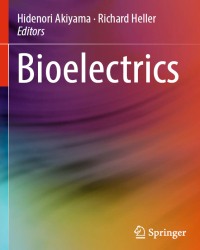
H. Akiyama – Bioelectrics (2017)
1.385 ₽
Автор: H. Akiyama
Название книги: Bioelectrics (2017)
Формат: PDF
Жанр: Биологические науки
Страницы: 491
Качество: Изначально компьютерное, E-book
This book focuses on bioelectrics, a new multidisciplinary field encompassing engineering and biology with applications to the medical, environmental, food, energy, and biotechnological fields. At present, 15 universities and institutes in Japan, the USA and the EU comprise the International Consortium of Bioelectrics, intended to advance this novel and important research field. This book will serve as an introductory resource for young scientists and also as a textbook for use by both undergraduate and graduate students – the world’s first such work solely devoted to bioelectrics.
Bioelectrics is a new field encompassing both the science and technology of
applying electrical stimuli to biological systems. Typical stimuli utilize what is
called pulsed power, a pulse with high voltage and/or current with a pulse width
from subnanoseconds to milliseconds. Pulsed power may be altered to such forms
as pulsed electric fields, plasmas, shock waves, pulsed electromagnetic waves, and
pulse light. Application targets include specific cells such as cancer cells and
bacteria, more complex arrangements such as tissues and organs, and complex
environments and ecosystems including plant and animal species. Elucidation of
effects of pulsed power on biology has led to numerous applications in such fields
as medical treatment and welfare, environment, food, agriculture and fisheries, and
biotechnology.
Research integrating pulsed power science and technology with the
biological and medical fields began in 2000. The Research Center for Bioelectrics,
Old Dominion University, was established in 2002 by Dr. Karl Schoenbach;
the Bioelectrics Research Center, Kumamoto University, was established in
2007 by Dr. Hidenori Akiyama. The International Bioelectrics Consortium
was established in 2005 by three institutions, Old Dominion University (USA),
Kumamoto University (Japan), and Karlsruhe Institute of Technology (Germany).
By 2016, the consortium had grown to encompass participation by15 universities
and institutions.
Military research has driven an increase in the size of pulsed power generators.
Sandia National Laboratories’ Z Machine, the largest pulsed power generator
in the world, has stored energy capabilities of 20 MJ, output current of 26 MA,
X-ray peak power of 350 TW, and diameter of about 33 m. Concurrent development
of low- to no-maintenance pulsed power supply systems continue to expand
industrial applications. Such systems require only moderate output power
and a small footprint but do require high repetition rate and high-functioning pulsed
power.
The rapid development of bioelectric science and technology leads to hope
that, in the near future, bioelectrics will substantially contribute to such global
concerns as cancer treatment, environmental maintenance, and food and energy
supplies.
Chapter 1 contains an introduction to the application of bioelectrics. Electroporation,
the electropermeabilization of cell membranes, is a fundamental and the
most thoroughly studied bioelectric effect due to pulsed electric fields. This chapter
provides background into the research history of this effect and introduces medical
and biotechnological applications based on both reversible and irreversible
electropermeabilization with millisecond to microsecond pulses. The Chap. 1 also
demonstrates application of nanosecond- to picosecond-range pulses with pulsed
electric fields ranging from a kV/cm to more than 100 kV/cm; these affect not only
the cell plasma membrane but also subcellular structures.
Chapter 2 includes an introduction into pulsed power technology. Pulsed power
is produced by transferring energy generally stored in capacitors and inductors to a
load very quickly through switching devices. The chapter focuses on the basics of
two key technologies, electric circuits and switches, tools used for pulsed power
measurement, and delivery of electric pulses to biological tissues using antennas.
Chapter 3 includes discussions about unique electromagnetic agents ranging
from cold plasma to electromagnetic radiation. Nonequilibrium plasmas in gases
and liquids are known to produce reactive agents that contribute to biological
effects including membrane disruption and apoptosis. These reactive agents include
ultraviolet radiation, heat, reactive oxygen-based and nitrogen-based species,
charged particles, and electric fields. The interactions between pulsed electromagnetic
fields and biological systems are included.
Chapter 4 outlines biological responses to pulsed electric fields (PEFs), which
exert profound effects on cells by interacting with the cell membrane and other
cellular components. The initial discussion within this chapter is a description from
multifaceted standpoints of interactions of PEFs with biological membranes, membrane
pore formation, and their physiological significance; this is followed by a
description of subcellular events induced by PEFs including their effects on the
cytoskeleton and signal transduction. The chapter also provides a detailed description
on irreversible electroporation and cell death by PEFs.
Chapter 5 covers the use in medical applications. Therapeutic applications of
bioelectrics have been developed for a large number of medical conditions including
cancer, wound healing, ischemia, cardiovascular disease, and diabetes. Utilization
of bioelectrics-based medical techniques has recently surged as the potential of
such techniques lies in a more holistic approach to fundamental biophysical mechanisms
driving underlying success.
Chapter 6 includes a discussion of environmental applications such as food and
biomass processing. PEF-based techniques have been demonstrated to be energy
saving and persistent in efficacy for bacterial inactivation in wastewater and liquid
food and for the eradication of cyanobacteria in surface waters, obviating harmful
chemical usage. PEF treatment offers specific advantages for component extraction—
low heat influx, low energy demand, and selectivity of compound release—
which make PEF processing suitable for winemaking, for extraction of sugar from
sugar beets and valuable components from fruits and vegetables, and in PEF
downstream processing of microalgae
Описание
Bioelectrics — книга, в которой ведущие мировые специалисты объясняют, как электрические явления влияют на биологические системы на всех уровнях: от отдельных клеток и тканей до целых организмов.
Издание объединяет фундаментальные принципы биоэлектричества, механизмы генерации и распространения электрических сигналов в живых тканях, влияние внешних электрических полей на физиологические процессы, а также современные технологии электромедицины и биоэлектронных устройств. Особое внимание уделено прикладным аспектам: электромагнитной стимуляции, электрокоагуляции, генной электропорации и новым методам доставки лекарств.
- Исследователям в области биофизики, биоинженерии и нейронауки
- Врачам, работающим с методами электростимуляции и электромедицины
- Студентам и преподавателям биологических и медицинских специальностей
- Специалистам, разрабатывающим медицинскую технику и биоэлектронные интерфейсы
Только зарегистрированные клиенты, купившие данный товар, могут публиковать отзывы.
Похожие


Другие книги раздела «Биологические науки»
- D. Murhammer – Baculovirus and Insect Cell Expression Protocols (2016)
- D. Thangadurai – Genomics and Proteomics (2015)
- F. Christiansen – Immunogenetics
- F. Martin – Microbial Environmental Genomics MEG (2016)
- F. Storici – Gene Correction (2014)
- G. Evtugyn – Biosensors. Essentials (2014)
- G. Saha – Physics and Radiobiology of Nuclear Medicine
- H. Remaut – Bacterial Membranes (2014)
- H. Seligmann – DNA Replication. Current Advances (2016)
- H. Yawo – Optogenetics (2015)
- I. Bertini – NMR of Biomolecules (2012)
- J. Cao – Breast Cancer (2016)
- J. Gorodkin – RNA Sequence, Structure and Function (2014)
- J. Kuo – Electron Microscopy (2014)
- J. Lackie – The Dictionary of Cell and Molecular Biology (2013)
- J. Morel – Molecular and Physiological Mechanisms of Muscle Contraction
Все книги раздела «Биологические науки» →
Смежные разделы: Медицина на испанском языке · Медицина на немецком языке · Медицина на французском языке · Анестезиология и Реаниматология · Акушерство и Гинекология · Ветеринария · Гастроэнтерология и Гепатология · Дерматология и косметология · Диетология и нутрициология · Иммунология и Аллергология · Кардиология · Лапароскопия и Эндоскопия
Рекомендуем также
- Brenda Schick – Advances in the Sign Language Development of Deaf Children
- L. Campbell – Language Classification
- M. Traxler – Handbook of Psycholinguistics (Second edition)
- A. El-Sayed – Fundamentals of Aircraft and Rocket Propulsion (2016)
- A. Polyanin – A Concise Handbook of Mathematics Physics and Engineering Sciences (2010)
- J. Arias – Nanotechnology and Drug Delivery (2 Volume set, 2016)
- M. Hurley – SFPE Handbook of Fire Protection Engineering (2016)
- B. Bhushan – Scanning Probe Microscopy in Nanoscience and Nanotechnology

Отзывы
Отзывов пока нет.