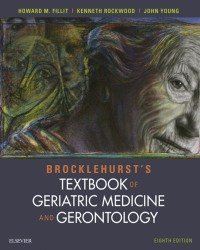
H. Fillit – Brocklehursts Textbook of Geriatric Medicine and Gerontology (8th edition, 2017)
2.975 ₽
Автор: H. Fillit
Название книги: Brocklehursts Textbook of Geriatric Medicine and Gerontology (2017)
Формат: PDF
Жанр: Медицина
Страницы: 1490
Качество: Изначально компьютерное, E-book
The leading reference in the field of geriatric care, Brocklehurst’s Textbook of Geriatric Medicine and Gerontology, 8th Edition, by Drs. Howard M. Fillit, Kenneth Rockwood, and John B. Young, provides a contemporary, global perspective on topics of importance to today’s gerontologists, internal medicine physicians, and family doctors. An increased focus on frailty, along with coverage of key issues in gerontology, disease-specific geriatrics, and complex syndromes specific to the elderly, makes this 8th Edition the reference you’ll turn to in order to meet the unique challenges posed by this growing patient population.
Consistent discussions of clinical manifestations, diagnosis, prevention, treatment, and more make reference quick and easy.
More than 250 figures, including algorithms, photographs, and tables, complement the text and help you find what you need on a given condition.
Clinical relevance of the latest scientific findings helps you easily apply the material to everyday practice.
A new chapter on frailty, plus an emphasis on frailty throughout the book, addresses the complex medical and social issues that affect care, and the specific knowledge and skills essential for meeting your patients’ complex needs.
New content brings you up to date with information on gerontechnology, emergency and pre-hospital care, HIV and aging, intensive treatment of older adults, telemedicine, the built environment, and transcultural geriatrics.
New editor Professor John Young brings a fresh perspective and unique expertise to this edition.
Introduction
The eighth edition of our text is the first since the death of
John Brocklehurst, whose name it rightly bears, as its originator
and longtime editor. In his Guardian obituary (http://www.the
guardian.com/science/2013/jul/17/john-brocklehurst), Ray Tallis
(himself a former editor of Brocklehurst, in its third to sixth editions)
honored John as “the leading geriatrician of his generation,”
and a man who “brought scientific gerontology to bear on
our understanding of the diseases of old age.” With other early
leaders, he organized training programs that helped define the
specialty and guide geriatric medicine in its critical adolescent
years. Those physicians laid the foundation that allowed geriatric
medicine to consist of approaches and procedures that were well
enough defined to be tested. This proved fortunate, because
medicine was entering the evidence age, which soon demonstrated
the merit of the approach. They had a view of geriatric
medicine as more than “internal medicine with social work
consult.” Even so, understanding just the claim of geriatric medicine
continues to evolve. In the seventh edition, and continued
here in the eighth, we press ahead with the view of geriatric
medicine as the care of frail older adults.1 Anyone who knows the
frailty literature will recognize that this is not entirely a settled
claim. Still, several points are inarguable.
First, frailty refers to a state of increased risk compared with
others of the same age. This same age comparison is necessary.
The risk of adverse health outcomes increases with age, so
without this, everyone past their fifth decade, when the increase
in risk becomes noticeable, would be seen as frail.
Second, frailty is related to age. This is one point that all frailty
measures have in common.2 Frailty becomes more common with
age; the absolute variability in risk increases, even as relative variability
declines after menopause.3 Both trends indicate systems
that are moving closer to failure. The first (increase in absolute
variability) shows that more people are at an increased risk; the
second, a decline in relative variability, captured by a reduction
in the coefficient of variation, is compatible with a decline in the
response repertoire. Older adults have less to fight back with. In
other words, their repair processes are less efficient, which is
evidenced, among other things, in prolonged recovery times.4
Third, although the use of dichotomous cut points can obscure
the extent of agreement, it is clear that the phenotype definition4
and the deficit accumulation definition5 bear much in common,
as do most current operational definitions, because these typically
depend on either or both approaches.2,6-12 Each identifies people
who are at increased risk. For example, when people have none
of the five phenotype characteristics, they have fewer deficits than
when one is present.7 Likewise, people with all five phenotypic
features present (e.g., weight loss, reduced higher order activities
such as gardening and heavy housework, feeling exhausted,
reduced grip strength, slower walking speed) have the highest number of deficits overall.7 As ever, theses can be nuanced. Given
that risk cannot exceed 1, and given that at some age, it becomes
indistinguishable from 1, there must be an age at which everyone
is frail. These details, like so much else, require elaboration. In
consequence, there is no merit in abandoning the value of understanding
frailty, even if there is disagreement about its precise
operational definition.
The reason that frailty is so central to geriatric medicine is
compelling. The challenge of aging to medical care lies in the
complexity of frailty. As people age, it is not just that any given
illness becomes more common—all illnesses become more
common. Age-related change, whether it crosses a disease threshold
or not, follows, on average, a trajectory of decline. Managing
single illnesses is tricky enough, but the complexity imposed by
frailty—managing illness in the presence of multiple interacting
medical and social problems that each become more common
with age—requires a specialized body of knowledge and skills.
This is what constitutes geriatric medicine.
With this focus on frailty in mind, we have continued to revise
and evolve the textbook. The current eighth edition includes new
entries on gerontechnology, homelessness, emergency and prehospital
care, HIV and aging, intensive treatment of older adult
patients, telemedicine, and the built environment. We have also
added a chapter on frailty, written by two authors with much
experience in regard to the various ways to define frailty. Obtaining
a nonpartisan view is important because all chapter authors
have been encouraged to revise their chapters, not just in relation
to developments in their area, but also to ensure a discussion on
how it is affected by frailty. For our part, we have aimed to advocate
for both types of changes, which often have resulted in
mutually beneficial exchanges. This reflects how the field is
evolving. It also is a pragmatic challenge for textbooks in the
Internet era. The goal is less to be a compendium of all the latest
information than to be an account of what is usefully known. We
see the role of this text as providing context and some sense of
the evolution of an area. This approach can provide value in ways
that merely recitation of what is up to date at the moment might
not always achieve. This has long been a goal of Brocklehurst,
and one that we are keen to continue.
In the eighth edition, we recognize the stellar contributions
of Professor Kenneth Woodhouse, who joined us in the seventh
edition, as we began the more explicit shift in emphasis toward
frailty. Now we are delighted to welcome Professor John Young.
He has conducted much of the useful UK research on clinical
geriatric medicine for the last decade, securing our discipline a
solid evidence base, and pointing out where we need to build
further. This direction has benefitted enormously from his long
history of clinical practice in geriatric medicine. Those skill sets
are now brought to bear in the National Health Service for England and Wales, for which he is now the Clinical Service
Director for Older Adults (or the “frailty czar,” as this post otherwise
is known). We feel privileged to have him join us.
As editors and chapter authors, we benefit from the engagement
of the many readers who have taken time to let us know
what they think of the text, both how it serves and how it might
be improved. We thank them for this effort and hope that the
dialogue remains ongoing. Providing health care for anyone is a
special privilege; providing it for people in great need, even more
so. It is not widely recognized enough that the care of frail older
adults is a special challenge, requiring particular expertise. When
it is done well, geriatric medicine is a thing of beauty, deeply
rewarding to patient and practitioner. We wish our reader this
joy of geriatrics.
Описание
Brocklehursts Textbook of Geriatric Medicine and Gerontology (8th edition, 2017) — фундаментальное руководство по гериатрической медицине и геронтологии от ведущих мировых экспертов под редакцией H. Fillit. Книга объединяет клинические аспекты старения, физиологические изменения, диагностику и лечение заболеваний у пожилых пациентов.
Издание подробно разбирает биологию старения, комплексную оценку гериатрического пациента, особенности фармакотерапии, нейродегенеративные заболевания, кардиологию, онкологию, ортопедию и вопросы паллиативной помощи в пожилом возрасте. Особое внимание уделено профилактике, сохранению функциональной независимости и улучшению качества жизни.
- Врачам-гериатрам, терапевтам и специалистам, работающим с пожилыми пациентами
- Ординаторам и студентам старших курсов медицинских вузов
- Специалистам по уходу и реабилитации в гериатрии
- Всем, кто профессионально занимается вопросами старения и возраст-ассоциированных заболеваний
Только зарегистрированные клиенты, купившие данный товар, могут публиковать отзывы.
Похожие



Другие книги раздела «Медицина»
- D. Sakas – Operative Neuromodulation (2 Volume set)
- Bertram G. Katzung – Basic and Clinical Pharmacology (14 edition)
- Mimis N. Cohen – The Unfavorable Result in Plastic Surgery (4th edition, 2018)
- Kent R. Olson – Poisoning and Drug Overdose (7th edition, 2018)
- Adam R. Nicholls – Psychology in Sports Coaching (Second edition, 2017)
- Antoinette R. Tan – Triple-Negative Breast Cancer (2018)
- W. Michael Scheld – Infections of the Central Nervous System (4th edition)
- O. James Garden – Principles and Practice of Surgery (2018)
- Subbaramiah Sridhar – Diagnostic and Therapeutic Procedures in Gastroenterology (2018)
- Lawrence D. Longo – The Rise of Fetal and Neonatal Physiology (2018)
- Dennis P. Orgill – Interventional Treatment of Wounds (2018)
- Erik Van de Kelft – Surgery of the Spine and Spinal Cord
- Maria Claudia Almeida Issa – Lasers, Lights and Other Technologies (2018)
- Hans G. Beger – The Pancreas (Third edition, 2018)
- Luis Javier Lopez del Val – Toxina Botulinica (2 Edicion, Испанский язык)
- Masahiko Wanibuchi – Photo Atlas of Skull Base Dissection
Все книги раздела «Медицина» →
Смежные разделы: Бизнес-Книги · Биография · Боевики и Триллеры · Детективы · Детские книги · Школа · Дом и Семья · Здоровье · Искусство · Историческая проза · Классика · Компьютеры
Рекомендуем также
- Benjamin H. Bratton – The Stack. On Software and Sovereignty
- V. Krapivin – New Ecoinformatics Tools in Environmental Science (2015)
- Эжен Сю – Избранное
- Афонский Пантелеимонов Монастырь – Древнерусские Патерики (9 книг)
- В. Болотов – Лекции по истории Древней Церкви (4 Тома)
- Святитель Игнатий Брянчанинов – Полное собрание творений (8 Томов)
- Святитель Иоанн Златоуст – Полное собрание творений (12 Томов)
- Иар Эльтеррус – Сочинения (32 книги)
Отзывы
Отзывов пока нет.