

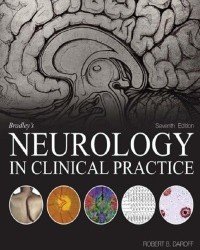
R. Daroff – Bradleys Neurology in Clinical Practice (2 Volume set, 7th edition, 2015)
2.985 ₽
Автор: R. Daroff
Название книги: Bradleys Neurology in Clinical Practice (2 Volume set, 7th edition, 2015)
Формат: PDF
Жанр: Медицина
Страницы: 2529
Качество: Изначально компьютерное, E-book
Comprehensive, easy to read, and clinically relevant, Bradley’s Neurology in Clinical Practice provides the most up-to-date information presented by a veritable “Who's Who” of clinical neuroscience. Its unique organization allows users to access content both by presenting symptom/sign and by specific disease entities-mirroring the way neurologists practice. A practical, straightforward style; templated organization; evidence-based references; and robust interactive content combine to make this an ideal, dynamic resource for both practicing neurologists and trainees.
Authoritative, up-to-date guidance from Drs. Daroff, Jankovic, Mazziotta, and Pomeroy along with more than 150 expert contributors equips you to effectively diagnose and manage the full range of neurological disorders.
True-to-life view of how neurological disorders manifest through detailed videos covering EEG and seizures, deep brain stimulation for PD and tremor, sleep disorders, movement disorders, ocular oscillations, EMG evaluation, cranial neuropathies, disorders of upper and lower motor neurons, as well as other neurologic signs.
Easy searches through an intuitive organization by both symptom and grouping of diseases mirrors the way you practice.
The latest advances in clinical neurogenetics, brain perfusion techniques for cerebrovascular disease, the relationship between neurotrauma and neurodegenerative disease, management strategies for levodopa-related complications in movement disorders, progressive neuropsychiatric disorders arising from autoimmune encephalitis, and more keep you at the forefront of your field.
Reorganized table of contents which includes new chapters on: Brain Death, Vegetative, and Minimally Conscious States; Deep Brain Stimulation; Sexual Dysfunction in Degenerative and Spinal Cord Disorders; Sports and Performance Concussion; Effects of Drug Abuse on the Nervous System; and Mechanisms of Neurodegenerative Disorders.
Regular online updates reflect the latest information on the diagnosis and treatment of neurologic diseases based on the latest recommendations and methodologies.
Expert Consult eBook version included with purchase. This enhanced eBook experience allows you to search all of the text, figures, references, and videos from the book on a variety of devices.
Neurology in Clinical Practice is a practical textbook of neurology
that covers all the clinical neurosciences and provides not
only a description of neurological diseases and their pathophysiology
but also a practical approach to their diagnosis and
management. In the preface to the 1991 first edition of this
book, we forecast that major technological and research
advances would soon reveal the underlying cause and potential
treatment of an ever-increasing number of neurological
diseases.
The near quarter century since that prediction has been
filled with the excitement of new discoveries resulting from
the blossoming of neurosciences. Genetics and molecular
biology have revolutionized our understanding of neurological
disorders; targeted therapies that treat the basis of disease
have improved outcomes and changed the course of many
neurological diseases such as multiple sclerosis and other neuroimmune
disorders and tumors associated with tuberous
sclerosis. Advances in neuroimaging now enable the precise
identification of functional regions and fine neuroanatomy of
the human brain in health and disease. The important and
challenging problem of neuroprotection is being addressed in
both neurodegenerative disorders and acute injuries to the
nervous system, such as stroke, hypoxic brain injury, and
trauma. In line with this effort, basic science progress in areas
of neuroplasticity and neural repair is yielding important
results that should translate into clinical utility in the near
future. When the first edition of this textbook was published,
there was essentially no effective means of treating acute
ischemic stroke. Today we have numerous opportunities to
help such patients, and a campaign has begun to educate the
general public about the urgency of seeking treatment when
stroke symptoms occur. These and other advances have
changed neurology to a field in which interventions are
increasingly improving the outcomes of disorders previously
considered to be untreatable.
The advent of teleneurology is also beginning to provide
treatment for patients who lack access to neurological specialists
or whose problems are too complicated for routine management
in the community. Teleneurology consults are
beginning to be provided nationwide across all subspecialties
of our discipline, with a particular emphasis on patients who
need intraoperative monitoring, critical care neurology, and
stroke interventions.
To the benefit of patients, clinical neuroscience has partnered
with engineering. Neuromodulation has become an
important part of clinical therapy for patients with movement
disorders and has applications in pain management and
seizure control. Along these same lines, brain-controlled
devices will soon help provide assistance to individuals whose
mobility or communication skills are compromised. Recent
advances in optogenetics have led to development of techniques
that allow exploration and manipulation of neural
circuitry, which may have therapeutic applications in a variety
of neurologic disorders.
Finally, a search for biomarkers that reliably identify a
preclinical state and track progression of disease is a promising
goal in many neurodegenerative disorders. Age-related neurodegenerative
diseases, such as Alzheimer disease and Parkinson
disease, are increasingly prevalent and represent a growing
health and socioeconomic burden. The costs in terms of
suffering and hardship for patients and their families are too
immense to quantify. As such, there is an urgent need for basic
and clinical neuroscience to make progress in finding ways to
delay the onset and slow progression of neurodegenerative
disorders and, ultimately, prevent them.
There are startling new advances changing the neurosciences.
The engineering of nanotechnologies into strategies
to treat patients with neurological disorders is just beginning.
Advances in genetics, including whole genome and whole
exome sequencing, will undoubtedly result not only in discoveries
of new genes but also new disease mechanisms. Novel
imaging techniques provide insights into connectivity deficits
in sensory and motor networks that have been associated with
several neurological disorders. Innovative neurosurgical techniques
and robotics are increasingly being utilized in enhancing
function and optimizing quality of life of patients with
neurological disorders.
We still have a long way to go to reach the ultimate goal of
being able to understand and treat all neurological diseases.
Neurology remains an intellectually exciting discipline, both
because of the complexity of the nervous system and because
of the insight that the pathophysiology of neurological disease
provides into the workings of the brain and mind. Accordingly,
we offer the seventh edition of Neurology in Clinical Practice as
the updated comprehensive and most authoritative presentation
of both the art and the science of neurology.
For this edition, the text has been rewritten and updated,
and over 60 new authors have been added to the cadre of
contributors. New chapters have been added covering brain
death, deep brain stimulation, sexual function in degenerative
disorders, concussion, drug abuse, and mechanisms of neurodegenerative
disorders. The seventh edition includes an interactive
online version housed on www.expertconsult.com, which
can be also downloaded for offline use on phones or tablets.
The electronic version of the text contains video and audio
material, as well as additional illustrations and references. A
work of this breadth would not have been possible without
the contributions of many colleagues throughout the world.
We are deeply grateful to them for their selfless devotion to
neurological education. We are also grateful to our Elsevier
counterparts, Lotta Kryhl, Senior Content Strategist; Joanne
Scott, Deputy Content Development Manager; and Humayra
Rahman Khan, Senior Content Coordinator, who were key in
drawing this project together. Additionally, we thank Andrew
Riley, Project Manager, without whose energy and efficiency
the high quality of production and rapidity of publication of
this work would not have been achieved. We also gratefully
acknowledge the contributions of our readers, whose feedback
regarding the print and online components of Neurology in
Clinical Practice has been invaluable in refining and enhancing
our educational goals. Finally, we wish to express our deep
appreciation to our families for their support throughout this
project and over the many decades of our shared lives.
Robert B. Daroff, MD
Описание
Только зарегистрированные клиенты, купившие данный товар, могут публиковать отзывы.





Отзывы
Отзывов пока нет.