
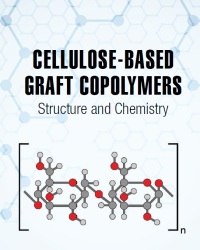
V. K. Thakur – Cellulose Based Graft Copolymers Structure and Chemistry (2015)
1.475 ₽
Автор: V. K. Thakur
Название книги: Cellulose Based Graft Copolymers Structure and Chemistry
Формат: PDF
Жанр: Химия
Страницы: 622
Качество: Изначально компьютерное, E-book
Cellulose-Based Graft Copolymers: Structure and Chemistry discusses the synthesis, characterization, and properties of multifunctional cellulose-based graft copolymers. Presenting the contributions of accomplished experts in the field of natural cellulosic polymers, this authoritative text:
Offers an overview of cutting-edge technical accomplishments in natural cellulose-based graft polymers
Addresses a separate biomaterial in each chapter, exploring composition as well as graft copolymerization chemistry
Covers fundamentals and applications including toxic ion removal, biomedical engineering, biofuels, micro/nano composites, papermaking, building materials, and defense
With the gradual reduction of nonrenewable resources and increasing demand for novel materials,
non-oil commodities, catalysts, and photoelectric devices, the development of natural biorenewable
polymer–based materials has caught the world’s attention. Among various biorenewable polymers,
cellulose (a linear polysaccharide of β-(1→4)-linked d-glucose) is one of the most abundant biomacromolecules
in nature and has drawn much attention in recent years due to its inherent properties
such as renewability, biocompatibility, biodegradability, nontoxicity, and easy availability, to name
a few. Cellulose is also the most lavish natural polymeric material that is widely distributed in every
corner of the world. It is even more significant that cellulose is renewable by direct fixation of solar
energy by plants. Because of the recent soar in prices of petroleum products, cellulosic raw materials
have gained special importance since they are available in large amounts all over the world. The
history of cellulose was known as cotton in the valley of the Indus River as early as 3000 BC. Since
then, there has been a tremendous growth of its use in the whole range of polymers, which has led to
the development of a new family of polymers and which, with appropriate modification, can display
different promising properties.
In the past century, scientists have paid a great deal of attention in studying the physical and
chemical properties of cellulose. But it seems that the current applications of cellulose are still not
able to meet the growing needs of the community. Over the years, researchers from both academia
and industry have made great efforts to modify the structure of cellulose and strengthen its physical
or chemical properties, such as dimension stability, resistance to abrasion and wear, and oil repellency,
but it is still insufficient. The reports of extending far beyond the traditional application
areas of cellulosic materials, such as ion detectors, biosensors, and electronic devices, are quite
limited. This book is a great opportunity to pay attention to value-added cellulose materials for
multifunctional applications. There is great potential for these applications to be realized in the near
future if we keep a research eye on functional polymer-grafted cellulose, and all those applications
would easily benefit from the advantages of cheaper, lighter, flexible, and green cellulose substrates.
Cellulose-based materials have the potential as raw materials if the desired functional groups could
be effectively coupled onto them.
Different kinds of modifications are intended to impute different desired properties to the modified
materials. Modification of the properties of cellulosics according to tailor-made specifications is
an important criterion for various applications. The spectrum of its uses may be still more widened
considerably by taking recourse to “grafting,” a popular route to modify the properties of various
high-molecular-weight compounds. Grafting is a tailor-made art. Of the various polymers on which
grafting of suitable monomers can be made, cellulose appears to be very interesting and promising.
The approaches can be of “grafting from,” “grafting to,” and “grafting through.” Depending on the
chemical structure of the monomer grafted onto cellulose, graft copolymers gain new properties
such as water absorption, improved elasticity, hydrophilic or hydrophobic character, ion exchange,
dye-absorption capabilities, heat resistance, thermosensitivity, pH sensitivity, and resistance to
microbiological attack, to name a few. Keeping in mind the immense advantages of natural cellulosic polymers, this book primarily
focuses on the synthesis, characterization, and properties of multifunctional cellulose-based graft
copolymers. Several critical issues and suggestions for future work are comprehensively discussed
in this book with the hope that it will provide a deep insight into the state of the art of advanced
cellulose-based graft copolymers. I thank Allison Shatkin (senior editor) and her colleagues at CRC
Press for the invaluable help in the organization of the editing process.
Finally, I thank my parents and my wife, Manju, for their continuous encouragement and support.
Vijay Kumar Thakur, PhD
Описание
V. K. Thakur – Cellulose Based Graft Copolymers: Structure and Chemistry (2015) — специализированное научное издание, посвящённое синтезу, структуре и химическим свойствам graft-сополимеров на основе целлюлозы. Книга подробно разбирает современные методы модификации природного полимера, позволяющие получать материалы с новыми функциональными характеристиками.
Автор рассматривает механизмы прививки различных мономеров к целлюлозной цепи, влияние условий реакции на степень прививки и молекулярную архитектуру, а также аналитические методы characterization полученных сополимеров. Особое внимание уделено взаимосвязи между структурой graft-цепей и конечными физико-химическими свойствами материалов.
- Исследователям и аспирантам, работающим в области полимерной химии и материаловедения
- Специалистам по натуральным полимерам и биосовместимым материалам
- Химикам-технологам, разрабатывающим функциональные покрытия, адсорбенты и композиты
- Студентам старших курсов и преподавателям профильных вузов
Только зарегистрированные клиенты, купившие данный товар, могут публиковать отзывы.
Похожие



Другие книги раздела «Химия»
Смежные разделы: Авиация и космонавтика · Астрономия · Геология и Геодезия · Железнодорожное дело · Журналистика · Математика · Машиностроение · Нанотехнологии · Научно-популярная литература · Физика · Экология · Энергетика
Рекомендуем также
- О. Швецова – Технология изготовления изделий по индивидуальным заказам
- R. Patel – Green Biocatalysis (2016)
- T. Jezierski – Canine Olfaction Science and Law (2016)
- M. Colecchia – Pathology of Testicular and Penile Neoplasms (2016)
- Н. Куликов – Водоснабжение (2016)
- C. Salgado – Aesthetic and Functional Surgery of the Genitalia
- A. Khan – Precision Molecular Pathology of Breast Cancer (2015)
- J. Rowley – Chromosomal Translocations and Genome Rearrangements in Cancer (2015)

Отзывы
Отзывов пока нет.