50% Off
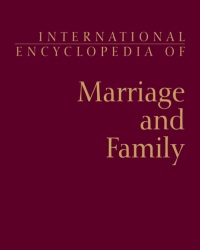
J. Ponzetti – International Encyclopedia of Marriage and Family. Second edition (4 Volumes)
Первоначальная цена составляла 3.790 ₽.1.895 ₽Текущая цена: 1.895 ₽.
Автор: J. Ponzetti
Название книги: International Encyclopedia of Marriage and Family (4 Volumes)
Формат: PDF
Жанр: Политология и Социология
Страницы: 535+520+539+369
Качество: Изначально компьютерное, E-book
People everywhere form bonds of friendship, develop close intimate relationships,
cohabit, and raise children, but each of these acts is conditioned by cultural
expectations, customs, norms, rules, mysteries, and ceremonies. Of all the
institutions that have shaped human life, marriages and families have been the
most important. While marriage and family relationships constitute basic institutions,
both for the individuals involved in them and for society as a whole, they
are neither simple nor static. On the contrary, they are constantly changing,
evolving with time, and adapting to place. It is in these relationships that many
of the most distinctive features of human life are most clearly and unambiguously
illustrated.
Love, sex, marriage, and families are subjects of intrinsic interest to nearly
everyone. Perhaps this is so because they represent common experiences that are
given special favor and protection in one way or another by all societies. Familial
activities and relations are intertwined with many other kinds of activities and
relations. Accordingly, marriage and family relationships must be understood as
part of the cultural life as a whole.
Different societies have different conceptions of what constitutes a marriage
or family, but in all societies the relations between the sexes and the generations
have an identifiable pattern. Marriage and family life are so decisive in the formation
of personality and the shaping of people’s most intimate feelings that as
they evolve, surely personal habits, social arrangements, quotidian emotions, and
even one’s innermost thoughts will also change. This diversity and malleability
make it difficult to comprehend contemporary marriages and families, yet it is the
very reason understanding is necessary.
The literature on marital and family relations is fragmented and diverse, “running
all the way from superstition-based folklore, to imaginative fiction, to poetic
outpourings, to philosophical speculation, to popularized magazine articles and
advice columns, and finally to reports of scientific investigations” (Christensen
1964, p. x). Yet, the multidisciplinary study of these relationships has only just
been recognized as a distinct area of study (Burr and Leigh 1983). Over the past
two decades, Family Science has emerged as a significant and burgeoning field
of study in the social and behavioral sciences (Hollinger 2003). Unfortunately,
much of the scholarship has been limited to English-speaking, Western, industrialized
countries, and little work has taken an international perspective The purpose of the International Encyclopedia of Marriage and Family, Second
Edition, is to peruse the current state and panoramic diversity of marriage
and family life in an international context. The basic aim of this encyclopedia is
to make information that is often difficult to find and analyze available to students,
scholars, journalists, and other interested readers in an easy-to-use reference
source. This information is vital to contemporary life in a global society
because modernization and globalization continue to alter the way people live.
These social forces and the change they inevitably bring about weaken the foundations
of the old norms and customs without creating any consensus on new
ones. Instead of living in small towns where surveillance by family and friends is
ubiquitous, people now live mostly in cities where anonymity is the rule and few
care about what they do.
That new conditions engender new attitudes is indisputable, but the salient
question is not change per se but the response to it. Many people expect marriage
and family relations to respond to changes due to globalization by providing
the emotional nurturance that is not easily attained in other, more impersonal
social contexts. In order to address this expectation, greater understanding and
mutual respect for diverse arrangements and behaviors is essential.
The International Encyclopedia of Marriage and Family is a significant
expansion and revision of the Encyclopedia of Marriage and the Family published
in 1995. This project began in 2000 with the goal of creating a focal reference
source on the diverse marriage and family lifestyles evident around the
world. An exceptional group of scholars representing different disciplines and
perspectives was invited to serve on the Editorial Board, which met in Denver to
plan the scope of the project. All the entries from the Encyclopedia of Marriage
and the Family were reviewed in light of the present edition’s strong international
focus: Some were updated, others substantively revised, and still others deleted.
Additional topics, issues, and countries were identified for the new edition, scholars
were commissioned to contribute to the project, completed entries were carefully
reviewed by the Editorial Board for readability and content, and final entries
were compiled.
Format of the Encyclopedia
The expanded International Encyclopedia of Marriage and Family comprises
four volumes and is a compendium surveying the shared patterns and amazing
variation in marriage and family life in a rapidly changing multicultural world.
These volumes, as in the first edition, present “knowledge about marriages, families,
and human relationships and about the psychological, cultural, and societal
forces that influence them” (Levinson 1995, p. x). One critical addition
justifies the doubling in length of the second edition, namely, the integration of
a global perspective.
The incorporation of an international focus was not an easy one to bring to
fruition. As noted above, marriage and family scholarship is multidisciplinary and
thus not confined to scholars in a single academic discipline. Further, the study of
marriage and family is not pervasive in all countries; that is, more research is available
on the industrialized West than on developing countries. The inconsistent
coverage presented a significant obstacle to overcome, making the International
Encyclopedia of Marriage and Family an impressive accomplishment indeed In keeping with the inclusive and multidisciplinary definition used in the first
edition, the terms marriage and family are used in the broadest sense, not just to
include socially approved, durable heterosexual unions that beget children, but
also to encompass a wide variety of topics and issues pertinent to these relations
and contemporary variations that may be less traditional such as abortion, gay and
lesbian parenting, infidelity, and spouse abuse. However, this second edition significantly
differs from the first in its deliberate attention to marriage and family in
an international context. Given global diversity and the lack of scholarly attention
to marriage and family in many nations worldwide, a representative rather than
comprehensive selection of countries and ethnic groups was identified.
Fifty countries representing the regions of the world from Africa, Asia and the
Pacific, Europe, the Middle East, the Americas, and the Caribbean were selected.
Every attempt was made to identify scholars from within (rather than outside) the
countries, to write about family life in their nations. Twelve entries on unique
racial/ethnic groups were also included. These groups were selected because they
were either indigenous (e.g., First Nations families in Canada, Yoruba families) or
prominent (e.g., Basque families, African-American families) in heterogeneous
nations and research was available about their distinct family patterns. In addition,
eleven entries on specific religions or belief systems (e.g., Catholicism, Evangelical
Christianity, Islam, Confucianism) were included because of the profound impact
these systems have in guiding and supporting lifestyle choices and patterns.
The contributors are family scholars with particular expertise on the topic or
country on which they are writing. They represent numerous disciplines such as
family studies, psychology, sociology, social work, gerontology, history, home
economics, law, medicine, and theology. A concerted effort, which achieved significant
success, was made to solicit scholars from outside the United States. Contributors
from Europe, Africa, Asia and the Pacific, and the Americas strengthened
the overall presentation. A more competent and internationally representative
group of scholars has yet to be convened in this field. Accordingly, readers can
be assured of the veracity of the close to four hundred entries.
Use of the Encyclopedia
The International Encyclopedia of Marriage and Family is designed for use by
general readers interested in the dynamics of marriage and family around the
world, as well as students and scholars seeking a unique source of information
regarding global family lifestyles. This extensive reference work serves as a
springboard to new insight and understanding. In fact, it is the first comprehensive
publication to focus on marriage and relationships from an international
perspective.
Readers will find detailed entries that integrate often discrete information into
a concise, readable review. Entries are cogent, carefully documented, and accompanied
by a bibliography incorporating cited works and suggestions for further
reading. All entries are signed and include cross references to related content.
These cross references facilitate the use of the multi-volume set and make the content
more accessible. Thus, a reader may begin reading an entry on one aspect of
his or her field of inquiry and move easily to other entries on related aspects of
the subject. For example, after reading the entry on godparents, one might consult
the entries on extended families and kinship, and then move on to consider particular countries where godparents are important, such as Mexico and the
Philippines, or even look at the entry on Catholicism because of the salient role of
godparents within this religion. Someone who is interested in chronic illness could
examine the entry on that topic, and then read about specific illnesses (e.g.,
Alzheimers, AIDS, depression, schizophrenia) or find more generic discussions on
health and families, caregiving, death and dying, and grief.
At the beginning of the first volume, alphabetical lists of entries and contributors
with affiliations are presented. A notation of (1995) after an entry title in the
lists indicates that the entry has been essentially reprinted from the first edition,
with an updated bibliography. A comprehensive index of concepts, names, and
terms at the end of volume four is designed to assist readers in locating topics
throughout the Encyclopedia and directs readers to the discussion of these subjects.
Many subjects are not treated in separate entries but instead appear within
the context of more comprehensive articles.
Acknowledgments
In a project of this magnitude, there are many people to acknowledge and
thank for their contribution. I am grateful to David Levinson for his invitation,
almost a decade ago, to join him in working on the Encyclopedia of Marriage
and the Family. His phenomenal intellect and energy have remained an inspiration.
Of course, the numerous contributors must be acknowledged as vital to
this project. Their willingness to share their expertise was requisite for the project’s
fulfillment. The professional staff of Macmillan Reference USA—Elly Dickason,
Jill Lectka, and Dawn Cavalieri—have gone “above and beyond” in their
unfailing assistance throughout the planning and editorial process that produced
this second edition. Thank you.
I am indebted as well to the Associate Editors—Raeann Hamon, Yvonne
Kellar-Guenther, Patricia Kerig, Laine Scales, and James White—for the privilege
of working with such committed and competent scholars. In addition, the University
of British Columbia provided an environment conducive to and supportive
of this endeavor. My colleagues on the Family Studies faculty—Phyllis
Johnson, Sheila Marshall, Anne Martin-Matthews, Daniel Perlman, and James
White—encouraged me and offered their considerable expertise to this project.
Finally, I owe everything to my family who tolerated my preoccupation with
this project. My wife, Rosanne, and our children—Caitlin, Nicholas, Olivia, and
Bridget—provide a personal and professional raison d’etre.
JAMES J. PONZETTI, JR.
Описание
International Encyclopedia of Marriage and Family — это фундаментальное справочное издание, подготовленное под редакцией Джеймса Понзетти. В четырёх томах собраны актуальные знания о браке, семье, партнёрстве и родственных отношениях в разных культурах и обществах.
Энциклопедия рассматривает, как меняются структура семьи, гендерные роли, воспитание детей, развод, повторные браки и семейная политика под влиянием глобализации, миграции, технологий и демографических сдвигов. Особое внимание уделено сравнительному анализу семейных практик в странах Европы, Азии, Африки, Латинской Америки и США.
- социологам, антропологам и демографам, изучающим трансформацию семьи;
- психологам и семейным терапевтам, работающим с разными культурными контекстами;
- студентам и преподавателям социальных наук, ищущим авторитетные обзоры по теме;
- специалистам по семейной политике и социальному законодательству.
Только зарегистрированные клиенты, купившие данный товар, могут публиковать отзывы.



Отзывы
Отзывов пока нет.