
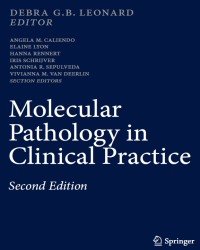
Debra Leonard – Molecular Pathology in Clinical Practice (Second edition, 2016)
2.930 ₽
Автор: Debra Leonard
Название книги: Molecular Pathology in Clinical Practice (Second edition)
Формат: PDF
Тема: Молекулярная патология
Страницы: 989
Качество: Изначально компьютерное, E-book
This authoritative textbook offers in-depth coverage of all aspects of molecular pathology practice and embodies the current standard in molecular testing. Since the successful first edition, new sections have been added on pharmacogenetics and genomics, while other sections have been revised and updated to reflect the rapid advances in the field. The result is a superb reference that encompasses molecular biology basics, genetics, inherited cancers, solid tumors, neoplastic hematopathology, infectious diseases, identity testing, HLA typing, laboratory management, genomics and proteomics. Throughout the text, emphasis is placed on the molecular variations being detected, the clinical usefulness of the tests and important clinical and laboratory issues.
Описание
Molecular Pathology in Clinical Practice (второе издание) — это фундаментальный учебник, который объединяет все ключевые области клинической молекулярной патологии в одной книге. В нём подробно разбирается, как молекулярные и геномные данные влияют на принятие клинических решений в онкологии, медицинской генетике, инфекционных заболеваниях и других сферах здравоохранения.
Второе издание существенно расширено: добавлено 12 новых глав, включая разделы по применению next-generation sequencing в генетике и онкологии, а также главу по протеомике. Книга акцентирует внимание не на конкретных протоколах тестов (которые быстро устаревают), а на клинической значимости выявляемых молекулярных вариантов, интерпретации результатов, микробиоме, регуляторных элементах генома (microRNA, lncRNA) и интеграции геномики в повседневную практику. Особое внимание уделено роли молекулярного патолога в эпоху genomic medicine.
- практикующим патологам и молекулярным диагностам
- ординаторам и слушателям программ по Anatomic & Clinical Pathology и Molecular Genetic Pathology
- онкологам и генетикам, использующим молекулярное профилирование в лечении пациентов
- специалистам лабораторий, внедряющих NGS и другие геномные технологии
Только зарегистрированные клиенты, купившие данный товар, могут публиковать отзывы.
Похожие


Другие книги раздела «Патология (Патологическая анатомия)»
- M. Grant Maxie – Jubb, Kennedy and Palmer’s Pathology of Domestic Animals (6th edition, 3 Volume set)
- Anne Marie Coady – Twining’s Textbook of Fetal Abnormalities (Third edition)
- C. Goodman – Pathology. Implication for Physical Therapist (4th edition)
- Syed Hoda – Rosens Breast Pathology (4th edition)
- Eiji Yumoto – Pathophysiology and Surgical Treatment of Unilateral Vocal Fold Paralysis
- Kim A. Collins – Forensic Pathology of Infancy and Childhood
- Diana Weedman Molavi – The Practice of Surgical Pathology (Second edition, 2018)
- Gunter Burg – Atlas of Dermatopathology
- Raquel M. Walton – Equine Clinical Pathology
- A. Porwit – Blood and Bone Marrow Pathology
- Enid Gilbert-Barness – Handbook of Pediatric Autopsy Pathology (Second edition)
- Michael P. Burke – Forensic Pathology of Fractures and Mechanisms of Injury
- E. Jacobson – Infectious Diseases and Pathology of Reptiles
- Brad Bolon – Pathology of the Developing Mouse
- Jerzy Klijanienko – Small Volume Biopsy in Pediatric Tumors (2018)
- Joseph A. Regezi – Oral Pathology (7th edition, 2017)
Все книги раздела «Патология (Патологическая анатомия)» →
Смежные разделы: Медицина на испанском языке · Медицина на немецком языке · Медицина на французском языке · Анестезиология и Реаниматология · Акушерство и Гинекология · Ветеринария · Гастроэнтерология и Гепатология · Дерматология и косметология · Диетология и нутрициология · Иммунология и Аллергология · Кардиология · Лапароскопия и Эндоскопия
Рекомендуем также
- Keith C. Ferdinand – Hypertension in High Risk African Americans (2015)
- Nirav Trivedi – Atlas of Head and Neck Cancer Surgery (2015)
- D. Slutsky – Peripheral Nerve Surgery
- John G. Clement – Computer Graphic Facial Reconstruction
- Honore de Balzac – Oeuvres Completes
- Анатоль Франс – Собрание сочинений в 8 томах
- Герман Гессе – Собрание сочинений в 4 томах (1994)
- Иво Андрич – Собрание сочинений в 3 томах (1984)

Отзывы
Отзывов пока нет.