
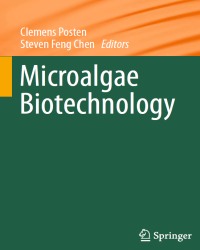
C. Posten – Microalgae Biotechnology (2016)
1.694 ₽
Автор: C. Posten
Название книги: Microalgae Biotechnology
Формат: PDF
Жанр: Биологические науки
Страницы: 205
Качество: Изначально компьютерное, E-book
Contents
Antenna Mutants, Domestication, by Roberto Bassi
Heterotrophic Cultivation, by William McCaffrey
Chlorella for industrial applications: Advances and prospective, by Feng Chen
Carotinoide, by Carola Griehl
Engineering the algal chloroplast for synthesis of therapeutic proteins, by Saul Purton
Design Concepts and recent developments of photobioreactors, by Clemens Posten
Efficiency of flat plate reactors, by Mario Tredici
Measuring modelling and control, by Olivier Bernard
Microalgae in Life Support Systems, by Klaus Slenzka
Heterotrophic oil production, by Makato Watanabe
One of the biggest global challenges of the twentieth century is to sustainably
supply a growing world population with food, raw materials, and energy in times of
climate change. In doing so, biomass plays an important role, as the plants, with the
help of sunlight and carbon dioxide from the atmosphere, can produce all these
components sustainably and without consuming fossil energy sources. This
photosynthesis-based capacity of plants, hence, is the cornerstone of the current
bioeconomy concept. However, there are clear limits: The available and even
decreasing agricultural area and the yield per unit area that can hardly be increased
any further.
Microalgae are a promising—some people say the only—way out of this limitation.
Even residual biomass—the so called biomass of the second generation—is
available only in limited amounts compared to the huge needs in energy supply. So
microalgae have been classified as the biomass of the third generation. The potential
for a novel type of biomass production for bioeconomy is enormous. The two major
advantages on this strategical level can be identified:
• Per unit area, microalgae can form up to five times more biomass than classical
energy plants. Values of 100 t biomass per hectare and year are considered to be
realistic.
• No valuable agricultural area is required. It is possible to use practically any
areas not claimed for other purposes. This includes dry areas, industrial
wasteland, brackish water zones or open seas.
But where are the large-scale production facilities for economically efficient
supply of basic foodstuffs, bulk chemicals or chemical energy carriers? Even if the
potential of microalgae for biomass supply is quite obvious, there is still a great
need for research to develop relevant applications and to find out, how microalgal
biomass can be produced in reliable and profitable manner in large scale. This
editorial will give a look over current trends, identify existing obstacles, and specify
biological and technical research needs necessary for an economically efficient
microalgae-based bioeconomy.
Microalgae: Solar Cell Factory for Bio-based Resources
of the Third Generation
Microalgae are microscopically small plants naturally occurring in water bodies,
such as lakes, rivers or seas. For some time now, microalgae have also been
cultivated and used by man. For this purpose, open ponds or closed reactors are
applied. There, microalgae grow suspended in an aqueous medium. Apart from the
microalgae, this medium contains mineral nutrients only. Some high-quality food or
feedstuff supplements and cosmetic products have long been introduced on the
market. Examples are the red dye astaxanthin for fish cultivation and polyunsaturated
fatty acids (PUFA) for healthy human nutrition. However, the quantity produced
worldwide totals some thousand tons only. Several demonstration plants for
the production of bioenergy carriers have been built.
Besides the already mentioned advantages the potential of microalgae on the
biological level can be summarized:
• Many species grow in saltwater even at high salt concentrations, reducing
problems with water supply.
• For many species carbon flux can be partitioned to lipids or carbohydrates
without loss of photosynthetic efficiency. Intracellular concentrations are far
above those of classical land plants showing high concentrations for example
only in seeds.
• Accumulation of pigments namely antioxidants or other strongly reducing
compounds is possible thanks the specific cell structure. Similar concentrations
cannot be reached in genetically modified heterotrophic microorganisms.
• Microalgae do not have any roots or wooden parts in the sprouts and leaves.
Hence, the complete microalga or all its components can be used without any
problems.
• The different microalgae species contain multiple different compounds for
commercialization, making the biorefinery profitable.
Diversity of Microalgae: The Unexplored Potential
Microalgae do not represent any consistent biological group, but can be divided into
several, partly extremely different strains from several phyla. The term microalgae,
hence, is understood to comprise forms of microscopically small plants that predominantly
live in aquatic habitats. In that sense also the procaryotic cyanobacteria
are often included in this term. Of the several hundred thousands of alga species
estimated, some ten thousand have been classified so far. Only a fraction of them,
i.e. about 20 microalgae, are used for economic purposes.
Comprehensive screening programmes in all parts of the world constantly
deliver new strains for strain collections. These strains are then applied in a variety
of high-concentration products. In spite of the application of latest methods, e.g.
growth tests in highly parallel microtitre plates, however, the products can be
customised to a certain extent and for a few defined environmental conditions only.
Often, attention is paid to a certain substance class exclusively. In the second stage,
a process-oriented strain selection has to be made. Important criteria are robustness
in the bioreactor, temperature stability, or the possibility of specifically excreting
valuable substances.
For thousands of years, human beings have been growing higher plants for the
production of food, construction materials or fabrics. In the last decades, this
process was further analysed and advanced thanks to better insight into life processes.
On the one hand, initial diversity converged towards a manageable quantity
of useful plants with high yields, such as corn or cotton. On the other hand, a large
plant variety developed and was optimised for regional climate conditions or
special applications. This step that is referred to as domestication still remains to be
accomplished for microalgae screening and strain development within the shortest
possible time.
Strain Development: Biological and Technical Optimization
Microalgae-based molecular biological methods are still behind the development in
the area of classical microorganisms like bacteria and yeasts. Recently, however, its
importance increased strongly. Research concentrates on production of recombinant
proteins, a technology that is expected to have major biological and technical
advantages when using microalgae. Known products also are in the focus of genetic
engineering. Even if photosynthesis as such cannot be improved significantly, it is
succeeded in increasing the partly low concentrations of highly valuable substances
or in adapting e.g. the fatty acid profiles of the oils produced to the needs of foods,
lubricants, or biodiesel.
In addition, process-oriented properties are studied and produced specifically.
Algae cells that flocculate “on command” largely facilitate harvest. Another idea is
that algae with reduced pigment concentrations utilize light more efficiently during
cultivation. Process technology is also influenced by the specific excretion of
products from the alga cell. Work in this area does not necessarily lead to the use
of the genetically modified strains in practice, but is considered to serve as a model
to test the molecular effect and practical use. In view of the high diversity, the
findings can then be used in the screening for natural strains.
This development process, known as domestication, is still in an early stage.
Strains with interesting products are not yet adapted to the intensive conditions in
bioreactors. Comparing the improvement by breeding of terrestrial crops over
centuries or the increase of productivity for heterotrophic microorganisms, the high
development potential still to be realized becomes obvious.
Описание
C. Posten – Microalgae Biotechnology (2016) — это фундаментальное руководство по биотехнологии микроводорослей. Книга подробно рассматривает биологические особенности, методы культивирования и промышленные применения микроводорослей как перспективного сырья для производства биотоплива, пищевых добавок, фармацевтических веществ и биопродуктов.
Автор системно объясняет процессы фотобиореакторов, оптимизацию роста культур, генетические подходы к повышению продуктивности и экономические аспекты масштабирования производства. Особое внимание уделено интеграции биотехнологии микроводорослей в биоэкономику и устойчивые технологии будущего.
- исследователям и студентам в области биотехнологии, микробиологии и биоинженерии
- специалистам, работающим в промышленном культивировании микроводорослей
- инженерам, занимающимся разработкой фотобиореакторов и биопроцессов
- предпринимателям и аналитикам, интересующимся зелёной экономикой и биоэнергетикой
Только зарегистрированные клиенты, купившие данный товар, могут публиковать отзывы.
Похожие


Другие книги раздела «Биологические науки»
- А. Савченко – Основы клинической иммунометаболомики
- Н. Парамонова – Клиническая иммунология и аллергология
- E. Klipp – Systems Biology (2016)
- A. Bondanza – Tumor Immunology (2016)
- A. Cambi – Cell Membrane Nanodomains (2015)
- A. Castilho – Glyco-Engineering (2015)
- A. Fernandez – Physics at the Biomolecular Interface (2016)
- A. Keller – Nucleic Acids as Molecular Diagnostics (2015)
- A. Kianianmomeni – Optogenetics (2016)
- A. Lorence – Recombinant Gene Expression (2012)
- A. Rasooly – Mobile Health Technologies (2015)
- A. Seshasayee – Bacterial Genomics (2015)
- A. Stigliano – Biomolecular Interfaces (2015)
- B. Jastrzebska – Rhodopsin (2015)
- C. Mccoy – Toll-Like Receptors (2016)
- D. Carrell – Spermatogenesis
Все книги раздела «Биологические науки» →
Смежные разделы: Медицина на испанском языке · Медицина на немецком языке · Медицина на французском языке · Анестезиология и Реаниматология · Акушерство и Гинекология · Ветеринария · Гастроэнтерология и Гепатология · Дерматология и косметология · Диетология и нутрициология · Иммунология и Аллергология · Кардиология · Лапароскопия и Эндоскопия
Рекомендуем также
- A. Escarpa – Agricultural and Food Electroanalysis (2015)
- A. Jess – Chemical Technology (2013)
- Gerhard Ertl – Handbook of Heterogeneous Catalysis (Second edition)
- Johannis P. Kamerling – Comprehensive Glycoscience from Chemistry to Systems Biology
- T. Albright – Orbital Interactions in Chemistry (Second edition, 2013)
- V. Andrushko – Stereoselective Synthesis of Drugs and Natural Products
- G. Cariolaro – Unified Signal Theory (2011)
- J. Whitaker – Power Vacuum Tubes Handbook (3rd edition, 2012)

Отзывы
Отзывов пока нет.