
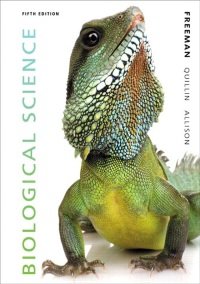
S. Freeman – Biological Science (Fifth edition, 2014)
1.835 ₽
Автор: S. Freeman
Название книги: Biological Science (Fifth edition)
Формат: PDF
Жанр: Биология
Страницы: 1418
Качество: Изначально компьютерное, E-book
You are about to embark on an amazing journey of discovery. Th e study of life spans from the inner
workings of cells to the complex interactions of entire ecosystems, through the information stored
in DNA to the ways genetic information evolves over time. At the same time that our understanding
of biology is growing in leaps and bounds, so too are great insights into how learners acquire new
knowledge and skills. We are thrilled to join Scott Freeman on Biological Science, a book dedicated
to active, research-based learning and to exploring the experimental evidence that informs what we
know about biology. Th e next few pages highlight the features in this book and in MasteringBiology®
that will help you succeed.
T he first edition of Biological Science was visionary in its
unique emphasis on the process of scientific discovery and
experimental design—teaching how we know what we
know. The goal was for students not only to learn the language of
biology and understand fundamental concepts but also to begin
to apply those concepts in new situations, analyze experimental
design, synthesize results, and evaluate hypotheses and data—to
learn how to think like biologists. Each edition since has proudly
expanded on this vision. The Fifth Edition is no exception.
A team of six dedicated teacher-scholars has joined Scott to
build on and refine the original vision, and by so doing, make
the book an even better teaching and learning tool. The pace of
biological discovery is rapid, and with each novel breakthrough
it becomes even more challenging to decide what is essential to
include in an introductory biology text. Pulling together an author
team with firsthand expertise from molecules to ecosystems
has ensured that the content of the Fifth Edition reflects cuttingedge
biology that is pitched at the right level for introductory
students and is as accurate and as exciting as ever for instructors
and students alike.
New findings from education research continue to inform
and inspire the team’s thinking about Biological Science—we
know more today than ever before about how students learn.
These findings demand that we constantly look for new ways to
increase student engagement in the learning process, and to help
instructors align course activities and learning goals with testing
strategies.
The New Coauthors
The new coauthor team brings a broad set of talents and interests
to the project, motivated by a deep commitment to undergraduate
teaching, whether at a small liberal arts college or a large
university. Kim Quillin has been a partner in this textbook in
every edition. For the Fifth Edition, she revised chapters across
three units in addition to spearheading the continued effort
to enhance the visual-teaching program. Michael Black, Greg
Podgorski, Jon Monroe, and Emily Taylor, who served as unit
advisors on the Fourth Edition, were already familiar with the
book. And most of the authorial team have been avid users of
previous editions for many years.
Core Values
Together, the coauthor team has worked to extend the vision
and maintain the core values of Biological Science—to provide
a book for instructors who embrace the challenge of boosting
students to higher levels of learning, and to provide a book for students that helps them each step of the way in learning to think
like scientists. Dedicated instructors have high expectations of
their students—the Fifth Edition provides scaffolding to help
students learn at the level called for by the National Academy
of Sciences, the Howard Hughes Medical Institute, the American
Association of Medical Academies, and the National Science
Foundation.
What’s New in This Edition
The Fifth Edition contains many new or expanded features, all
of them targeted at ways to help students learn to construct their
own knowledge and think like biologists.
⦁ Road Maps The new Road Maps at the beginning of each
chapter pair with the Big Picture concept maps introduced
in the Fourth Edition. Together they help students navigate
chapter content and see the forest for the trees. Each Road
Map starts with a purpose statement that tells students what
they can expect to learn from each chapter. It then goes on
to visually group and organize information to help students
anticipate key ideas as well as recognize meaningful relationships
and connections between the ideas.
⦁ The Big Picture Introduced in the Fourth Edition, Big Picture
concept maps integrate words and visuals to help students
synthesize information about challenging topics that
span multiple chapters and units. In response to requests
from instructors and students, three new Big Pictures focused
on additional tough topics have been added: Doing Biology,
The Chemistry of Life, and Plant and Animal Form and
Function. In addition, the Ecology Big Picture is completely
revised to reflect changes to that unit.
⦁ New Chapters Two new chapters are added to better
serve instructors and students. Unit 2 now contains a new
Chapter 8, Energy and Enzymes: An Introduction to Metabolic
Pathways. This chapter consolidates these critical topics
in a place where students and instructors need it most—right
before the chapters on cellular respiration and photosynthesis.
In the Fourth Edition, animal movement was discussed in
a chapter largely focused on animal sensory systems. In the
Fifth Edition, this important topic is treated in depth in a new
Chapter 48, Animal Movement, that explores how muscle and
skeletal systems work together to produce locomotion.
⦁ New BioSkills Instructors recognize that biology students
need to develop foundational science skills in addition to content
knowledge. While these skills are emphasized throughout
the book, Biological Science, beginning with the Third
Edition, has provided a robust set of materials and activities
to guide students who need extra help. To promote even
fuller use of this resource, the BioSkills are now updated, expanded,
and reorganized. New in this edition are a discussion
of significant figures within the BioSkills on the Metric System,
and two new BioSkills on Primary Literature and Peer
Review and Using Bloom’s Taxonomy. BioSkills are located
in Appendix B, and practice activities can be assigned online
in MasteringBiology®.
⦁ Promotion of Quantitative Skills Reports like Biology 2010,
Scientific Foundations for Future Physicians, and Vision and
Change all place a premium on quantitative skills. To infuse
a quantitative component throughout the text, new and existing
quantitative questions are flagged in each chapter to encourage
students to work on developing their ability to read
or create a graph, perform or interpret a calculation, or use
other forms of quantitative reasoning.
⦁ Bloom’s Taxonomy In the Fifth Edition, all questions in the
text are assigned a Bloom’s Taxonomy level to help both students
and instructors understand whether a question requires
higher-order or lower-order cognitive skills. Questions span
all six Bloom’s levels. (Bloom’s levels are identified in Appendix
A: Answers.) The coauthors were trained by experts Mary
Pat Wenderoth and Clarissa Dirks1 to ensure we followed
a process that would result in high inter-rater reliability—
or agreement among raters—in assigning Bloom’s levels to
questions. The new BioSkill, Using Bloom’s Taxonomy, explains
the six Bloom’s levels to students and offers a practical
guide to the kinds of study activities best suited for answering
questions at each level.
⦁ Expanded Emphasis on “Doing Biology” A constant hallmark
of this text is its emphasis on experimental evidence—
on teaching how we know what we know. To reflect the
progress of science, in the Fifth Edition, the coauthor team replaced
many experiments with fresh examples and added new
Research Boxes. And as noted earlier, they added a new Big
Picture on Doing Biology, focusing on the process of science
and the organizational levels of biology. Data sources are now
cited for all graphs and data tables to model the importance of
citing data sources to students. Updated Research Box questions
continue to encourage students to analyze some aspect
of experimental design. Also new to this edition is a BioSkill
on Primary Literature and Peer Review.
⦁ Art Program The art program is further enhanced in this
edition by the addition of more illustrated summary tables.
These tables make subject areas more accessible to visual
learners and reinforce key concepts of the chapter. Many of
the life-cycle figures in Unit 6 are significantly overhauled.
Updated Blue Thread Scaffolding
In the Third and Fourth editions of Biological Science, a metacognitive
tool was formulated as the now popular feature known
as “Blue Thread”—sets of questions designed to help students
identify what they do and don’t understand. The fundamental
idea is that if students really understand a piece of information
or a concept, they should be able to do something with it.
In the Fifth Edition, the Blue Thread is revised to reflect
changes in chapter content, and to incorporate user feedback.
Blue-Thread questions appear in the following locations:
⦁ In-text “You should be able to’s” offer exercises on topics
that professors and students have identified as the most difficult
concepts in each chapter.
⦁ Caption questions and exercises challenge students to examine
the information in a figure or table critically—not just
absorb it.
⦁ Check Your Understanding boxes present two to three tasks
that students should be able to complete in order to demonstrate
a mastery of summarized key ideas.
⦁ Chapter summaries include “You should be able to” problems
or exercises related to each key concept.
⦁ End-of-chapter questions are organized in three levels of increasing
difficulty so students can build from lower to higherorder
cognitive questions.
Integration of Media
The textbook continues to be supported by MasteringBiology®,
the most powerful online homework, tutorial, and assessment
system available. Tutorials follow the Socratic method, coaching
students to the correct answer by offering feedback specific to a
student’s misconceptions as well as providing hints students can
access if they get stuck. Instructors can associate content with
publisher-provided learning outcomes or create their own. Content
highlights include the following:
⦁ NEW! Solve It Tutorials These activities allow students to
act like scientists in simulated investigations. Each tutorial
presents an interesting, real-world question that students will
answer by analyzing and interpreting data.
⦁ Experimental Inquiry Tutorials The call to teach students
about the process of science has never been louder. To support
such teaching, there are 10 interactive tutorials on classic scientific
experiments—ranging from Meselson–Stahl on DNA
replication to the Grants’ work on Galápagos finches and Connell’s
work on competition. Students who use these tutorials
should be better prepared to think critically about experimental
design and evaluate the wider implications of the data—preparing
them to do the work of real scientists in the future.
⦁ BioFlix® Animations and Tutorials BioFlix are moviequality,
3-D animations that focus on the most difficult core
topics and are accompanied by in-depth, online tutorials that
provide hints and feedback to guide student learning. Eighteen
BioFlix animations and tutorials tackle topics such as
meiosis, mitosis, DNA replication, photosynthesis, homeostasis,
and the carbon cycle.
⦁ NEW! End-of-Chapter Questions Multiple choice end-ofchapter
questions are now available to assign in MasteringBiology.
⦁ Blue-Thread Questions Over 500 questions based on the
Blue-Thread Questions in the textbook are assignable in
MasteringBiology.
⦁ Big Picture Tutorials Interactive concept map activities
based on the Big Picture figures in the textbook are assignable
in MasteringBiology, including tutorials to support the three
new Big Pictures: Doing Biology, The Chemistry of Life, and
Plant and Animal Form and Function.
⦁ BioSkills Activities Activities based on the BioSkills content
in the textbook are assignable in MasteringBiology, including
activities to support the new BioSkills on Primary Literature
and Peer Review and Using Bloom’s Taxonomy.
⦁ Reading Quiz Questions Every chapter includes reading
quiz questions you can assign to ensure students read the
textbook and understand the basics. These quizzes are perfect
as a pre-lecture assignment to get students into the content
before class, allowing you to use class time more effectively.
Serving a Community of Teachers
All of us on the coauthor team are deeply committed to students
and to supporting the efforts of dedicated teachers. Doing biology
is what we love. At various points along our diverse paths,
we have been inspired by our own teachers when we were students,
and now are inspired by our colleagues as we strive to
become even better teacher-scholars. In the tradition of all previous
editions of Biological Science, we have tried to infuse this
textbook with the spirit and practice of evidence-based teaching.
We welcome your comments, suggestions, and questions.
Thank you for your work on behalf of your students.
Описание
Biological Science Скотта Фримена — один из самых популярных современных учебников по общей биологии. Пятое издание 2014 года последовательно объясняет ключевые концепции от молекулярного уровня до экосистем, уделяя особое внимание научному методу и тому, как именно учёные получают знания.
Книга построена вокруг «Большой картины» биологии: эволюции, передачи информации, энергии и обмена веществ, а также взаимодействия систем. Автор использует актуальные научные открытия, яркие примеры из жизни и продуманные иллюстрации, чтобы показать логику биологических процессов и связи между ними.
- студентам биологических, медицинских и ветеринарных специальностей;
- преподавателям, ищущим современный и хорошо иллюстрированный учебник;
- всем, кто хочет глубоко и системно понять биологию на уровне мировых университетов;
- подготовки к вступительным экзаменам и олимпиадам по биологии.
Только зарегистрированные клиенты, купившие данный товар, могут публиковать отзывы.
Похожие


Другие книги раздела «Биологические науки»
- B. Nilius – Mammalian Transient Receptor Potential Cation Channels (2 Volume set, 2014)
- D. Barh – PlantOmics (2015)
- D. Bruno – A Colour Atlas of Salmonid Diseases (2013)
- J. Dmello – Amino Acids in Higher Plants (2015)
- J. Whelan – Plant Mitochondria (2015)
- K. Gupta – Alternative Respiratory Pathways in Higher Plants (2015)
- M. Siddiqui – Nanotechnology and Plant Sciences (2015)
- T. Plant – Knobil and Neills Physiology of Reproduction (4th edition, 2015)
- J. Cohen – Infectious Diseases (4th edition, 2017)
- A. Ansari – Phytoremediation (4 Volume set, 2016)
- A. Kumar – Salamanders in Regeneration Research (2015)
- A. Rasooly – Biosensors and Biodetection (2 Volume set, 2017)
- G. Arimura – Plant Specialized Metabolism (2017)
- L. Jorde – Medical Genetics (2016)
- M. Boudvillain – RNA Remodeling Proteins (2015)
- M. Heinlein – Plasmodesmata (2015)
Все книги раздела «Биологические науки» →
Смежные разделы: Медицина на испанском языке · Медицина на немецком языке · Медицина на французском языке · Анестезиология и Реаниматология · Акушерство и Гинекология · Ветеринария · Гастроэнтерология и Гепатология · Дерматология и косметология · Диетология и нутрициология · Иммунология и Аллергология · Кардиология · Лапароскопия и Эндоскопия
Рекомендуем также
- M. Dick – Clinical Cardiac Electrophysiology in the Young (2015)
- N. Schneiderman – Psychosocial Stress and Cardiovascular Disease in Women
- P. Ghosh – Introduction to Protein Mass Spectrometry (2016)
- M. Abzalov – Applied Mining Geology (2016)
- M. Ullah – Critical Dietary Factors in Cancer Chemoprevention (2016)
- S. Ranjan – Nanoscience in Food and Agriculture (5 Volume set)
- W. Lyons – Standard Handbook of Petroleum and Natural Gas Engineering
- M. Katz – Multimodality Management of Borderline Resectable Pancreatic Cancer

Отзывы
Отзывов пока нет.