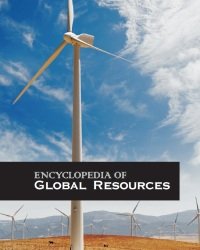
Craig Allin – Encyclopedia of Global Resources
1.840 ₽
Автор: Craig Allin
Название книги: Encyclopedia of Global Resources
Формат: PDF
Жанр: Геология и Геодезия
Страницы: 1599
Качество: Изначально компьютерное, E-book
From North America to the World
Salem’s critically acclaimed Natural Resources, which
originally appeared in 1998 in three volumes, forms
the foundation for this fully revised and expanded
four-volume set, Encyclopedia of Global Resources. Hailed
by the American Library Association in its first edition
as an Outstanding Reference Source of 1999, Encyclopedia
of Global Resources now adds 143 new articles (6 of
which replace superseded entries) to the original 438
entries. All of the original articles have been revised to
extend their scope to our global economy in 2010. All
of the original 135 charts, graphs, and tables have
been updated or replaced, and 110 new charts, tables,
graphs, sidebars have been added, for a total of 235
data-laden sidebars that are easily understood at a
graphic, visual level. Dozens of appendixes illustrate
the text, providing students with worldwide insights
into where we derive our mineral, biological, and energy
resources; how they are processed; for what purposes
they are used; and where they stand in our current
economy.
The coverage touches not only on the economic
applications and benefits of natural resources but also
on their processing, their management, the environmental
impact of their extraction, and trends in their
availability—all in easily understood language. The
expanded contents include 40 overviews of top resource
nations and their significance in the global
context. Specific minerals, organizations, historical
events, and biographies are included as well as articles
on energy and ecological resources. Appendixes provide
both alphabetical and periodic tables of the elements,
along with lists of Major U.S. Mineral Resources,
Major U.S. Mineral Resources by State, Major
Canadian Mineral Resource Production and Values,
Major Worldwide Mineral Resources and Producers,
MajorWorldwide Resources by Country, a Time Line,
a Glossary, a Bibliography, and a list of Web Sites.
Content Definition
The term“natural resources” has been in general use
since the late nineteenth century, and for many decades
discussions of natural resources have formed an
important part of history, anthropology, and social
studies curricula. In the most basic sense, natural
resources have long been defined as naturally occurring
raw materials and phenomena—timber, flowing
water, and minerals such as iron and coal—that are
economically useful to humans, particularly those
materials important to major industries or to a nation’s
security. By the late 1960’s, however, concerns
about the world’s growing human population, the finite
nature of many “nonrenewable” resources, and
the environmental and ecological ramifications of
resource exploitation had taken hold. Viewed in a
global context, resource issues rapidly became more
complex. Today one is as likely to hear discussions
of “global resources” as of natural resources, along
with debates over issues such as “sustainable development,”
“renewable vs. nonrenewable resources,” “ecological
resources,” and “energy resources.” This sea
change in the way we view our resources and their integration
into a global marketplace and worldwide
environmental concerns has prompted this complete
overhaul of the original edition, its expansion to four
volumes, and its new title: Encyclopedia of Global Resources.
Contents and Scope of Coverage
Salem Press’s four-volume Encyclopedia of Global Resources
provides a wide variety of perspectives on both
traditional and more recent views of Earth’s resources.
In this sense, Encyclopedia of Global Resources serves as
a bridge connecting the domains of resource exploitation,
environmentalism, ecology, geology, and biology,
and it explains their interrelationships in terms
that students and other nonspecialists can understand.
The 575 alphabetically arranged articles in Encyclopedia
of Global Resources are as broad as “Agricultural
products” and as specific as “Svalbard Global Seed
Vault.” They range in length from 500 words (about a
page) to more than 3,000 words (6 pages) and cover
topics as diverse as soil, fisheries, forests, aluminum,
the Industrial Revolution, the U.S. Department of the
Interior, the hydrologic cycle, glass, and placer mineral
deposits. Top resources—119 mineral-based, 41
biologically based, and 39 energy-related (such as oil
and tar sands)—are covered, as well as 40 countries;
32 ecological resources; 50 environment, conservation,
and resource management; 41 geological processes
and formations; 72 government and resources;
18 historical events and movements; 35 laws and conventions;
49 obtaining and using resources; 71 organizations,
agencies, and programs; 37 people; 22 pollution
and waste disposal; 23 products from resources 19 scientific disciplines; and 31 social, economic, and
political issues.
In the traditional view of natural resources, the
core of the set is a series of more than one hundred
articles on specific mineral and other nonliving resources,
from aluminum to zirconium; more than
twenty overviews were added to the original list of
these mineral resources, while the others were updated.
These articles begin with immediately accessible,
informative subheads—“Where Found,” “Primary
Uses,” “Technical [including chemical] Definition”—
and continue with subsections that address “Description,
Distribution, and Forms,” “History,” “Obtaining
[the Resource],” and “Uses of [the Resource].” There
are also survey articles on such resource categories
as abrasives, gems, radioactive isotopes, and silicates
as well as on the geologic processes and formations
that produce mineral resources. Reflecting the overwhelming
importance of petroleum products to the
world, a cluster of articles discuss the chemistry, distribution,
and formation of oil and natural gas in addition
to oil exploration and drilling, the oil industry,
oil shale and tar sands, and petrochemical products.
Other energy resources, such as hydroenergy, nuclear
energy, solar energy, and wind energy, are also covered
in detail. Two other broad resource areas are discussed
in a number of articles: plant and animal resources,
and what we have called ecological resources, such as
Earth’s atmosphere, biodiversity, forests, medicinal
plants, oceans, water, and even resources deriving
from extraterrestrial exploration of our solar system.
Articles on the former range fromspecific crops, such
as corn, to overviews of animal breeding, agricultural
products, and carbon. Articles on the latter reflect the
realization that, in an increasingly populated world,
natural systems such as rain forests, grasslands, lakes,
and wetlands—from their genetic diversity to the
global biosphere itself—must be considered crucially
important resources, subject to threat and in continual
need of being monitored and protected.
Because the concept of “natural resources” describes
materials useful or necessary to people, this set
includes entries on many aspects of the human dimension
of resource exploitation, such as how various
resources are obtained and processed. Also discussed
are the major secondary or intermediate materials
that resources are used to produce; among these articles
are “Carbon fiber and carbon nanotubes,” “Cement
and concrete,” “Fiberglass,” “Gasoline and other
petroleum fuels,” and “Semiconductors.” Economic,
political, and societal ramifications of resource use
are discussed in essays on energy economics and politics,
the early history of mineral resource use, resource
exploitation and health, and resource use in
developing countries. A number of articles stress the
environmental effects of human activities related to
obtaining and using resources—air and water pollution,
mining wastes, deforestation, desertification—
as well as phenomena that can be either natural or
caused by humans, such as droughts, erosion, and
fires. Other articles delineate the issues and choices
surrounding resource management, recycling, conservation,
sustainable development, preservation, environmentalism,
and waste disposal.
Another set of essays cover particularly significant
pieces of legislation, international conventions, and
activities of specific government agencies. Brief articles
highlight organizations, historical events, and
personages important in the history of resource exploitation,
conservation, and environmental protection.
Finally, several overviews of important fields of
study—from agronomy to geographic information
systems to risk assessment—round out the set.
Reference Features
Each article in Encyclopedia of Global Resources is signed,
and each has summary information at the beginning
and cross-references to other articles in the set at the
end. All articles are organized using internal subheads,
consistent by type of article, and articles that
are 1,000 words in length or longer conclude with bibliographies.
Of the 575 essays, 350 also contain sections
that direct users to authoritative Web sites. All
illustrations have been updated or replaced and significantly
expanded with 235 charts, tables, and
graphs, as well as 200 photos.
A useful reference feature at the beginning of each
volume is a Complete List of Contents, and at the end
of volume 4 are several appendixes: an Alphabetical
Table of the Elements, the Periodic Table of the Elements,
lists of Major U.S. Mineral Resources, Major
U.S. Mineral Resources by State, Major Canadian
Mineral Resource Production and Values, Major
Worldwide Mineral Resources and Producers, Major
Worldwide Resources by Country, aTime Line, a Glossary,
a Bibliography, and a list of Web Sites. Finally,
the set ends with a Category Index that groups similar
essays, along with a comprehensive Subject Index.
Acknowledgments
Salem Press wishes to acknowledge the editors of the
original three-volume edition, Mark S. Coyne of the
University of Kentucky and Craig W. Allin of Cornell
College. For this expanded four-volume edition, Professor
Allin was instrumental in defining the scope,
coverage, and contents. We also thank the 199 scholars
who contributed original essays, updated their
previous work, and/or wrote new material for this edition;
a list of their names and affiliations appears on
the following pages.
Описание

Только зарегистрированные клиенты, купившие данный товар, могут публиковать отзывы.


Отзывы
Отзывов пока нет.