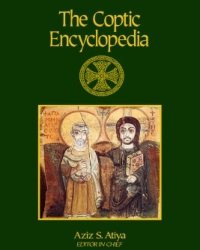
Aziz Atiya – The Coptic Encyclopedia (8 Volume set)
1.875 ₽
Автор: Aziz Atiya
Название книги: The Coptic Encyclopedia (8 Volume set)
Формат: PDF
Жанр: Философия
Страницы: 6969
Качество: Изначально компьютерное, E-book
Four million according to the official census, and six million in the
opinion of some unofficial contenders, the Copts are the purest
descendants of the ancient Egyptians. They are sometimes
dramatically, but not altogether correctly, described as the “modern
sons of the pharoahs.” Though it is difficult to define the exact
genealogy of that Mediterranean race, there is no doubt that one
cementing factor has kept their qualities as pure as can be expected.
That factor is their religion and their church, in whose fold Copts
have remained unperturbed throughout the centuries. The
introduction of Christianity in Egypt was one of the most
momentous events in the history of the country, and the ready
acceptance of the new religion by the Egyptians calls for an inquiry
into Egyptian history. We must remember that Christianity was
preached in the eternal city of Alexandria by Saint Mark, the author
of the oldest known gospel. The astounding response to the new
preaching and the spread of the new religion among the Copts was
not a matter of chance. Ancient Egyptian mythology, strangely
enough, prepared the way for the spread of the new gospel. The
basic ideas in the Christian faith had parellel in Egyptian beliefs, and
this took away the strangeness of Christianity from Egyptian minds.
After all, the first monotheist in the annals of world history was
Akhenaton in the fourteenth century B.C. Though unsuccessful at
the time, this remained a potent precedent in Egyptian thought. The
idea of the trinity found its double in every Egyptian nome or
province that had its own triad. Most famous of all the triads is the
one represented by the myth of Osiris, Isis, and Horus. The birth of a
god from a virgin mother through a holy spirit was a common idea
in ancient Egypt where the best representation of this principle is the
birth of the bull god Apis from a virgin cow, in whose bosom the
Ptah, father of all the gods, breathed his own spirit. Some pharaohs,
such as Horemheb of the Twentieth Dynasty, claim descent from
Osiris. The same pharoah was anointed by washing with holy water
for a spiritual rebirth, a ritual that finds its equivalent in the Christian baptism. Even the sign of the cross that Christians adopted
as the symbol of eternal life had its counterpart in the ancient
Egyptian ankh, a cross with a rounded head that was always found
in the right hand of gods and pharaohs to attest their eternity.
The very foundation of the ancient religion and indeed all Egyptian
civilization was centered on immortality and the reward of heaven
or hell to the pious and the impious. The ancients upheld the
doctrine of the resurrection of the body and consequently preserved
the body or its likeness for the “Ka” or soul to return to it in the life
beyond. This idea seems to be at the very root of all facets of ancient
Egyptian culture. Pyramids and tombs, the glory of the ancients,
were planned together with mummification for the protection of the
dead. Sculpture and painting furnished a device for the “Ka” to
identify its likeness and occupy it in case the mummy perished.
Without identifying the ancient mythology with Christian doctrine,
we must concede that that parallelism in thought paved the way for
the acceptance of the new faith, for the purification of the late
Egyptian debasement and for corruption of the older mythology.
The Flight of the Holy Family to Egypt also played a role. Jesus
who came as a mere infant returned to Palestine a young boy whose
mind must have been exposed to the wisdom of the Egyptians. To
the present day, the Copts cherish the thought that they gave refuge
to Jesus the fugitive and follow the stations of the progress of the
Holy Family in places of pilgrimage; churches have been
constructed over some of them. People of all ages have followed in
the steps of the Master through the Delta to Middle Egypt as far as
the spot where the Monastery of the Virgin known as Dayr al-
Muharraq still stands, continuously inhabited to this day.
The establishment of the Coptic church came to pass at the hands of
Saint Mark the Evangelist, who became its first patriarch between
A.D. 42, the year of his entry into Alexandria, and 68, the year of his
martyrdom in the same city. His first convert was a cobbler named
Anianus, who followed him in the episcopate of Alexandria. Since
the Coptic mind had been ready for the acceptance of the new
religion, it is no wonder that Christianity spread in Egypt with
bewildering rapidity. The Copts, who refused to offer incense and
libation to the imperial image as a common deity in those pagan days, were subjected to the severest persecution. The Copts cared
little about their fate, and unlike many other Christians, they
worshipped in the open and not in the catacombs, and in this way
courageously sought the crown of martyrdom. So fierce was the
wave of persecution in Egypt that the Copts decided to start their
church calendar with the year of the accession of Emperor
Diocletian (A.D. 284), during whose reign the massacre of the
Christians is said to have reached its peak.
In spite of persecution the Catechetical School of Alexandria had
become the natural successor to the brilliant ancient academy of
learning known as the Museon. Thus for the first time in history did
Christian theology have a scholarly home where men of learning
began to systematize the hitherto amorphous Christian doctrines.
Immortal names figure in the panel of its teachers, from Pantaenus
to Clement, and from Origen to Didymus the Blind. All were men of
tremendous learning, whose work still ranks high in all treatises on
patrology. Origen, a true son of Egypt and its church, was perhaps
the most prolific theologian of all time; an incredible five thousand
books are ascribed to him. Whatever the truth of this contention, he
is known to be the author of the first system of theology; the
compiler of the Hexapla, including the whole text of the Bible in six
ancient languages; and the commentator on almost all the books of
the Old Testament.
The age of the church fathers abounds in saints whose great piety
and untiring search for the Christian truths filled the entire
community with that fire of the faith that can still illuminate the way
for us. Some of these names are recited in every Coptic liturgy to
this day. There is Demetrius, who led the Alexandrian populace in
the battle for the extermination of paganism from that city;
Athanasius the Apostolic, Arius the “arch-heretic,” Saint Antony the
Great, Saint Pachomius, Cyril the Great, Dioscorus, and others.
Some of these men led the Christian world in the formative years of
the ecumenical movement that Constantine the Great initiated in the
Council of Nicaea (325). The bishop of Alexandria; Alexander, was
accompanied to that council by a young deacon named Athanasius,
who was the power behind the throne. Evidently it was he who
composed the famous credo approved by the Nicene bishops as the basis of Christian dogma. Athanasius was destined to become
patriarch of Alexandria at a time when the Arian heresy was rapidly
spreading in the Christian world, and it fell to him to combat it.
This was also the age of monasticism. Begun by Paul the Hermit and
Saint Antony the Great in the Eastern Desert, monastic rule was
perfected by Saint Pachomius the Great in the Thebaid, while the
societies of Macarius the Great and Macarius Alexandrinus in the
wilderness of Mareotis and Nitrea developed into ascetic and
learned centers. Their settlements in the wilderness attracted
pilgrims from the Byzantine empire and the rest of Europe. Saint
Basil transplanted the rule of Pachomius to Greece, and John
Cassian founded his famous monastery in southern France on a
Coptic model. The vestiges of his influence are still seen in the Fort
St. Victor in Marseilles and the monastery of the Ile de St. Honorat
off the coast of Cannes.
This was equally the age of missionary endeavor. Wherever the
Roman legionaries opened the way, Coptic missionaries followed in
their trail to preach the faith and oftentimes earn the crown of
martyrdom in distant lands. It was thus that the Coptic saints Felix,
Exuperantius, and Regula, who appear on the arms of the city of
Zurich, perished on the shores of the Limmat river and were buried
under the Wasserkirche in the heart of that city. The Copts extended
their message to many parts of Gaul. They are known even to have
crossed the Channel to the British Isles long before the coming of
Saint Augustine of Canterbury. The tombs of seven Coptic monks
have been identified in Disert Aldith in County Donegal not far from
Belfast at the northeastern tip of Ireland.
The fourth and fifth centuries were times of great religious turmoil
that are marked by the Council of Nicaea in 325 and the Council of
Chalcedon in 451. Between those two dates, the Coptic bishops
championed the cause of orthodoxy against emerging heresies such
as Arianism and Nestorianism. The leading role of Saint Cyril the
Great at the Council of Ephesus in 431 was so overwhelming that
the Western and Byzantine divines called the Coptic patriarchs
Pharaohs of the Church. This did not sit well with the bishops of
Byzantine and the West, where the prelates of Constantinople were
in imperial favour and the bishops of Rome filled the imperial vacuum in the Eternal City. Thus we see a rising alliance against
Egypt, which was regarded as a satellite province of the Byzantine
empire. In this way, both the Roman and Byzantine bishops, backed
by imperial power, united hands at Chalcedon in an attempt to
humiliate Dioscorus, patriarch of Alexandria. It is a mistake to hold
to the one-sided Western view that the issue was solely theological.
The political background of the whole story of Coptic
monophysitism versus the West's leaning toward diophypsitism is
not to be minimized.
Deposed and degraded, Dioscorus became the symbol of
disaffection, and rising hatred begat new waves of persecutions of
the Christians of the East by the Christians of the West. Two parallel
lines of patriarchs arose in Alexandria: the one Melchite, Greek, and
imperialist, the other native Egyptian, nationalist, and anti-
Chalcedonian in profession. The one was appointed by the emperor
and was seated on the throne of Alexandria by imperial arms; the
other was elected by the Copts and became a patriarch errant among
the Coptic monastic institutions of Egypt. Then Emperor Justinian,
who was interested in a perfectly united theocracy, devised a new
system of governance in Egypt, whereby the patriarch became the
prefect of the country and the general of the armed forces. This
irregular and totally unspiritual combination was intended to uproot
“monophysitism” by brutal force. To this day the Copts remember
diabolical persecutions of the Chalcedonian Patriarch-Prefect-
General Cyrus on the eve of the Arab conquest of 639-642. They
were reminiscent of the black days of Decius and Diocletian. At the
time of the Arab invasion the Copts had already been so alienated
from the mainstream of Western Christianity that they could do
nothing but stand by and watch the edifice of imperial power
crumble to the ground. Under Byzantine rule, the Copts had lost
both political and religious independence. Indeed they had lost
everything except self-respect and the tenacity to fight the
persecution, rapacity, and brutality of the foreign legions. Under the
Arabs, on the contrary, their church became the only official church.
The native patriarch obtained considerable freedom to run the
internal affairs of his people. This may help to elucidate the position
of the Copts vis-à-vis the Arab conquest. They watched until their Greek oppressors were routed, and from that time the Copts were
almost totally unknown by their co-religionists in the West.
The Copts' subsequent history under Arab rule was marked by
further flight and endurance. The miracle of the survival of the
Copts as a community through the ages may be ascribed to two main
factors—the one internal and the other external. The internal factor
may be summed up in their profound spirituality, which sustained
their unflinching adherence to their church as a comprehensive way
of life. The external factor was their acceptance as an integral part of
the country by the Muslim rulers, who systematically employed
them in the affairs and offices of state. With the emergence of
democracy in modern times, the Copts' enfranchisement became
complete.
AZIZ S. ATIYA
Описание
«The Coptic Encyclopedia» (8 Volume set) — фундаментальный справочник, созданный под редакцией известного коптолога Aziza Atiya. Издание представляет собой наиболее полное собрание знаний о коптской цивилизации, истории, языке, литературе, искусстве, богословии и повседневной жизни коптов с I по XXI век.
Энциклопедия охватывает все ключевые аспекты коптского христианства: от раннехристианских монастырей и мученичества до уникальной коптской литургии, иконографии, архитектуры и влияния на мировую культуру. Отдельные статьи посвящены коптскому языку, библейским переводам, значимым историческим личностям, географии и современному состоянию коптской общины в Египте и диаспоре.
- исследователям коптологии, раннего христианства и восточных церквей
- студентам и преподавателям теологических и исторических факультетов
- специалистам по истории Ближнего Востока и христианскому искусству
- всем, кто интересуется древними восточными традициями и культурным наследием Египта
Только зарегистрированные клиенты, купившие данный товар, могут публиковать отзывы.
Похожие



Другие книги раздела «Философия»
- C. Hooker – Philosophy of Complex Systems (2011)
- Протоиерей Сергей Булгаков – Собрание сочинений (2016)
- Паскаль Буайе – Объясняя религию. Природа религиозного мышления (2017)
- И. Фокин – Philosophus Teutonicus. Якоб Бёме
- Люйши Чуньцю – Весны и осени господина Люя
- Марк Аврелий Антонин, Эпиктет – Размышления
- Ч. Кирвель – Социальная философия
- Ольга Власова – Антипсихиатрия. Социальная теория и социальная практика
- Гуннар Скирбекк – История философии
- Нагата Хироси – История философской мысли Японии
- Роджер Бэкон – Избранное
- Андре Конт-Спонвиль – Философский словарь
- Елена Князева – Эволюционная эпистемология
- Николай Бердяев – Сочинения
- Michael A. Peters – Encyclopedia of Educational Philosophy and Theory
- В. Поликарпов – Философские проблемы сознания
Все книги раздела «Философия» →
Смежные разделы: Бизнес-Книги · Биография · Боевики и Триллеры · Детективы · Детские книги · Школа · Дом и Семья · Здоровье · Искусство · Историческая проза · Классика · Компьютеры
Рекомендуем также
- S. Paul – Clinical Cases in Skin Cancer Surgery and Treatment (2016)
- Y. Sakai – Laparoscopic Surgery for Colorectal Cancer (2016)
- V. Stearns – Novel Biomarkers in the Continuum of Breast Cancer (2016)
- A. Mathur – Nanotechnology in Cancer (2017)
- P. Rennert – Novel Immunotherapeutic Approaches to the Treatment of Cancer
- M. Baranska – Optical Spectroscopy and Computational Methods in Biology and Medicine (2014)
- A. Bondanza – Tumor Immunology (2016)
- H. Seligmann – DNA Replication. Current Advances (2016)
Отзывы
Отзывов пока нет.