
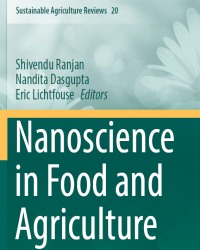
S. Ranjan – Nanoscience in Food and Agriculture (5 Volume set)
9.830 ₽
Автор: S. Ranjan
Название книги: Nanoscience in Food and Agriculture
Формат: PDF
Жанр: Нанотехнологии в сельском хозяйстве
Страницы: 1700
Качество: Изначально компьютерное, E-book
1. Nanotechnology is a fast-evolving discipline that already produces outstanding basic knowledge and industrial applications for the benefit of society. Whereas the first applications of nanotechnology have been developed mainly in material sciences, applications in the agriculture and food sectors are still emerging. Due to a rapid population growth there is a need to produce food and beverages in a more efficient, safe and sustainable way. Here, nanotechnology is a promising way to improve crop production, water quality, nutrition, packaging, and food security. There are actually few comprehensive reviews and clear textbooks on nanotechnology in agriculture, water, and food. In this book there are 10 chapters describing the synthesis and application of nanomaterials for health, food, and agriculture are presented.
Nanomaterials with unique properties will dramatically improve agriculture and food production. Applications will include nanofertilisers to enhance plant growth and nanosensors to detect food contamination. An overall view of nanotechnology applications in agriculture, food, water, and environment are described in the first two chapters by Dasgupta et al. and Singh. Health and environmental applications of nanotechnology are presented in chapters 3-5. Shukla and Iravani review green methods to synthesize metal nanoparticles, and give applications to water purification, in chapter 3. The removal of up to 95% of contaminants by nanoparticles, nanotubes and nanostructured membranes is described by Naghdi et al. in chapter 4. Yoti et al. then review nanosensors for the detection of pathogenic bacteria in chapter 5. Those nanosensors can be used as biodiagnostics to control food and water quality. Food applications of nanoscience are presented in chapters 6 and 7 by Kuswandi and Sarkhar et al. Kuswandi explain in chapter 6 that nanomaterials can improve packaging quality and that nanosensors can detect freshness and contanimants. The use of nanoparticles to protect ingredients such as vitamins, flavours, and antimicrobials is reviewed by Sarkhar et al. in chapter 7.
2 This book is the second volume on this topic within the series. With unique properties, nanomaterials are rapidly finding novel applications in many fields such as food, medicine, agriculture and pollution. Such applications include to treat cancer, nanosensors to detect food contamination, nanomaterials for food packaging, nanoencapsulation to preserve nutraceuticals, and nanofertilisers for advanced agriculture. After an introductory chapter on property rights of nanomaterials, readers will discover the applications of nanotechnology in food, health, environment, ecotoxicology and agriculture.
3. This book is the third volume on Nanoscience in Food and Agriculture, published in the Sustainable Agriculture Reviews series. In this book we present ten chapters describing the synthesis and application of nanomaterials for health, food, agriculture and bioremediation.
4. In this book we present ten chapters describing the synthesis and application of nanomaterials for health, food, agriculture and bioremediation. Nanomaterials, with unique properties are now being used to improve food and agricultural production. Research on nanomaterials is indeed revealing new applications that were once thought to be imaginary. Specifically, applications lead to higher crop productivity with nanofertilisers, better packaging, longer food shelf life and better sensing of aromas and contaminants. these applications are needed in particular in poor countries where food is scarce and the water quality bad. Nanotechnology also addresses the age old issue of water polluted by industrial, urban and agricultural pollutants. For instance, research produces nanomaterials that clean water more efficiently than classical methods, thus yielding water for drinking and irrigation. However, some nanomaterials have been found to be toxic. Therefore, nanomaterials should be engineered to be safe for the environment.
5. This book presents comprehensive reviews on the principles, design and applications of nanomaterials in the food and agriculture sectors. This book is the fifth of several volumes on Nanoscience in Food and Agriculture, published in the series Sustainable Agriculture Reviews.
Описание
S. Ranjan – Nanoscience in Food and Agriculture (5 Volume set) — это фундаментальное многотомное издание, которое показывает, как нанотехнологии уже меняют производство продуктов питания, сельское хозяйство и контроль качества. Автор системно рассматривает применение наноматериалов от улучшения урожайности до упаковки и мониторинга безопасности продуктов.
Пять томов охватывают ключевые аспекты: наноудобрения и защита растений, наносенсоры для обнаружения загрязнителей, наночастицы в переработке пищевых продуктов, экологические последствия нанотехнологий в агросекторе и инновационные подходы к устойчивому развитию. Издание объединяет последние научные данные, практические кейсы и перспективы регулирования.
- Исследователям и преподавателям в области нанотехнологий, пищевой биотехнологии и агрономии
- Специалистам пищевой промышленности, ищущим инновационные решения для качества и безопасности продуктов
- Экологам и регуляторам, изучающим влияние наноматериалов на окружающую среду
- Студентам магистратуры и PhD, работающим на стыке биологических наук и нанотехнологий
Только зарегистрированные клиенты, купившие данный товар, могут публиковать отзывы.
Похожие


Другие книги раздела «Нанотехнологии»
- A. Grumezescu – Nanobiomaterials in Cancer Therapy (2016)
- A. Maffucci – Fundamental and Applied Nano-Electromagnetics (2016)
- C. Chen – Biomedical Applications and Toxicology of Carbon Nanomaterials
- C. Laurencin – Nanotechnology and Regenerative Engineering (2nd edition, 2014)
- E. Guenin – Microwave Engineering of Nanomaterials (2016)
- E. Iannone – Labs on Chip (2014)
- E. Kong – Nanomaterials Polymers and Devices (2015)
- E. Lafontaine – Nanothermites (2016)
- F. Ebrahimi – Nanocomposites. New Trends and Developments (2016)
- H. Hernandez-Sanchez – Food Nanoscience and Nanotechnology (2015)
- H. Unlu – Low-Dimensional and Nanostructured Materials and Devices (2016)
- I. Capek – DNA Engineered Noble Metal Nanoparticles (2015)
- J. Levy – Magnetic Structures of 2D and 3D Nanoparticles (2016)
- J. Lourtioz – Nanosciences and Nanotechnology (2016)
- J. Rogers – Silicon Nanomembranes (2016)
- J. Roig – Isotopes in Nanoparticles (2016)
Все книги раздела «Нанотехнологии» →
Смежные разделы: Авиация и космонавтика · Астрономия · Геология и Геодезия · Железнодорожное дело · Журналистика · Математика · Машиностроение · Научно-популярная литература · Физика · Химия · Экология · Энергетика
Рекомендуем также
- Альфред Бестер – Миры Альфреда Бестера (4 Тома)
- Ashish Tewari – Advanced Control of Aircraft Spacecraft and Rockets
- C. Venkatesan – Fundamentals of Helicopter Dynamics
- Ethirajan Rathakrishnan – Theoretical Aerodynamics
- John Westfall – Celestial Shadows. Eclipses, Transits, and Occultations (2015)
- Jeffery Burley – Encyclopedia of Forest Sciences
- Rob Kitchin – International Encyclopedia of Human Geography
- А. Корольченко – Пожаровзрывоопасность веществ и материалов и средства их тушения (Второе издание, 2 Тома)

Отзывы
Отзывов пока нет.