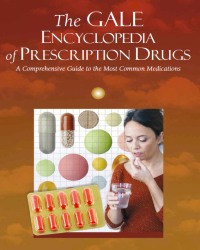
K. Glaza – Gale Encyclopedia of Prescription Drugs (2015)
2.980 ₽
Автор: K. Glaza
Название книги: Gale Encyclopedia of Prescription Drugs (2015)
Формат: PDF
Жанр: Медицина
Страницы: 1089
Качество: Изначально компьютерное, E-book
Being told you need to take a prescription drug can
sometimes be alarming. A lot happens during the
medication process, from when the doctor determines a
prescription medication is necessary to when the
prescription is picked up at the pharmacy and the first
dose is taken. When a doctor determines a prescription
medication is necessary, the patient might leave the office
with a handwritten or computer-generated prescription,
or the doctor could fax, electronically submit, or phone
the prescription directly to the pharmacy. For the patient,
the entire process can be mysterious, confusing, and
maybe even a little frightening. How did my prescription
get to the pharmacy? What is the pharmacist doing
behind the glass? Why do I need a prescription for some
drugs but not others? Why does a generic medication cost
so much less, and is it really the same as the brand name
product? How will I feel when I take the drug—will it
make me feel better or could I feel sicker?
WHAT IS A DRUG?
A medication, or drug, is any product that is
intended for use in the diagnosis, treatment, or prevention
of an illness or to relieve the symptoms of an illness.
Drugs can be divided into two categories: prescription
drugs or over-the-counter (OTC) drugs. For example, if
you are diagnosed with an ear infection, your doctor may
order a prescription antibiotic to treat the infection and
instruct you to take an OTC pain reliever/fever reducer to
treat the symptoms of the infection.
PRESCRIPTION VS. OTC DRUGS
Prescription drugs are those that require a physician’s
prescription. These medications are intended for
conditions that must be monitored by a physician. OTC
medications are those that are sold without a prescription
and are regularly available.
OTC medications have been found by the U.S. Food
and Drug Administration (FDA) to be suitable for selfadministration
without a physician’s guidance. These
medications are typically not habit-forming and have a
low potential of causing harm. The ingredients, strength,
expiration date, lot number, directions, and warnings
must clearly be printed on the product package.
OTC products may contain more than one active
ingredient. This is typically seen in many allergy and
cough and cold products. It is crucial to be aware of this,
since some ingredients may also be found in prescription
medications. Unintentionally ingesting too much of a
medication could lead to an overdose or more pronounced
side effects, such as sleepiness or dizziness. Acetaminophen,
for example, is found in both OTC products and in
combination prescription pain medications. Ingesting too
much acetaminophen can lead to liver damage.
DRUG APPROVAL
To ensure consumer safety and drug efficacy, the
FDA must approve all prescription medications. The
medication approval process is a complex one, taking on
average 12–15 years to get a new drug from the research
laboratory to a pharmacy shelf. The process starts when a
sponsor develops or discovers a new drug product. The
sponsor may be a drug company, a government agency, a
scientific institution, or even an individual.
The sponsor of the new medication first tests the
drug on a variety of animals to assess the drug’s efficacy
and toxicity. Next, the sponsor meets with the FDA and
provides them with the animal data. The FDA decides if
the new product is suitable to be tested on humans. If so,
three phases of clinical trial testing commence.
Phase one is performed on a small group of people,
with the goal of observing side effects and seeing how the
drug works in the human body. Phase two is performed on
a larger group and focuses on how effective the drug is
against the condition or disease. Phase three studies the
product on a large group of people from a variety of
populations and evaluates different dosages.
After all human clinical trials are complete, the
sponsor provides the FDA with its findings. The FDA reviews the data, the drug’s labeling, and the manufacturing
facilities. If the FDA review team deems the product
safe and efficacious, the drug is made available to the
public.
BRAND NAME VS. GENERIC DRUGS
During the drug development process, the sponsor
obtains a patent to protect the drug formula and the
commercial name that will be used in the marketing of
the final product. Having a patent means that no other
manufacturer can produce, sell, or use the name of the
new drug. The patent-protected drug name is referred to
as the “brand name.” Once the patent for a medication
expires, usually 20 years after the patent is obtained, the
active ingredient is no longer protected and can be
produced and sold by other manufacturers. The name of
the active ingredient is called the medication’s “generic
name.”
Generic drug manufacturers require approval from
the FDA before they are able to sell their generic product.
The manufacturer must prove that they are using the
same active ingredient, in the same form, with the same
strength, given by the same route of administration as the
brand name predecessor. After equivalency is proven and
FDA approval is given, a generic medication may be
distributed by the manufacturer and substituted for the
brand name product in the pharmacy. Generic medications
are often less costly than brand name drugs because
generic drug manufacturers did not invest billions of
dollars in clinical trials, development, and research.
However, even though the generic active ingredient must
be the same, the inactive ingredients do not need to be.
This is why generic drugs often have a different taste,
shape, or color.
OTC medications do not require individual FDA
approval. Instead, the FDA maintains a database of
approved active ingredients. The database, or Federal
Register, is made up of active ingredient summaries
containing the ingredient, dose, formulation, and labeling
rules. As long as a company formulates a new OTC
product using approved active ingredients and follows
the guidelines for the active ingredients, there is no need
for final FDA review.
HERBS AND SUPPLEMENTS
It is important to note that herbal and homeopathic
remedies, dietary supplements, and vitamins are not
evaluated, approved, or regulated by the FDA. It is
important to let your doctor or pharmacist know if you
regularly take these types of products so that they can
evaluate the safety of combining supplements with a
prescription or OTC medication.
DRUG SIDE EFFECTS
All drugs, both prescription and OTC, produce some
effect on our bodies. Sometimes, however, these effects
may be unwanted. For example, a medication you take
for a headache may cause you to have diarrhea. This
unwanted effect is known as a “side effect,” or an effect
of a medication that is not intended. Side effects may not
be the same for all who take the same medication.
Common side effects include nausea, constipation, and
diarrhea, since most medications are taken orally and are
absorbed through the digestive tract. Other types of side
effects include sleepiness, dizziness, skin flushing, and
sensitivity to sunlight.
More severe unwanted effects are categorized as
“adverse effects.” Adverse effects are those that cause
injury to the patient. Some antibiotics, for example, can
cause permanent hearing loss or kidney damage if their
use is not monitored appropriately. Other types of
adverse effects include allergic reactions (swelling,
difficulty breathing, hives), irregular heartbeat, an
increase or decrease in blood pressure, and bleeding.
Side effects can generally be minimized or avoided
if some simple steps are taken:
• Always inform your physician or pharmacist of all
medications, vitamins, supplements, and OTC products
being taken.
• Read the prescription label and the accompanying
drug literature and ask your physician or pharmacist
questions.
• Do not combine alcohol or other medications with the
drug unless approved by a physician or pharmacist.
• If a medication causes dizziness or sleepiness it can be
taken at bedtime; likewise, if a medication causes
insomnia or hyperactivity, it can be taken in the
morning.
Some side effects may subside after a medication is
taken for a few weeks. It is common for nausea, loss of
appetite, and dizziness to subside once the body is
accustomed to the medication.
The Gale Encyclopedia of Prescription Drugs:
A Comprehensive Guide to the Most Common Medications
is a new title in the well-known Gale Encyclopedia
of … series. It features entries on 300 top prescription
medications. The Encyclopedia provides in-depth coverage
of each drug, including an image. Unlike other
sources that feature highly technical drug monographs,
the Encyclopedia presents medical concepts and terminology
in language that general readers can understand,
while still providing thorough coverage.
SCOPE
Entries follow a standardized format to help users
find information quickly. Rubrics include the following
headings (as applicable):
• Definition
• Purpose
• Description
• Recommended dosage
• Precautions
• Side effects
• Interactions
• Resources
The Definition section provides information on the
drug’s class, and the Description section includes subheadings
for U.S., Canadian, and international brand names.
The Recommended dosage and Precautions sections
both include subheadings that cover pediatric and
geriatric populations, as well as necessary modifications
for pregnancy and other conditions or allergies.
The Precautions section also specifies a drug’s
pregnancy category, as applicable. Pregnancy categories
were assigned by the U.S. Food and Drug Administration
(FDA) to assess whether or not a drug adversely affected
a pregnancy and to rate its level of impact (i.e.,
sometimes the benefits of a drug outweighed its potential
risks). However, while this Encyclopedia was being
developed, the FDA decided to redefine its program and
eliminate the pregnancy categories. The categories are
still provided here to give readers a general idea of a
drug's effects during pregnancy, but a pregnant woman
should always consult with her physician before starting
new or stopping existing medications.
The Interactions section includes not only drug-drug
interactions but also drug-food interactions and interactions
with other substances.
INCLUSION CRITERIA
A preliminary list of medications was compiled from
a wide variety of sources, including professional and
government-sponsored medical guides as well as consumer
guides and encyclopedias. The advisory board,
made up of medical doctors, pharmacists, and nurse
practitioners, evaluated the topics and made suggestions
for inclusion. Final selection of topics to include was made
by the advisory board in conjunction with the editor.
ABOUT THE CONTRIBUTORS
The essays were compiled by experienced medical
writers, including physicians, pharmacists, nurses, and
other healthcare professionals. The advisory board
reviewed the completed essays to ensure that they are
appropriate, up to date, and accurate.
HOW TO USE THIS BOOK
The Gale Encyclopedia of Prescription Drugs has
been designed with ready reference in mind.
• Straight alphabetical arrangement of topics allows
users to locate information quickly. Drugs are listed
under their generic name.
• Bold-faced terms within entries indicate that fulllength
articles exist for those topics.
• Cross-references placed throughout the encyclopedia
direct readers from alternate drug names, including
brand names, to their intended entries
• Patient profiles in select entries provide a narrative
account of an individual’s experience with a certain
drug.
•A list of key terms is provided in most entries
to define unfamiliar or complicated terms or concepts.
• Resources sections at the end of entries direct readers
to additional sources of information on a topic.
• Valuable contact information for organizations is
included with most entries.
• A comprehensive general index guides readers to all
topics mentioned in the text.
• Author and advisor bylines provide information on
who wrote and reviewed the entries, including their
credentials.
APPENDICES
The Encyclopedia’s content is enhanced with four
appendices in the back of volume 2:
• Questions to Ask Your Pharmacist present conversation
points to facilitate discussions with a pharmacist.
• The Institute of Safe Medicine Practices (ISMP) has
allowed us to reproduce their list of commonly
confused drug names. ISMP is a nonprofit agency
of healthcare professionals certified as a Patient Safety
Organization (PSO) by the federal Agency for
Healthcare Research and Quality. The inclusion of
the list in this guide is intended to prevent medication
errors.
• All of the contact information from the entries is
compiled and arranged alphabetically in the Organizations
appendix.
• A glossary contains all of the key terms within the
entries, arranged alphabetically.
GRAPHICS
The Gale Encyclopedia of Prescription Drugs is
enhanced by 300 color photographs. Please note that the
photographs depict one possible formulation of each
drug. Drug appearances vary greatly due to differences in
dosage, manufacturer, form (e.g., capsule or tablet), and
other factors. The image shown may not appear the same
as the specific form prescribed.
Описание
K. Glaza – Gale Encyclopedia of Prescription Drugs (2015) — это подробный справочник, который объясняет, как работают наиболее часто назначаемые лекарственные препараты, для чего они используются и чего от них ожидать.
Издание содержит актуальную информацию о механизмах действия, показаниях, противопоказаниях, побочных эффектах, взаимодействии с другими препаратами и особенностях применения. Материал изложен доступным языком, но с сохранением необходимой медицинской точности, что делает энциклопедию удобной как для специалистов, так и для обычных читателей, желающих лучше понимать свои назначения.
- Врачам и фармацевтам как быстрый справочник по современным лекарственным средствам
- Студентам медицинских и фармацевтических вузов для изучения клинической фармакологии
- Пациентам и их родственникам, которые хотят осознанно подходить к лечению
- Всем, кто регулярно принимает рецептурные препараты и хочет знать больше о своем здоровье
Только зарегистрированные клиенты, купившие данный товар, могут публиковать отзывы.
Похожие


Другие книги раздела «Медицина»
- Mike Martin – Small Animal ECGs (Third edition, 2015)
- Molly Varga – Textbook of Rabbit Medicine (Second edition)
- N. James MacLachlan – Fenner’s Veterinary Virology (5th edition, 2017)
- Sorrel J. Langley-Hobbs – Feline Soft Tissue and General Surgery
- Stanley H. Done – Color Atlas of Veterinary Anatomy. The Dog and Cat
- Stephen Spotte – Free-Ranging Cats (Бездомные коты)
- Matthew E. Gompper – Free-Ranging Dogs and Wildlife Conservation (Бездомные собаки)
- Michael Day – Arthropod-borne Infectious Diseases of the Dog and Cat (Second edition)
- Michael E. Peterson – Small Animal Pediatrics
- Michael P. Burke – Forensic Pathology of Fractures and Mechanisms of Injury
- Nova Silvy – The Wildlife Techniques Manual (7th edition, 2 Volume set)
- Steven Fox – Multimodal Management of Canine Osteoarthritis (2017)
- Steven E. Holmstrom – Veterinary Dentistry. A Team Approach (Second edition)
- Steven Fox – Pain Management in Small Animal Medicine
- Steven R. Lindsay – Handbook of Applied Dog Behavior and Training (3 Volume Set)
- Steven Swaim – Small Animal Bandaging, Casting, and Splinting Techniques
Все книги раздела «Медицина» →
Смежные разделы: Бизнес-Книги · Биография · Боевики и Триллеры · Детективы · Детские книги · Школа · Дом и Семья · Здоровье · Искусство · Историческая проза · Классика · Компьютеры
Рекомендуем также
- R. Larson – Algebra and Trigonometry (2016)
- R. Singh – Principles and Applications of Environmental Biotechnology for a Sustainable Future (2017)
- M. Gulrajani – Colour Measurement
- C. Prestigiacomo – Surgical Endovascular Neuroradiology (2015)
- R. Eklund – Encyclopedia of Sport and Exercise Psychology (2014)
- C. Batt – Encyclopedia of Food Microbiology (2nd edition, 2014)
- A. Bosserhoff – Melanoma Development (2017)
- S. Kountakis – Encyclopedia of Otolaryngology Head and Neck Surgery
Отзывы
Отзывов пока нет.