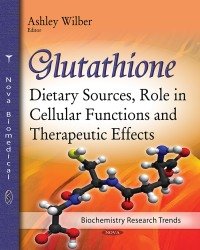
A. Wilber – Glutathione (2015)
1.326 ₽
Автор: A. Wilber
Название книги: Glutathione
Формат: PDF
Жанр: Биохимия
Страницы: 227
Качество: Изначально компьютерное, E-book
Glutathione is a widely mentioned biochemical molecule in present clinical biochemistry. There is no doubt that glutathione has several advantages to human bodies. Hence, there are many applications of glutathione products in present biomedicine. Glutathione plays a critical role in cell signalling and antioxidant defences. It plays a significant role in subjects with periodontitis and associated systemic comorbidities. Its depletion leads to oxidative damage. This book discusses dietary sources of glutathione as well as the role it plays in cellular functions, and it's therapeutic effects.
Glutathione is a widely mentioned biochemical molecule in present clinical biochemistry.
There is no doubt that glutathione has several advantages to human bodies. Hence, there are
many applications of glutathione products in present biomedicine. Glutathione plays a critical
role in cell signalling and antioxidant defences. It plays a significant role in subjects with
periodontitis and associated systemic comorbidities. Its depletion leads to oxidative damage.
This book discusses dietary sources of glutathione as well as the role it plays in cellular
functions, and it's therapeutic effects.
Chapter 1 – Tripeptide glutathione (L-γ-Glutamyl-L-Cysteinyl-Glycine) is a wide spread
physiologically active compound in plants and animals, where it stands second to none in
terms of its role as a significant redox buffer in oxidative stressed cells. GSH plays various
roles as reductant in ascorbate preroxidase cycle, as a building block for the synthesis of
higher thiols such as phytochelatins by phytochelatin synthase and/or as agent for conjugation
of xenobiotics by glutathione sulfo-transferase. Though a tremendous progress has been made
in GSH focused research, there seems information paucity in context with cross-talks on GSH
role in plants and humans, and its significance and prospects in analytical chemistry and
nanobiotechnology. Given the above, this chapter aims to present first, a basic overview about
the main roles of GSH in plants and mammals (particularly in environmental stress context)
followed by a short review about analytical methods for GSH analysis, and a detailed
discussion on nanobiotechnology perspectives for GSH.
Chapter 2 – Glutathione (GSH) plays a critical role in cell signalling and antioxidant
defences. It plays a significant role in subjects with periodontitis and associated systemic
comorbidities. Its depletion leads to oxidative damage. Some of the prevalent redox reactions
and interactions with dietary agonists are addressed. Glutathione may interact directly with
ROS / reactive nitrogen species (RNS); or act as an essential cofactor for GSH S-transferases
and glutathione peroxidases. Coordinated actions of GSH and its dependent enzymes which
constitute the glutathione system, lead to detoxification of reactive oxygen and nitrogen
species (ROS/RNS). Therapeutic interventions aimed at enhancing GSH concentrations in
vivo include N-acetyl cysteine; activation of nuclear factor (erythroid-derived 2)-like 2 (Nrf-
2) by folate supplementation and phytochemicals such as curcumin and resveratrol. An
antioxidant defence system comprising a range of enzymes such as superoxide dismutase
(SOD), catalase (CAT), glutathione peroxidase (GPx) and glutathione reductase (GR) is
active in removing ROS accumulating in cells, in addition to vitamin A, vitamin C, -
tocopherol and plant flavonoids which are available as dietary antioxidants.
Oxidative stress plays an important role in chronic periodontitis (CP), the metabolic
syndrome (MetS) and associated conditions. There is a significant correlation between SOD
activity, triglycerides, high-density lipoprotein and sVCAM-1 levels. The association between
SOD activity and MetS components could be the most significant variable parameter in
subjects with MetS; it has potential as a predictive tool to determine the degree of oxidative
stress in these subjects. The impact of diabetes mellitus (DM) as a risk factor for CP in the
context of antioxidant enzyme activity, SOD, glutathione reductase (GR), catalase and the
marker of free radical damage, malondialdehyde, favours the role of oxidative stress in both
DM and CP.
Dietary non-enzymic antioxidants play an important role in interacting with oxidative
stress-inducing mechanisms. Their targeted interaction with the glutathione network results
in an enhanced antioxidant profile in chronic inflammatory diseases associated with excessive
pro-oxidant activities. Dietary agonists are able to overcome proxidant profiles associated
with decreased Nrf2 linked to reduced CAT and GPx m RNA expression. Their
administration contribute to coordinated cytoprotective responses in tissues.
Chapter 3 – Azathioprine is a purine antimetabolite drug commonly used as
immunomodulator in the treatment of various chronic inflammatory diseases, such as
inflammatory bowel disease (IBD). Azathioprine is activated in vivo after reaction with
reduced glutathione (GSH) and conversion to mercaptopurine. Although this reaction may
occur spontaneously, the presence of the enzyme glutathione-S-transferase (GST), in
particular of isoforms GST-A1/GST-A2 and GST-M1, can increase its speed, leading to a
faster activation of azathioprine to active thioguanine nucleotides. Moreover, GSTs may
contribute to azathioprine effects by modulating GSH consumption, oxidative stress and
apoptosis. Indeed, in young patients with IBD, deletion of GST-M1, which determines
reduced enzymatic activity, was recently associated with reduced sensitivity to azathioprine
and reduced production of its active metabolites. Therefore, genetic polymorphisms in genes
for GSTs may be useful to predict response to azathioprine even if more in vitro and clinical
validation studies are needed.
Chapter 4 – The authors described previously in PC 12 cells that inhibition of glutathione
biosynthesis induced by high concentrations of glutamate or addition of buthionine
sulfoximine led to a rapid oxidative shock followed by a slowly progressing apoptosis. On the
other hand, the effects of glucocorticoids on brain cell survival or death remain a matter of
controversy since both neuroprotective and neurotoxic actions have yet been described by
different groups in various experimental models.
In the present paper the authors have thus studied the effect of dexamethasone, a potent
synthetic glucocorticoid, on the toxicity induced by glutathione depletion in PC 12, a
neuronal-like cell line. They first observed that Dex was able to markedly decrease the
deleterious effect of buthionine sulfoximine addition on cell survival but failed to protect PC
12 cells from an oxidative shock induced by either cumene hydroperoxide or 6-hydroxydopamine.
The characteristics of Dexamethasone action, i.e. time-course, dose-response curve
and antagonism by mifepristone, strongly suggested that it represents a typical receptormediated
event. The authors also demonstrated that PC 12 cells contained immunoreactive
glucocorticoid receptors. Dexamethasone failed however to alter intracellular glutathione
content and did not significantly influence two of the major cellular defences against
oxidative shock: glutathione peroxidase and superoxide dismutase. Although the precise
mechanism of the protection provided by dexamethasone remains to be defined, they consider
that their model may represent an useful tool to investigate the effects of glucocorticoids on
brain cells survival.
Chapter 5 – Rationale: Reduction-oxidation reactions determine cell homeostasis and
free-radicals productions are invariable components of the aerobic metabolism processes. The
cells have an elaborate defense against free-radicals and the imbalance resulting in excessive
accumulation of free-radicals, defined as oxidative stress which plays a key role in promotion
of pathological processes including cancer. Hence physiological levels of free-radicals
mediate crucial intracellular signaling pathways and are essential for cell survival whereas
excess generates cell damage and death. Thereby, “hormetic” responses to free-radicals are
resulting from the constant ongoing battle between the production of oxidants and the
antioxidants defenses. Among the oxidative stress-dependent compounds are the thiolantioxidants
having glutathione (GSH) as its major representative intracellularly. Alterations
in GSH levels are associated with human diseases including cancer where it has “double-edge
sword” actions by protecting non-tumor cells against oxidative stress and by removal and
detoxification of carcinogens.
However, at the other end of the scale GSH protects tumor cells from apoptosis by
increasing the resistance to cancer chemotherapeutic agents. By its physiological importance
GSH levels can be controlled endogenous and exogenously by changing its biosynthesis with
nutrients such as amino acids and vitamins. Almost none has been found in the available
literature about B vitamin related-GSH metabolism in esophageal cancer . Nutritional deficits
in fresh fruits, vegetables and dietary fiber are commonly referred as associated with the
presence of esophagus cancer (EC). Moreover heavy consumption of alcoholic beverages and
tobacco might interfere with vitamins and dietary components with potential anticarcinogenic
effects. To their understanding the adequacy of B-vitamins would allow the full
effects of the sulfur-containing antioxidative defenses.
Methods: Twenty-six patients with EC (58.4 ± 11.8 years) and a control group of 20
healthy subjects (27 ± 8.4 years) were assessed for nutritional and biochemical markers at
baseline (Mo). The EC patients were distributed in two groups G1/G2 to be either
supplemented with placebo or vitamins B2, B6, B12 and folate during 15 days (M1) followed
by cross-over for the same period (M2). The results were statistically analyzed.
Results: The EC patients were predominantly males addict to smoke and alcoholism,
diagnosed with squamous-cell carcinoma, stage IV. Their food intake was inappropriate,
particularly energy resulting in 46% with Body Mass Index (BMI) <18 kg/m2 (15.9 ± 1.7
kg/m2) presenting a body-weight loss of 21.3 ± 13.4% during the last 6 months. However
plasma albumin and glucose were similar to controls. No significant difference was also
found for cholesterol, folate, and levels of Methionine (Met), Homocysteine (Hcy), Glutamic
acid (Glu), and in the glutathione disulfide/glutathione ratio (GSSG/GSH). After the
intervention it was observed an increasing of B12 vitamin and decreased levels of Hcy.
Conclusion: EC in its advanced stage has a different pattern of thiol pathways with the
most preserved amino acids being methionine, homocysteine and glutamate. Met/Hcy
(transmethylation/remethylation) cycle was maintained whereas Hcy/Cys (transsulfuration)
was reduced therefore accumulating Hcy. However even in the presence of lower Cys it
seems that there is an effort of the host to generate GSH by uptaking more GSH- precursors
(Cys and Glu) from the GSH-gamma GT cycle for keeping controlled the GSSG/GSH ratio.
Short-term B-vitamin supplementation led to increased plasma vitamin B12 which together
with normal folate contributed effectively for reducing Hcy. By keeping controlled Hcy and GSH/GSSG the cell would tend to reduce the oxidative stress and probably the tumor
progression, what could be attributed presently to the supplemented vitamins.
Chapter 6 – Adult T-cell leukemia/lymphoma (ATL) is a fatal malignancy caused by
infection with human T-cell leukemia virus type Ⅰ (HTLV-1). Worldwide, 10 to 20 million
people are infected with HTLV-1 and a part of viral carriers (6-7% for men and 2-3% for
women) develops ATL after a long latent period (at least 20-30 years). There is much room
for improvement in accepted curative therapy for ATL and the development of new
therapeutic and preventive strategies is necessary. Functional foods and their ingredients are
focused as natural resources for the prevention and treatment of life style-related diseases.
Considering that only a part of viral carriers develops ATL after the long latent period, it is
speculated that ATL onset is influenced by a diet taken daily. Recently, they have reported
that carnosol, which is an ingredient contained in rosemary (Rosmarinus officinalis), induces
apoptosis in ATL cells via glutathione depletion. This suggests that glutathione depletion
caused by functional food ingredients may be a possible new target for the prevention and
therapy of ATL. In this review, the authors present an overview of the developmental
mechanism of ATL, glutathione as new preventive and therapeutic target of ATL, and
glutathione regulation by carnosol.
Chapter 7 – Glutathione is a widely mentioned biochemical molecule in present clinical
biochemistry. It is no doubt that glutathione has several advantages to human bodies. Hence,
there are many applications of glutathione products in present biomedicine. An interesting
application is the glutathione food supplementation. In the present brief article, the authors
will summarized and discussed on the present status of glutathione food supplementation in
Thailand.
Chapter 8 – Diabetes mellitus, as a disease with dramatically increasing incidence, affects
the quality of life especially due to the presence of chronic diabetic complications like
neuropathy, retinopathy or nephropathy. One of the factors in complex and not fully
understood etiology of diabetes and its chronic complications is oxidative stress,
characterized as an imbalance between reactive oxygen species (ROS) production and the
function of antioxidant mechanisms. Glutathione S-transferase (GST) represents a family of
enzymes catalyzing the conjugation of glutathione with various electrophilic compounds to
facilitate their excretion. GSTs detoxify some of the secondary ROS generated during
oxidation of membranes or other cellular constituents, act in the detoxification of organic
hydroperoxides and protect cells from peroxide-induced cell death. GST enzymes are
involved in the synthesis of inflammatory mediators, leukotrienes and prostaglandins and act
also in cell signalling pathway as potential regulators of apoptosis. The most researched GST
enzymes are glutathione S-transferase mu 1 (GST M1) and glutathione S-transferase theta 1
(GST T1). It has been shown that individuals carrying the null genotype of GST have
significantly reduced activity of this enzyme compared to wild genotype carriers. This chapter
brings comprehensive review about the possible role of oxidative stress in etiopathogenesis of
type 1 diabetes, type 2 diabetes and chronic diabetic complications. Recent studies also
assume the role of GST gene polymorphisms while the information varies according to the
authors, region and studied population. More knowledge about this predisposition factor may
bring the basis for the possible therapeutic intervention in the future.
Описание
Glutathione — это подробное научное издание, посвященное одному из самых важных антиоксидантов человеческого организма. Автор A. Wilber рассматривает биохимические механизмы синтеза, метаболизма и функций глутатиона, а также его роль в защите клеток от окислительного стресса.
Книга анализирует участие глутатиона в детоксикации, регуляции иммунного ответа, лечении хронических заболеваний и поддержании общего здоровья. Особое внимание уделяется современным исследованиям, методам измерения уровня глутатиона и возможностям его повышения с помощью нутрицевтиков и фармакологических средств.
- студентам и преподавателям химии, биохимии и молекулярной биологии
- специалистам в области медицины, фармакологии и нутрициологии
- исследователям, изучающим окислительный стресс и антиоксидантную защиту
- врачам интегративной и превентивной медицины, интересующимся биохимией
Только зарегистрированные клиенты, купившие данный товар, могут публиковать отзывы.
Похожие


Другие книги раздела «Химия»
- B. Tieke – Makromolekulare Chemie (2014, Немецкий язык)
- E. Vedejs – Lewis Base Catalysis in Organic Synthesis (2016)
- M. Baerns – Technische Chemie (2013, Немецкий язык)
- C. Breitkopf – Springer Handbook of Electrochemical Energy (2017)
- J. Zheng – Handbook of Ion Channels (2015)
- R. Meyer – Explosives (2016)
- J. Ancheyta – Deactivation of Heavy Oil Hydroprocessing Catalysts (2016)
- J. Speight – Handbook of Petroleum Product Analysis (2015)
- И. Дияров – Химия нефти. Руководство к практическим и лабораторным занятиям (2013)
- С. Покровская – Технология переработки нефти. Производство нефтяных масел
- J. Fanchi – Introduction to Petroleum Engineering (2017)
- X. Wang – Azo Polymers (2017)
- Y. Chen – Helicene Chemistry (2017)
- H. Belitz – Food Chemistry (4th edition)
- H. Belitz – Lehrbuch der Lebensmittel Chemie (6 Auflage, Немецкий язык)
- J. Burgot – The Notion of Activity in Chemistry (2017)
Смежные разделы: Авиация и космонавтика · Астрономия · Геология и Геодезия · Железнодорожное дело · Журналистика · Математика · Машиностроение · Нанотехнологии · Научно-популярная литература · Физика · Экология · Энергетика
Рекомендуем также
- A. Silverstein – A History of Immunology (Second edition)
- Ajay K. Singh – Textbook of Nephro-Endocrinology
- Akila N. Viswanathan – Gynecologic Radiation Therapy
- Albert S. Woo – Plastic Surgery Case Review. Oral Board Study Guide
- Allen H. Maniker – Operative Exposures in Peripheral Nerve Surgery
- Cicero Urban – Oncoplastic and Reconstructive Breast Surgery (Plus Video Content, 2019)
- D. Haines – Neuroanatomy. An Atlas of Structures Sections and Systems (8th Edition)
- Douglas Gould – BRS Neuroanatomy (Fifth edition)
Отзывы
Отзывов пока нет.