
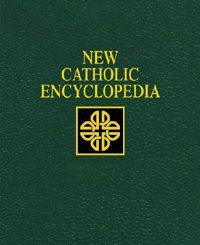
Berard Marthaler – New Catholic Encyclopedia (15 Volume set)
2.285 ₽
Автор: Berard Marthaler
Название книги: New Catholic Encyclopedia (15 Volume set)
Формат: PDF
Жанр: Философия и Религия
Качество: Изначально компьютерное, E-book
This revised edition of the New Catholic
Encyclopedia represents a third generation in the evolution
of the text that traces its lineage back to the Catholic
Encyclopedia published from 1907 to 1912. In 1967,
sixty years after the first volume of the original set
appeared, The Catholic University of America and the
McGraw-Hill Book Company joined together in organizing
a small army of editors and scholars to produce the
New Catholic Encyclopedia. Although planning for the
NCE had begun before the Second Vatican Council and
most of the 17,000 entries were written before Council
ended, Vatican II enhanced the encyclopedia’s value and
importance. The research and the scholarship that went
into the articles witnessed to the continuity and richness
of the Catholic Tradition given fresh expression by
Council. In order to keep the NCE current, supplementary
volumes were published in 1972, 1978, 1988, and
1995. Now, at the beginning of the third millennium, The
Catholic University of America is proud to join with The
Gale Group in presenting a new edition of the New
Catholic Encyclopedia. It updates and incorporates the
many articles from the 1967 edition and its supplements
that have stood the test of time and adds hundreds of new
entries.
As the president of The Catholic University of
America, I cannot but be pleased at the reception the
NCE has received. It has come to be recognized as an
authoritative reference work in the field of religious
studies and is praised for its comprehensive coverage of
the Church’s history and institutions. Although Canon
Law no longer requires encyclopedias and reference
works of this kind to receive an imprimatur before publication,
I am confident that this new edition, like the
original, reports accurate information about Catholic
beliefs and practices. The editorial staff and their consultants
were careful to present official Church teachings
in a straightforward manner, and in areas where there are
legitimate disputes over fact and differences in interpretation
of events, they made every effort to insure a fair
and balanced presentation of the issues.
The way for this revised edition was prepared by the
publication, in 2000, of a Jubilee volume of the NCE,
heralding the beginning of the new millennium. In my
foreword to that volume I quoted Pope John Paul II’s
encyclical on Faith and Human Reason in which he
wrote that history is “the arena where we see what God
does for humanity.” The New Catholic Encyclopedia
describes that arena. It reports events, people, and
ideas—“the things we know best and can verify most
easily, the things of our everyday life, apart from which
we cannot understand ourselves” (Fides et ratio, 12).
Finally, I want to express appreciation on my own
behalf and on the behalf of the readers of these volumes
to everyone who helped make this revision a reality. We
are all indebted to The Gale Group and the staff of The
Catholic University of America Press for their dedication
and the alacrity with which they produced it.
Very Reverend David M. O’Connell, C.M., J.C.D.
President
The Catholic University of America
When first published in 1967 the New Catholic
Encyclopedia was greeted with enthusiasm by librarians,
researchers, and general readers interested in
Catholicism. In the United States the NCE has been recognized
as the standard reference work on matters of
special interest to Catholics. In an effort to keep the
encyclopedia current, supplementary volumes were published
in 1972, 1978, 1988, and 1995. However, it
became increasingly apparent that further supplements
would not be adequate to this task. The publishers subsequently
decided to undertake a thorough revision of
the NCE, beginning with the publication of a Jubilee volume
at the start of the new millennium.
Like the biblical scribe who brings from his storeroom
of knowledge both the new and the old, this
revised edition of the New Catholic Encyclopedia incorporates
material from the 15-volume original edition and
the supplement volumes. Entries that have withstood the
test of time have been edited, and some have been
amended to include the latest information and research.
Hundreds of new entries have been added. For all practical
purposes, it is an entirely new edition intended to
serve as a comprehensive and authoritative work of reference
reporting on the movements and interests that
have shaped Christianity in general and Catholicism in
particular over two millennia.
SCOPE
The title reflects its outlook and breadth. It is the
New Catholic Encyclopedia, not merely a new encyclopedia
of Catholicism. In addition to providing information
on the doctrine, organization, and history of
Christianity over the centuries, it includes information
about persons, institutions, cultural phenomena, religions,
philosophies, and social movements that have
affected the Catholic Church from within and without.
Accordingly, the NCE attends to the history and particular
traditions of the Eastern Churches and the Churches
of the Protestant Reformation, and other ecclesial communities.
Christianity cannot be understood without
exploring its roots in ancient Israel and Judaism, nor can
the history of the medieval and modern Church be
understood apart from its relationship with Islam. Interfaith
dialogue requires an appreciation of Buddhism and
other world religions, as well as some knowledge of the
history of religion in general.
On the assumption that most readers and researchers
who use the NCE are individuals interested in
Catholicism in general and the Church in North America
in particular, its editorial content gives priority to the
Western Church, while not neglecting the churches in the
East; to Roman Catholicism, acknowledging much common
history with Protestantism; and to Catholicism in
the United States, recognizing that it represents only a
small part of the universal Church.
Scripture, Theology, Patrology, Liturgy. The
many and varied articles dealing with Sacred Scripture
and specific books of the Bible reflect contemporary biblical
scholarship and its concerns. The NCE highlights
official church teachings as expressed by the Church’s
magisterium. It reports developments in theology,
explains issues and introduces ecclesiastical writers from
the early Church Fathers to present-day theologians
whose works exercise major influence on the development
of Christian thought. The NCE traces the evolution
of the Church’s worship with special emphasis on rites
and rituals consequent to the liturgical reforms and
renewal initiated by the Second Vatican Council.
Church History. From its inception Christianity
has been shaped by historical circumstances and itself
has become a historical force. The NCE presents the
Church’s history from a number of points of view
against the background of general political and cultural
history. The revised edition reports in some detail the
Church’s missionary activity as it grew from a small
community in Jerusalem to the worldwide phenomenon
it is today. Some entries, such as those dealing with the
Middle Ages, the Reformation, and the Enlightenment,
focus on major time-periods and movements that cut across geographical boundaries. Other articles describe
the history and structure of the Church in specific areas,
countries, and regions. There are separate entries for
many dioceses and monasteries which by reason of
antiquity, size, or influence are of special importance in
ecclesiastical history, as there are for religious orders and
congregations. The NCE rounds out its comprehensive
history of the Church with articles on religious movements
and biographies of individuals.
Canon and Civil Law. The Church inherited and
has safeguarded the precious legacy of ancient Rome,
described by Virgil, “to rule people under law, [and] to
establish the way of peace.” The NCE deals with issues
of ecclesiastical jurisprudence and outlines the development
of legislation governing communal practices and
individual obligations, taking care to incorporate and
reference the 1983 Code of Canon Law throughout and,
where appropriate, the Code of Canons for the Eastern
Churches. It deals with issues of Church-State relations
and with civil law as it impacts on the Church and
Church’s teaching regarding human rights and freedoms.
Philosophy. The Catholic tradition from its earliest
years has investigated the relationship between faith and
reason. The NCE considers at some length the many and
varied schools of ancient, medieval, and modern philosophy
with emphasis, when appropriate, on their relationship
to theological positions. It pays particular attention
to the scholastic tradition, particularly Thomism, which
is prominent in Catholic intellectual history. Articles on
many major and lesser philosophers contribute to a comprehensive
survey of philosophy from pre-Christian
times to the present.
Biography and Hagiography. The NCE, making
an exception for the reigning pope, leaves to other reference
works biographical information about living persons.
This revised edition presents biographical sketches
of hundreds of men and women, Christian and non-
Christian, saints and sinners, because of their significance
for the Church. They include: Old and New
Testament figures; the Fathers of the Church and ecclesiastical
writers; pagan and Christian emperors;
medieval and modern kings; heads of state and other
political figures; heretics and champions of orthodoxy;
major and minor figures in the Reformation and Counter
Reformation; popes, bishops, and priests; founders and
members of religious orders and congregations; lay men
and lay women; scholars, authors, composers, and
artists. The NCE includes biographies of most saints
whose feasts were once celebrated or are currently celebrated
by the universal church. The revised edition relies
on Butler’s Lives of the Saints and similar reference
works to give accounts of many saints, but the NCE also
provides biographical information about recently canonized
and beatified individuals who are, for one reason or
another, of special interest to the English-speaking
world.
Social Sciences. Social sciences came into their
own in the twentieth century. Many articles in the NCE
rely on data drawn from anthropology, economics, psychology
and sociology for a better understanding of religious
structures and behaviors. Papal encyclicals and
pastoral letters of episcopal conferences are the source of
principles and norms for Christian attitudes and practice
in the field of social action and legislation. The NCE
draws attention to the Church’s organized activities in
pursuit of peace and justice, social welfare and human
rights. The growth of the role of the laity in the work of
the Church also receives thorough coverage.
ARRANGEMENT OF ENTRIES
The articles in the NCE are arranged alphabetically
by the first substantive word using the word-by-word
method of alphabetization; thus “New Zealand” precedes
“Newman, John Henry,” and “Old Testament
Literature” precedes “Oldcastle, Sir John.” Monarchs,
patriarchs, popes, and others who share a Christian name
and are differentiated by a title and numerical designation
are alphabetized by their title and then arranged
numerically. Thus, entries for Byzantine emperors Leo I
through IV precede those for popes of the same name,
while “Henry VIII, King of England” precedes “Henry
IV, King of France.”
Maps, Charts, and Illustrations. The New
Catholic Encyclopedia contains nearly 3,000 illustrations,
including photographs, maps, and tables. Entries
focusing on the Church in specific countries contain a
map of the country as well as easy-to-read tables giving
statistical data and, where helpful, lists of archdioceses
and dioceses. Entries on the Church in U.S. states also
contain tables listing archdioceses and dioceses where
appropriate. The numerous photographs appearing in the
New Catholic Encyclopedia help to illustrate the history
of the Church, its role in modern societies, and the many
magnificent works of art it has inspired.
SPECIAL FEATURES
Subject Overview Articles. For the convenience
and guidance of the reader, the New Catholic
Encyclopedia contains several brief articles outlining the
scope of major fields: “Theology, Articles on,” “Liturgy,
Articles on,” “Jesus Christ, Articles on,” etc.
Cross-References. The cross-reference system in
the NCE serves to direct the reader to related material in other articles. The appearance of a name or term in small
capital letters in text indicates that there is an article of
that title elsewhere in the encyclopedia. In some cases,
the name of the related article has been inserted at the
appropriate point as a see reference: (see THOMAS
AQUINAS, ST.). When a further aspect of the subject is
treated under another title, a see also reference is placed
at the end of the article. In addition to this extensive
cross-reference system, the comprehensive index in volume
15 will greatly increase the reader’s ability to access
the wealth of information contained in the encyclopedia.
Abbreviations List. Following common practice,
books and versions of the Bible as well as other standard
works by selected authors have been abbreviated
throughout the text. A guide to these abbreviations follows
this preface.
The Editors
Описание
Berard Marthaler – New Catholic Encyclopedia (15 Volume set) — это фундаментальное справочное издание, которое представляет собой наиболее полную и авторитетную энциклопедию католического вероучения, истории, теологии и культуры. В 15 томах собраны тысячи статей, написанных ведущими специалистами, охватывающие все аспекты католицизма от библейских времён до современности.
Издание подробно рассматривает догматику, литургию, каноническое право, историю Церкви, биографии святых, вопросы христианской философии, этики и взаимодействия с другими религиями. Особое внимание уделено актуальным темам XX–XXI веков, включая документы Второго Ватиканского собора и современное развитие католической мысли.
- Студентам и преподавателям теологии, философии и религиоведения
- Священнослужителям и работникам католических учреждений
- Исследователям истории Церкви и христианской культуры
- Всем, кто глубоко интересуется католическим мировоззрением и его влиянием на мировую цивилизацию
Только зарегистрированные клиенты, купившие данный товар, могут публиковать отзывы.
Похожие


Другие книги раздела «Философия»
- Jacob E. Safra – Britannica Encyclopedia of World Religions
- John Anthony McGuckin – The Encyclopedia of Eastern Orthodox Christianity
- K. Patton – Religion of the Gods. Ritual, Paradox, and Reflexivity
- L. Jones – Encyclopedia of Religion (14 Volume set, Second edition)
- M. Mitchell – The Cambridge History of Christianity (9 Volume set)
- Michael O’Neal – World Religions. Reference library (6 Volume set)
- Nancy M. Tischler – All Things in the Bible. An Encyclopedia of the Biblical World
- Lise Nelson – A Companion To Feminist Geography
- P. Byrne – Companion Encyclopedia of Theology
- Plato – The Complete Works
- Platon – Oeuvres Completes (FRA)
- R. Pasnau – The Cambridge History of Medieval Philosophy
- R. Pippin – Hegel on Ethics and Politics. Hegels Practical Philosophy (2 Books)
- Robert Kastenbaum – Macmillan Encyclopedia of Death and Dying
- Roy Sorensen – A Brief History of the Paradox. Philosophy and the Labyrinths of the Mind
- Sahotra Sarkar – Encyclopedia of Philosophy of Science
Все книги раздела «Философия» →
Смежные разделы: Бизнес-Книги · Биография · Боевики и Триллеры · Детективы · Детские книги · Школа · Дом и Семья · Здоровье · Искусство · Историческая проза · Классика · Компьютеры
Рекомендуем также
- W. Zhang – Measurement Technology for Micro-Nanometer Devices (2016)
- Yu Yao – Robust Control (2016)
- T. Gasser – Basiswissen Urologie (6 Auflage, 2015, Немецкий язык)
- D. Ubelaker – The Global Practice of Forensic Science (2015)
- G. Christ – Handbook of Oncology Social Work (2015)
- J. Wu – Variational Methods in Molecular Modeling (2017)
- M. Rai – Nanotechnology for Bioenergy and Biofuel Production (2017)
- W. Hustrulid – Open Pit Mine Planning Design (2013)

Отзывы
Отзывов пока нет.