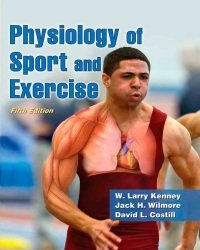
W. Kenney – Physiology of Sport and Exercise (5th edition)
988 ₽
Автор: W. Kenney
Название книги: Physiology of Sport and Exercise (5th edition)
Формат: PDF
Жанр: Спорт
Страницы: 642
Качество: Изначально компьютерное, E-book
The body is an amazingly complex machine. At
any given time there is intricate communication
among various cells, tissues, organs, and systems
that serve to coordinate its physiological functions.
When you think of the numerous processes occurring
within the body at any given time, it is truly remarkable
that these physiological functions work so well together.
Even at rest, the body is physiologically quite active.
Imagine, then, how much more active all of these body
systems become when you engage in exercise. During
exercise, nerves excite muscles to contract. Exercising
muscles are metabolically active and require more
nutrients, more oxygen, and efficient clearance of
waste products. How does the whole body respond to
the increased physiological demands of exercise?
That is the key question when you study the physiology
of sport and exercise. Physiology of Sport and Exercise,
Fifth Edition, introduces you to the fields of sport and
exercise physiology. Our goal is to build on the knowledge
that you developed during basic course work in
human anatomy and physiology and to apply those
principles in studying how the body performs and
responds to the added demands of physical activity.
What’s New
in the Fifth Edition
The fifth edition of Physiology of Sport and Exercise has
been fully updated in both content and design. The
illustrations, photos, and medical artwork are completely
revamped for added detail, clarity, and realism,
allowing both a greater insight into the body’s response
to activity and a better understanding of the underlying
research. The layout is redesigned to focus on the new
artwork and better present the content and numerous
learning aids.
In addition to these visual changes, we have reorganized
the chapters on metabolism and hormonal
control during exercise—splitting the fourth edition’s
chapter 2 into two chapters, now chapters 2 and 4. Students
often find information on exercise metabolism
and bioenergetics to be challenging. To help students
better understand these systems, chapter 2 has been
completely updated and revised to offer a novel, bigpicture
perspective on how energy is derived from the
foods we eat and used for muscle contraction and other
physiological processes. All new figures help to make
this information readily understandable. Likewise,
Preface
chapter 4 on hormonal control of exercise has been
substantially revised and expanded in scope. We have
also updated the text to include the latest research on
important topics in the field, including the following:
• Updated principles of strength training based
on the 2009 ACSM position stand and new sections
on core strength, stability training, and
high-intensity interval training (HIT)
• New content on lactic acid as a fuel source,
muscle cramps, childhood obesity, substrate
utilization and endocrine response to exercise,
and vascular aging
• Updated coverage of central and peripheral
cardiac functions, the female athlete triad, and
the menstrual cycle
• New research on effects of physical activity on
health, including the addition of international
data on the incidence of cardiovascular disease
and obesity
All of these changes are made with an emphasis on
ease of reading and ease of understanding that have
made this book the leading text for introducing students
to this exciting field. Retained from the fourth
edition are the reduced thickness and weight of the
book compared to earlier editions and the overall
structure and progression of the text. As with the fourth
edition, our first focus is on muscle and how its needs
are altered as an individual goes from a resting to an
active state and how these needs are supported by—and
interact with—other body systems. In later chapters we
address principles of exercise training; considerations
of environmental factors of heat, cold, and altitude;
sport performance; and exercise for disease prevention.
Organization
of the Fifth Edition
We begin in the introduction with a historical overview
of sport and exercise physiology as they have emerged
from the parent disciplines of anatomy and physiology,
and we explain basic concepts that are used throughout
the text. In parts I and II, we review the major physiological
systems, focusing on their responses to acute
bouts of exercise. In part I, we focus on how the muscular,
metabolic, nervous, and endocrine systems interact
to produce body movement. In part II, we look at how the cardiovascular and respiratory systems continue to
deliver nutrients and oxygen to the active muscles and
transport waste products away during physical activity.
In part III, we consider how these systems adapt to
chronic exposure to exercise (i.e., training).
We change perspective in part IV to examine
the impact of the external environment on physical
performance. We consider the
body’s response to heat and
cold, and then we examine the
impact of low atmospheric pressure
experienced at altitude. In
part V, we shift attention to how
athletes can optimize physical
performance. We evaluate the
effects of different types and
volumes of training. We consider
the importance of appropriate
body composition for optimal
performance and examine athletes’
special dietary needs and
how nutrition can be used to
enhance performance. Finally,
we explore the use of ergogenic
aids: substances purported to
improve athletic ability.
In part VI, we examine unique
considerations for specific populations.
We look first at the
processes of growth and development
and how they affect
the performance capabilities
of young athletes. We evaluate
changes that occur in physical
performance as people age
and explore the ways in which
physical activity can help maintain
health and independence.
Finally, we examine issues and
special physiological concerns of
female athletes.
In the final part of the book,
part VII, we turn our attention to
the application of sport and exercise
physiology to prevent and
treat various diseases and the use
of exercise for rehabilitation. We
look at prescribing exercise for
maintaining health and fitness,
and then we close the book with
a discussion of cardiovascular
disease, obesity, and diabetes
Описание
W. Kenney – Physiology of Sport and Exercise (5th edition) — фундаментальное руководство по физиологическим процессам, которые происходят в организме человека во время физической нагрузки. Книга подробно объясняет, как работают системы организма при занятиях спортом, тренировках и восстановлении.
В пятом издании значительно обновлены данные о молекулярных механизмах адаптации мышц, влиянии питания и гидратации, гендерных различиях в ответе на нагрузку, а также о физиологии упражнений в условиях жары, высоты и старения. Авторы разбирают механизмы аэробной и анаэробной производительности, регуляцию температуры тела, гормональные изменения и влияние тренировок на здоровье сердечно-сосудистой и дыхательной систем.
- Студентам и преподавателям физкультурных вузов и факультетов спортивной медицины
- Тренерам, работающим с профессиональными и любительскими спортсменами
- Специалистам по фитнесу, реабилитации и спортивному питанию
- Всем, кто хочет глубоко понимать, как тренировки меняют организм
Только зарегистрированные клиенты, купившие данный товар, могут публиковать отзывы.
Похожие



Другие книги раздела «Спортивная литература»
- Dana Barnes – Notable Sports Figures (4 Volumes)
- Nick Draper – Adventure Sport Physiology
- V. Katch – Essentials of Exercise Physiology (4th edition)
- V. Katch – Exercise Physiology (7th edition)
- А. Маслов – Тайные коды боевых искусств Японии
- Григорий Левенфиш – Книга начинающего шахматиста (2017)
- Н. Третьякова – Теория и методика оздоровительной физической культуры (2016)
- С. Евсеев – Технологии физкультурно-спортивной деятельности в адаптивной физической культуре
- Audrey Pavia – Horseback Riding for Dummies
- Валентина Игнатьева – Теория и методика гандбола. Учебник
- Adam R. Nicholls – Psychology in Sports Coaching (Second edition, 2017)
- Stephen S. Cheung – Cycling Science
- Dave Chambers – The Hockey Drill Book
- Craig Liebenson – Functional Training Handbook
- Emeric Arus – Biomechanics of Human Motion (Second edition)
- H. Liebman – 1500 Stretches
Все книги раздела «Спортивная литература» →
Смежные разделы: Бизнес-Книги · Биография · Боевики и Триллеры · Детективы · Детские книги · Школа · Дом и Семья · Здоровье · Искусство · Историческая проза · Классика · Компьютеры
Рекомендуем также
- S. Dithmar – Fluoreszenzangiographie in der Augenheilkund (Немецкий язык, 2008)
- Alexandrina L. Dumitrescu – Chemicals in Surgical Periodontal Therapy
- Angus C. Cameron – Handbook of Pediatric Dentistry
- Ann Felton – Basic Guide to Oral Health Education and Promotion
- D. Miles – Atlas of Cone Beam Imaging for Dental Applications
- Evelyn M. Thomson – Case Studies in Dental Hygiene (3rd edition, 2012)
- Martin Levine – Topics in Dental Biochemistry
- A. L. Baert – Magnetic Resonance Imaging in Ischemic Stroke
Отзывы
Отзывов пока нет.