
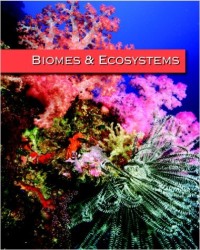
R. Howarth – Biomes and Ecosystems (2013)
1.680 ₽
Автор: R. Howarth
Название книги: Biomes and Ecosystems (2013)
Формат: PDF
Жанр: Биологические науки
Страницы: 1505
Качество: Изначально компьютерное, E-book
In conceiving, editing, and reading Biomes and
Ecosystems, the natural question arises: What is
the difference between a biome and an ecosystem?
In short, an ecosystem is much smaller than
a biome. Conversely, a biome can be thought
of as many similar ecosystems throughout the
world grouped together. An ecosystem can be as
large as the Sahara Desert, or as small as a puddle
or vernal pool. The distinction is worth further
investigation. According to the Merriam-Webster
dictionary, the definitions of the two terms are as
follows:
Biome: Largest geographic biotic unit, a major
community of plants and animals with similar
requirements of environmental conditions. It
includes various communities and developmental
stages of communities and is named
for the dominant type of vegetation, such as
grassland or coniferous forest. Several similar
biomes constitute a biome type; for example,
the temperate deciduous forest biome type
includes the deciduous forest biomes of Asia,
Europe, and North America.
Ecosystem: Complex of living organisms, their
physical environment, and all their interrelationships
in a particular unit of space. An ecosystem’s
abiotic (nonbiological) constituents
include minerals, climate, soil, water, sunlight,
and all other nonliving elements; its biotic constituents
consist of all its living members. Two
major forces link these constituents: the flow of
energy and the cycling of nutrients.
Still there is debate among scientists about
specific regions of the Earth, whether they are
technically a biome or ecosystem. The North
Atlantic Ocean, for example, can be termed either
way. In organizing this book the editors have targeted
a consensus and have produced a work
that presents five major categories of biomes as
Overviews (Part 1) and some 500 ecosystems as
Articles (Part 2).
Especially targeted toward high-school students,
this outstanding reference work is edited to tie
into the high-school curriculum, making the content
readily accessible as well to patrons of public,
academic, and university libraries. Pedagogical elements
include a Topic Finder, Chronology, Resource
Guide, Glossary, and thorough index. However, in
the end, as the General Editor states in his Introduction,
our writers use the terms ecosystems and
biomes somewhat interchangeably in Part 2.
This academic, multiauthor reference work serves
as a general and nontechnical resource for students
and teachers to understand the importance
of biomes and ecosystems; to appreciate the study
of ecology and how it affects life around the world;
to learn of the flora and fauna in biomes and ecosystems;
and to initiate educational discussion
brought forth by the specific social and topical
articles presented in the work.
After the frontmatter, the book opens with eight
illustrations by Jared T. Williams, depicting different
ecosystems around the world and showing the
flora and fauna that live in these ecoregions.
In Part 1: Overviews, the book presents 39
conceptual essays organized into five biome categories:
Marine and Oceanic Biomes (9); Inland
Aquatic Biomes (7); Desert Biomes (6); Forest
Biomes (9); and Grassland, Tundra, and Human
Biomes (8).
In Part 2: Articles, the work offers 506 entries,
organized in an A-to-Z presentation, on specific
ecosystems around the world, ranging from
Acacia-Commiphora Bushlands and Thickets to
Zapata Swamp. These ecosystem articles are categorized
in the Topic Finder as Coral Reefs (35);
Estuaries (30); Intertidal Zones (8); Lakes, Ponds,
and Pools (Lentic) (35); Oceans (9); Seas and Bays
(30); Streams and Rivers (Lotic) (76); Wetlands
(40); Coastal Deserts (7); Mid-Latitude Deserts
(7); Paleodeserts (1); Polar Deserts (3); Rain
Shadow Deserts (3); Trade Wind Deserts (12);
Coniferous Forests (15); Mediterranean Forests
(13); Montane Forests (14); Plantation Forests
(10): Subtropical Forests (13); Temperate Forests
(30); Tropical Rainforests (29); Desert and Xeric
Grasslands (15); Flooded Grasslands (8); Human
Ecosystems (9); Montane Grasslands (13); Temperate
Grasslands (12); Tropical and Subtropical
Grasslands (16); and Tundra Grasslands (13).
Article Length and Format
Articles and essays in the book range in length
from 500 to 3,500 words. Each ecosystem article
in Part 2 is first presented with the biome category
to which it belongs (for example, Marine and Oceanic
Biomes), its geographic location, and an article
summary. Each article is then followed by “Further
Reading” sources that include bibliographic citations.
Many articles are richly illustrated with photos
and captions. Finally, each article is signed by
the contributor to the book.
Frontmatter and Backmatter
Volume 1 of Biomes and Ecosystems begins with
“About the Editor” and then presents the introduction
to the book. The “Contents,” repeated in
all four volumes, features all the articles in alphabetical
order with page numbers as they are listed
in the book. The “Topic Finder” shows all the
articles organized by category to enable readers to
find related articles by topic. The “List of Contributors”
presents all the writers for the book along
with their academic or institutional affiliations.
The backmatter of the book at the end of Volume
4 has the “Chronology,” a timeline of major
milestones in the study of biomes and ecosystems.
A “Glossary” provides definitions for terms
encountered in the articles. Next is the “Resource
Guide” for further research that includes books
that are major works in ecology as well as current
editions of new works, journals in related fields,
and Internet sites that pertain to the subject.
Lastly, a comprehensive subject index references
all concepts, terms, events, persons, places, and
other topics of discussion.
The Earth holds an astounding diversity of life
forms, often studied and celebrated as individual
species. Those species do not live in isolation but
rather are parts of ecosystems and biomes, units
of biological organization that are larger than
individual organisms. Just as tissues and organs
are made up of cells, and organisms are composed
of tissues and organs, ecosystems and biomes are
made up by organisms together with the physical
environment in which they live. Biomes and
ecosystems and their astounding diversity are the
focus of this book.
The term ecosystem was first coined by the British
botanist A. G. Tansley back in 1935. A commonly
used definition comes from the writings of
American ecologist Raymond Lindeman in 1942:
“… the system composed of physical-chemicalbiological
processes active within a space-time
unit.” That is, an ecosystem is composed of all the
organisms—plants, animals, and microbes—and
their physical environment in a defined area, such
as an entire lake or forest. Culturally, the concept
of an ecosystem is much older, and terms in common
language such as tundra, pampas, chaparral,
swamp, and marsh recognize the existence of biological
units at a scale higher than that of the individual
organism or species. Ecosystems represent
perceptions of systems in the natural world that
may be inherent in human experience.
Biomes are large areas on the Earth’s surface
that are characterized by a particular type of ecosystem,
often described in terms of the dominant
vegetation. Biomes are defined by the climate of a
region, so that for example deserts exist in areas
of very low moisture, grasslands occur in regions
with somewhat more moisture, and forests dominate
in wetter regions. The functional characteristics
of organisms that dominate in a particular
biome type are similar across widely disparate
parts of the planet, even though these organisms
often have very different genetic make up.
For instance, the leaves of trees in mediterranean
biomes have hard waxy coatings to help conserve
water in these relatively dry areas, yet the tree species
of the mediterranean biome of California, of
Chile, and of the actual shores of the Mediterranean
Sea have very different ancestral histories
and have independently evolved this waxy-leaf
characteristic in response to the climate.
In this book, we use the terms biomes and
ecosystems rather interchangeably, as the concepts
have much in common: both consist of all
the organisms together in one location with their
physical-chemical environment. Ecologists tend to think of ecosystems as being somewhat smaller
in scale than biomes, but there is not a sharp dividing
line between the two.
Within these volumes we deal with the terms
anthropogenic and human, favoring human as in
“human ecosystems,” since that label may be better
understood by a larger audience. Anthropogenic
is an adjective defined by Merriam-Webster
as “relating to, or resulting from the influence of
human beings on nature” and is often used within
the ecology curriculum. In most cases, we have
chosen “human-induced” to describe the effects
of humans on biomes and ecosystems.
Biomes and ecosystems are of inherent intellectual
interest to ecologists, but nonscientists too
are fascinated by many types of these systems—
such as coral reefs, the savannas of Africa, and the
dark redwood forests of California—because of
their beauty and the wonder they inspire. Ecosystems
are also a critical level of biological organization
for environmental management. The effects
of acid rain on lakes and the fish and other organisms
in lakes first became clear through studying
lakes as whole ecosystems, and ecologists are
observing some of the earliest signs of disruption
from global climate change at the scale of whole
ecosystems. In this book, we have strived both
to describe the beauty, wonder, and diversity of
biomes and ecosystems and the sensitivity of these
systems to damage from global change and other
human-caused insults.
The book has two major parts: a series of overview
essays on the major types of biomes and
ecosystems around the world and then a series of
place-based articles on particular biomes and ecosystems
of interest. The overview essays fall into a
set of broad divisions: marine and oceanic biomes,
inland aquatic biomes, deserts, forests, and grasslands,
tundra, and human-dominated systems.
Within each of these, we have a series of further
divisions, for example dividing the inland aquatic
biomes into individual articles on freshwater lakes,
saline lakes, great lakes, ponds, streams, rivers, and
wetlands. Similarly, forests are divided into boreal
forests, Mediterranean forests, montane forests,
plantation forests, subtropical forests, temperate
coniferous forests, temperate deciduous forests,
tropical rainforests, and tropical seasonal forests.
Our goal is to present the reader with the basic
defining characteristics of the world’s major types
of biomes and ecosystems, and an understanding
of the physical environment that defines these different
major types of systems.
The place-based articles then provide greater
detail on particular ecosystems. For example, we
have articles on individual coral reefs, including
the Great Barrier Reef of Australia, the Mesoamerican
Barrier Reef off the shore of Honduras
and Belize in the Caribbean Sea, the Florida Keys
Coral Reef, and the coral reefs of the Red Sea.
The articles are designed to stand alone, so the
interested reader can pick up the book and gain
detailed information on any one of these reefs, or
read the overview article on coral reefs, or read
articles on many different coral reefs to understand
the amazing diversity across these systems.
For rivers, we have more than 75 articles representing
most of the better known rivers across the
planet. The more than 30 desert articles include
coastal deserts, such as Baja California; mid-latitude
deserts, such as the Mojave in the American
southwest; the Nebraska sand hills as an example
of a paleodesert; polar deserts, such as the dry
valley deserts in Antarctica; rain shadow deserts,
such as part of Patagonia in South America; and
trade wind deserts, such as the Great Victoria
Desert of Australia. Suggestions for further reading
are provided for each article, so the book can
be an excellent starting point for more in-depth
study of a particular ecosystem.
Whether this is your first introduction to
biomes and ecosystems or you are an experienced
student or expert in this area, we trust you will
find the book valuable, informative, and entertaining.
We hope you agree that the authors have done
an excellent job of presenting the extraordinary
diversity of life on Earth through this unique lens
of the diversity of biomes and ecosystems.
Описание
R. Howarth – Biomes and Ecosystems (2013) — фундаментальное издание, которое подробно разбирает структуру, функционирование и взаимодействие основных биомов и экосистем планеты. Книга объясняет, как климат, почвы, растительность и животный мир формируют уникальные природные комплексы от тропических лесов до арктической тундры.
Автор анализирует ключевые экологические процессы, циклы веществ, пищевые цепи и влияние человека на биологическое разнообразие. Особое внимание уделено современным проблемам: изменению климата, деградации экосистем и стратегиям их сохранения.
- студентам биологических и экологических специальностей
- специалистам в области охраны природы и экологического мониторинга
- преподавателям и научным работникам, изучающим глобальные экосистемы
- всем, кто интересуется географией, экологией и сохранением биоразнообразия
Только зарегистрированные клиенты, купившие данный товар, могут публиковать отзывы.
Похожие


Другие книги раздела «Биологические науки»
- A. Coutts – Cell Cycle Oscillators (2016)
- E. Paluch – Biophysical Methods in Cell Biology (2015)
- E. Egelman – Comprehensive Biophysics (2012)
- I. Mandoiu – Computational Methods for Next Generation Sequencing Data Analysis
- F. Martin – Molecular Mycorrhizal Symbiosis (2016)
- H. Lenasi – Microcirculation Revisited. From Molecules to Clinical Practice (2016)
- S. Huether – Understanding Pathophysiology (6th edition, 2016)
- M. Parnham – Compendium of Inflammatory Diseases (2016)
- N. Garg – Microbes in Food and Health (2016)
- R. Ahmad – Free Radicals and Diseases (2016)
- C. Theoret – Equine Wound Management (2016)
- M. Kaeberlein – Handbook of the Biology of Aging (2016)
- И. Афанасьева – Англо-Русский Биологический Словарь (4 Издание)
- E. Podgorsak – Radiation Physics for Medical Physicists (2016)
- K. Wang – Biomarkers of Brain Injury and Neurological Disorders (2015)
- E. Pannese – Neurocytology. Fine Structure of Neurons, Nerve Processes, and Neuroglial Cells (2015)
Все книги раздела «Биологические науки» →
Смежные разделы: Медицина на испанском языке · Медицина на немецком языке · Медицина на французском языке · Анестезиология и Реаниматология · Акушерство и Гинекология · Ветеринария · Гастроэнтерология и Гепатология · Дерматология и косметология · Диетология и нутрициология · Иммунология и Аллергология · Кардиология · Лапароскопия и Эндоскопия
Рекомендуем также
- В. Малявин – Военный канон Китая
- Elizabeth W. Lewis – Queen of the Confederacy
- Eric Foner – Give me Liberty. An American History (Third edition)
- Glenna Schroeder-Lein – Encyclopedia of Civil War Medicine
- J. Reynolds – The Demise of the American Convention System 1880-1911
- Paul Finkelman – Encyclopedia of the New American Nation (3 Volumes)
- Scott C. Patchan – Shenandoah Summer. The 1864 Valley Campaign
- Victoria E. Bynum – The Free State of Jones. Mississippi’s Longest Civil War

Отзывы
Отзывов пока нет.