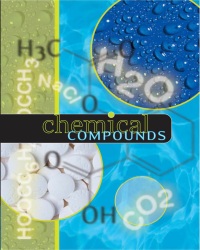
N. Schlager – Encyclopedia of Chemical Compounds
1.246 ₽
Автор: N. Schlager
Название книги: Encyclopedia of Chemical Compounds
Формат: PDF
Жанр: Химия
Страницы: 981
Качество: Изначально компьютерное, E-book
Offers information on the ways in which different chemical elements combine to fomr commonly used chemical coupounds, such as water, ammonia and aspirin. the four-vol set includes 180 entries on both organic and inorganic compounds and also features a general historical overview of major discoveries and the notable scientists who made them.
Water; sugar; nylon; vitamin C. These substances are all
very different from each other. But they all share one
property in common: They are all chemical compounds. A chemical
compound consists of two or more chemical elements,
joined to each other by a force known as a chemical bond.
This book describes 180 chemical compounds, some
familiar to almost everyone, and some less commonly known.
Each description includes some basic chemical and physical
information about the compound, such as its chemical formula,
other names by which the compound is known, and the
molecular weight, melting point, freezing point, and solubility
of the compound. Here are some things to know about
each of these properties:
Other Names: Many chemical compounds have more than
one name. Compounds that have been known for many centuries
often have common names that may still be used in
industry, the arts, or some other field. For example, muriatic
acid is a very old name for the compound now called hydrochloric
acid. The name remains in common use today. Marine
acid and spirit of salt are other ancient names for hydrochloric
acid, but they are seldom used in the modern world. All
compounds have systematic names, names based on a set of
rules devised by the International Union of Pure and Applied
Chemistry (IUPAC). For example, the systematic name for the
poisonous gas whose common name is mustard gas is 2,20-
dichlorodiethyl sulfide. When chemists talk about chemical compounds, they usually use only the official IUPAC name
for a compound since that name leaves no doubt as to the
substance about which they are talking. In some cases, a
compound may have more than one official name, depending
on the set of rules used in the naming process. For example,
1,10-thiobis[2-chloroethane] is also an acceptable name for
mustard gas. The ‘‘Other Names’’ section of each entry
lists both the systematic (IUPAC) and common names for a
compound.
Many compounds also have another kind of name, a
brand name or trade name given to them by their manufacturers.
For example, some trade names for the pain killer
acetaminophen are PanadolTM, TylenolTM, AcetaTM, Genapap
TM, TempraTM, and DepacinTM. The symbol next to each
name means that the name is registered to the company that
makes the compound. Trades names may be mentioned in the
Overview or Uses sections of the entry for each compound.
Chemical Formula: A chemical formula is a set of symbols
that tells the elements present in a compound and the
relative numbers of each element. For example, the chemical
formula for the compound carbon dioxide is CO2. That formula
tells that for every one carbon atom (C) in carbon
dioxide there are two atoms of oxygen (O).
Chemists use different kinds of formulas to describe a
compound. The simplest formula is a molecular formula.
A molecular formula like CO2 tells the kind and relative
number of elements present in the compound. Another kind
of formula is a structural formula. A structural formula
provides one additional piece of information: The arrangement
of elements in a compound. The structural formula for
methanol (wood alcohol), for example, is CH3OH. That formula
shows that methanol consists of a carbon atom (C) to
which are attached three hydrogen (H) atoms (CH3). The
carbon atom is also joined to an oxygen atom (O) which, in
turn, is attached to a hydrogen atom (H).
Structural formulas can be written in a variety of ways.
Another way to draw the structural formula for methanol, for
example, is to show where individual bonds between atoms
branch off other atoms in different directions. These structural
formulas can be seen on the first page of nearly
all entries in Chemical Compounds. In a third type of structural
formula, the ball-and-stick formula, each element is represented by a ball of some size, shape, and/or color. The
chemical bond that holds them together is represented by
sticks. This can be represented on paper in a drawing that
simulates a three-dimensional model, by computer software,
or actually in three dimensions from a kit with balls and
sticks.
All three kinds of structural formulas are given for each
compound described in this book. The only exception is
some very large compounds known as polymers that contain
many hundreds or thousands of atoms. In such cases, the
formulas given shown only one small segment of the
compound.
Compound Type: Millions of chemical compounds exist.
To make the study of these compounds easier, chemists
divide them into a number of categories. Nearly all compounds
can be classified as either organic or inorganic.
Organic compounds contain the element carbon; inorganic
compounds do not. A few important exceptions to that rule
exist, as indicated in the description of such compounds.
Both organic and inorganic compounds can be further
divided into more limited categories, sometimes called
families of compounds. Some families of organic compounds
are the hydrocarbons (made of carbon and hydrogen only),
alcohols (containing the -OH group), and carboxylic acids
(containing the -COOH groups). Many interesting and important
organic compounds belong to the polymer family. Polymers
consist of very large molecules in which a single small
unit (called the monomer) is repeated hundreds or thousands
of times over. Some polymers are made from two or, rarely,
three monomers joined to each other in long chains.
Most inorganic compounds can be classified into one of
four major groups. Those groups are the acids (all of which
contain at least one hydrogen (H) atom), bases (which all
have a hydroxide (OH) group), oxides (which all have an
oxygen (O)), and salts (which include almost everything else).
A few organic and inorganic compounds described in this
book do not easily fit into any of these families. They are
classified simply as organic or inorganic.
Описание
N. Schlager – Encyclopedia of Chemical Compounds — фундаментальный справочник, который содержит систематизированные данные о сотнях важнейших химических соединений. Книга объединяет информацию о свойствах, структуре, способах получения и областях применения веществ, используемых в промышленности, науке и повседневной жизни.
Издание подробно рассматривает органические и неорганические соединения, включая их физические и химические характеристики, токсичность, реакционную способность и современное промышленное значение. Материал организован в удобной энциклопедической форме, что позволяет быстро найти нужные данные без чтения от корки до корки.
- Студентам и преподавателям химических специальностей
- Научным сотрудникам и инженерам-химикам
- Специалистам лабораторий и промышленных предприятий
- Всем, кто профессионально работает с веществами и нуждается в проверенных справочных данных
Только зарегистрированные клиенты, купившие данный товар, могут публиковать отзывы.
Похожие


Другие книги раздела «Химия»
- R. Petrucci – General Chemistry (11th edition, 2017)
- D. Dionysiou – Photocatalysis (2016)
- K. Schror – Acetylsalicylic Acid (2016)
- R. Patel – Green Biocatalysis (2016)
- J. Teixeira-Dias – Molecular Physical Chemistry (2017)
- R. Pugh – Bubble and Foam Chemistry (2016)
- D. Murzin – Catalytic Kinetics (2016)
- C. Batt – Encyclopedia of Food Microbiology (2nd edition, 2014)
- G. Markovic – Rubber Nano Blends (2017)
- V. Thakur – Liquid Crystalline Polymers (2 Volume set, 2016)
- F. Xiao – Zeolites in Sustainable Chemistry (2016)
- D. Parry – Fibrous Proteins (2017)
- J. Seader – Separation Process Principles (2016)
- M. Awang – ICIPEG 2016 (Proceedings of the International Conference on Integrated Petroleum Engineering and Geosciences)
- M. Aggour – Petroleum and Gas Field Processing (2016)
- R. Smith – Chemical Process Design and Integration (2016)
Смежные разделы: Авиация и космонавтика · Астрономия · Геология и Геодезия · Железнодорожное дело · Журналистика · Математика · Машиностроение · Нанотехнологии · Научно-популярная литература · Физика · Экология · Энергетика
Рекомендуем также
- Б. Гржимек, Д. Корбетт, Д. Даррелл – Зеленая серия (100 Томов, Зоология)
- C. Kumar – X-ray and Neutron Techniques for Nanomaterials Characterization
- S. Thomas – Rheology and Processing of Polymer Nanocomposites (2016)
- K. Moore – Clinically Oriented Anatomy (2014)
- M. Husain – Advances in Nanomaterials (2016)
- S. Schramm – New Horizons in Fundamental Physics (2017)
- Г. Столяров – Лекарственные психозы и психотомиметические средства
- R. Arnold – Pharmacoeconomics
Отзывы
Отзывов пока нет.